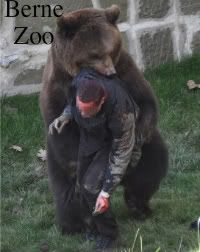
Wednesday, March 24, 2010

The Last Balcony's Last Balcony


I am pleased to report that, very soon, a pdf preview of the forthcoming DFL definitive fiction collection - 'The Last Balcony' - will be put up at the Ex Occidente Press site HERE


I am also kindly allowed by Unsettled Dust to use this wonderful photo (from HERE) in connection with this book. This is a photograph that has no connection with me or with the publisher. Its own title, I've been told, was inspired by the book title.

Monday, March 22, 2010

Today's Maxim (4)

When, at the end of the day, a weirdmonger cleans his slab with pride, he sees clearly from which balcony the next wave will come.

http://unsettleddust.wordpress.com/2010/01/21/one-photograph-the-last-balcony/

Sunday, March 21, 2010

Today's Maxim (3)

When, at the end of the day, a fishmonger cleans his slab with pride, he worries from which weird seas the next fish to sell will be coming.

Saturday, March 20, 2010

Today's Maxim (2)

When I write, I feel like I'm a band playing in my garage.

Brashly eclectic, but I know they're trying to perfect their art, so I put up with it.

Friday, March 19, 2010

Today's Maxim

Maybe, one man's obfuscation is another man's struggle to express the inexpressible.

Meat & Two Veg

The plate was empty. Like this page.

I knew that – soon – based on previous experience here, it would be full of meat & two veg. I’ve never known a cafe that simply plants a plate like that on the table and then has food dished up by the waitress piecemeal from saucepans on her trolley. Posh restaurants, maybe, do that, where a flaming piece of animal is often brought to the businessman’s trough, with a huge sizzling noise and billows of smoke. But never two-bit cafes like this one.

The waitress was done up as if she still lived in the past and travelled in Third Class carriages. Her saucepans steamed biliously like trains themselves. Her voice was in broken English, meaning she wasn’t even one of us. She told us about her troubles as she ladled the bits and bobs of tasselled bone in gravy. A thick accent that we could cut even with the blunt carving-knife that she then brought out to slice the still whole swede sweating nearby.

I nodded my head with my own version of small talk. My companion – a nondescript lass I’d met inside the cinema – merely tried to look pleased that I had taken her here for a meal. Going to see a continuous programme of 'Brief Encounter' and a B Film had left us with an appetite that would even salivate at soggy leavings in a plug-hole.

Soon, the plate was empty again. Every word eaten - & left a blank plot and nobody even to read it, let alone write it, if that was the right order.

Alone, I headed back towards the cinema – and now found it to be a car-park.

An empty car-park.


(written today and first published above)

Wednesday, March 17, 2010

Matt Cardin's Demon Muse

Matt Cardin has written some wonderful thought-provoking articles on the Muse or Daemon and the creative collaboration within self etc.: HERE in three parts. I recommend them to you.


They touch on some concerns that have preoccupied Nemonymous over the years and the Intentional Fallacy and The Ominous Imagination in Magic Realism and Magic Fiction. If one explores all my blog posts for example one may lose oneself forever in such concerns! :)

===========================================

Some quotes I hold relevant to this subject:

"My pictures are visionary and symbolical, and, from first to last, have seemed to be painted by someone other than myself. [...] I am thus entirely self-taught, or taught by that other within me. I am aware that my pictures lack serious technique(if there is a technique that can be distinguished from inspiration and invention). I should have given up painting them some time ago, were it not that a certain number of people seemed to find something remarkable in them, and have thus identified me with them, and made me feel mildly important."
FROM "RAVISSANTE" BY ROBERT AICKMAN


"From the cosmic point of view, to have opinions or preferences at all is to be ill; for by harbouring them one dams up the flow of the ineluctable force which, like a river, bears us down to the ocean of everything's unknowing. Reality is a running noose, one is brought up short with a jerk by death. It would have been wiser to co-operate wih the inevitable and learn to profit by this unhappy state of things - by realising and accommodating death! But we don't, we allow the ego to foul its own nest. Therefore we have insecurity, stress, the midnight-fruit of insomnia, with a whole culture crying itself to sleep. How to repair this state of affairs except through art, through gifts which render to us language manumitted by emotion, poetry twisted into the service of direct insight?"
from 'The Avignon Quincunx' by Lawrence Durrell ('Constance' 1982)

.

"The nemo is an evolutionary force, as necessary as the ego. The ego is certainty, what I am; the nemo is potentiality, what I am not. But instead of utilizing the nemo as we would utilize any other force, we allow ourselves to be terrified by it, as primitive man was terrified by lightning. We run screaming from this mysterious shape in the middle of our town, even though the real terror is not in itself, but in our terror at it."
-- John Fowles 1964 (from 'The Necessity of Nemo' in 'The Aristos')


[[Pretension is the dismissive name given to people's attempts to be something
other than what they 'really are'. It is vilified in England in particular
because we are so suspicious of people trying to 'rise above their station'.

In the arts, the word 'pretentious' has a special meaning: the attempt at
something that the critic thinks you have no right even to try. I'm very happy
to have added my little offering to the glowing mountain of things described as
'pretentious' - I'm happy to have made claims on things that I didn't have any
'right' to, and I'm happy to have tried being someone else to see what it felt
like.

I decided to turn the word 'pretentious' into a compliment. The common
assumption is that there are 'real' people and there are others who are
pretending to be something they're not. There is also an assumption that there's
something morally wrong with pretending. My assumptions about culture as a place
where you can take psychological risks without incurring physical penalties make
me think that pretending is the most important thing we do. It's the way we make
our thought experiments, find out what it would be like to be otherwise.

Robert Wyatt once said that we were always in the condition of children - faced
with things we couldn't understand and thus with the need to guess and
improvise. Pretending is what kids do all the time. It's how they learn. What
makes anyone think that you should sometime give it up?]]

---Brian Eno (quoted: HERE)


==================================================
My questions: I wonder who the author of any work really is? Who or what do you interview on that work - the author or his 'muse-daemon-nemo-pretension' or both? Or does one just sigh and call all authors Nemonymous?

Just sigh and read only the texts themselves to discover all the necessary and available elements of the 'thing or things' behind those texts?

In line with the Durrell quote above, I struggle to find my own opinion to answer those questions!

Sunday, February 28, 2010

A Third Class Murder

There was a subtle movement at the edge of things. Perception included most senses of the body, and the heady stench of imagined black steam was the first sense that officially hit you. Then its acrid acid taste, before the sound of moving metal juttered upon static metal. Closely followed by some fingering out upon either swaying side of your seated body testing the supporting touch of brushed upholstered shuddering weave. Finally, a gradual realisation that around and above was the emerging sight of concerned faces poking towards you with their own instinctive version of fingering out.

But which body sense had sensed the original subtle movement? The sense of fear: the strongest sense of all that could contain itself independently without the aid of other senses to support it? But a sense stronger than fear itself was consumed by a vision that you were thanklessly killed for mindless kicks, not even as a stranger’s gratuitous murder for literary treatment or as a murder performed with a choice of motives for a popular 'whodunnit'.

Yours was a third class murder where prior existence itself was nothing but a multitude of senses forever dwindling one by one along an endless track of dislodged sleepers.

A subtle movement at the edge of things. A hissing in a forgotten siding. A single smeared face and ghostly fingers upon a leather tongue.

Friday, February 26, 2010

Nontention and the Abhurdity of Onsense

"It is my nontention, however, that what we have here is not merely abhurdity but onsense." (sic)
from 'Children of Epiphany' by Frances Oliver (Secker & Warburg 1983 and Ash Tree Press 2004)

Sunday, February 14, 2010

Song of the River

(Lewicide 5)


Bill knew a lot about River rights. Riparian rights, as he taught me. R-I-P-A-R-I-A-N.

I often asked him why he kept the river fenced in from the land through which it flowed.

“It’s my land and I don’t want my land suffering from the curse of that damn river!” he would say, brushing an ever-thinning fringe from his eyes as he squinted at me dolefully.

“But surely, Bill," I replied, "the part of a river that flows through your land is your river, for which you are responsible?”

Compared to Bill, I knew I was too young to know most things that he boasted knowing. And, what was more, the wrong sex for knowing anything at all – in his eyes. I smiled. I was so much younger, I knew one thing for sure: he was too old for me to view him as a prospect for marriage, however much land he owned. Never mind, I often enjoyed his company, although ‘enjoy’ may not be wholly the correct word..

“Have you heard of the word ‘riparian’?” he asked. He asked this question many times on different occasions, despite having asked it before. And then he would continue: “Riparian tells of a lot of things that rivers can and can’t do, who owns which stretch of it and if you own a particular stretch, do you also own the water in that stretch, even when knowing that water is ever changing within the current?”

“That’s a new word that,” I said. He knew it wasn’t new. I knew it wasn’t new. But it was best to say it was new.

“Riparian,” he said, “is in all the law books but one thing the law books don’t tell you, Miss, is about curses and things that history steep in its waters, things quite beyond the scope of laws. Riparian is more than just law or common sense. It’s a feeling of ... what shall I call it? Spirit of Place?”

Bill often went off on one. I smiled, humouring him, even charming him with what he once called my ‘sparkling looks’. He said, too, more than once, that rivers had sparkling looks on one day, but gruff ugliness the next. I think that is what he said. The river was one of his hobby-horses, and Bill would not have been Bill without his hobby-horses.

He touched my hand so fleetingly, I hardly noticed – and he continued:

“Riparian rights also tell of the noise of a river as well as its looks. Not just the changes that happen with the weather changing, but changes stemming from its actual moods as a river.”

“Do rivers really have moods separate from the weather, Bill?”

This is not the first time that I’ve told you that this was not the first time we had had this conversation. I laughed to myself as if knowing the very rhythm of this river’s ritual, but then Bill went off on another one. This time a different one. A Billish speech I had never heard before:-

“Of course, on foggy days, its song can be sad or it can be happy. On rainy days, the same. On sunny days, the same. But on snowy days, it seems to swallow and gulp and choke. Riparian rights and wrongs in books won’t help you there. That’s why I fenced off the river. Its moods seemed to seep into the crops and my grazing animals bleated in tune with tunes I did not want them bleating with. Sad bleats whether the river itself was sad or happy that day. So I thought that by fencing off the river through my land, along its fringes, I would show it that I disowned it. Disowned it, literally, Miss. Riparian, Riparian, damn your Riparians. But I can see you shaking your head. How can a mere fence remove the song of the river? A fence is not sound-proof. Well, let me tell you,” – and he touched my hand again, this time more lingeringly – “it is all down to showing the river who’s boss. A fence along its fringes is just as powerful as even the thickest, highest river-wall, indeed even more powerful because the river can see things through the fence-slats and this makes it feel sad at losing its own ownership of the land through which it flows. Ownership can work both ways, you see. This time it’s a permanent sadness. Never to be mixed with happiness. The fence makes the river feel even more cut off than if we’d dammed it at source!”

“The river can see things as well as sing?” I asked, withdrawing my hand.

“Yes, it can see us as clearly as we see it. And when it sees things it didn’t know it missed seeing, it sort of utters its own misbegotten bleats ... as if it wants to die. Riparian suicide.”

At this point, I got up from the stile where we were both sitting. I kissed the top of his head and went home across his land, along by the fence he had erected by the river. I’m never sure how it sounds when I am not listening to it, but today as I walked, I heard sobs rather than bleats. And I shook my head as imagination played tricks on me. Through the slats, I saw the fringed heads of creatures or other amphibians floating along like logs towards a log-jam.

That was the last time I saw Bill outside of an open coffin. He died of old age overnight, I guess. I never really forgave myself for not taking him seriously. His body seemed literally to flow between the ornate casket sides. Perhaps waiting for my tears to join him there.

I now always think of Bill when I see the word ‘riparian’ ... which is not often.


========================================
Written today and first published above

Lewicide 4: http://weirdmonger.blog-city.com/fantasy_land.htm

Friday, February 05, 2010

An Act of Despair

.
“Sort it out!”

His voice was Essex. I now knew there would be no crossing this ‘gentleman’ ... well, not crossing him twice, as, evidently, I had already crossed him to elicit such a response: a response with no possible further response.

I turned to see whether this man’s companion, a woman of equal presence to his, would give any clue, by look or word, as to the options open to me. There was an unspoken glance of recognition between her and me, a glance that neither of us read properly.

There was no comfort there and, in the end, no memory, as if by their closing off of any options, the man and woman had me cornered.

But even in those few short instants, it dawned on me that even a cornered rat has one option. By allowing me no get-out clause, they had allowed me the best get-out clause of them all. An Act of Despair.

And that’s the way I sorted it out. Doing nothing. All of us frozen in time, waiting for my next move. Nobody willing to escape the final unspoken clause of all.


The County of Essex has wide open skies. Straightforward bent diamonds embedded in the salt of the earth.

The woman eventually wandered off mumbling to herself. She’d forgotten if she’d forgotten who she was. Leaving behind two dead bodies: not dead from a sudden duel, but from the pure onset of old age, with both men waiting too long for each to grow old faster than the other.

They say reaction in a gunfight is deadlier than if drawing first.

The woman smiled mindlessly. She’d not really liked either of the men. Her get-out clause was not only unspoken but taken as unread. I was no longer alive to sort it out. The ending, that is. The writing or the reading of it. Yet I somehow knew that despair always acted in due course...


The woman boarded a bus for home. Luckily buses in Essex were always late. And often lost.


(written today and first published above)

Skights

Following my article on Gunfleet Sands Wind Farm yesterday:

Findings have just been announced today that moths and butterflies surf the wind; http://news.discovery.com/animals/migrating-insects-butterflies.html

They instinctively or deliberately discover fast moving winds or thermals in the upper atmosphere that enable them to migrate vast distances in a short space of time. One can imagine them surging along - enfolded together or separately? - in an unconscious nirvana or fully conscious? -

?? like fiction writers who send their synchronised shards or mites into visionary tides of random truth and fiction within the vast migratory creativity of art. Some tides self-created others created for them.

These phenomena should be called 'skights', I say.

Sunday, January 31, 2010

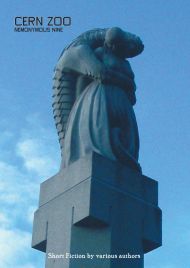
CERN Zoo

'The Virtual Revolution' on BBC2 last night says World Wide Web was invented in CERN. Seems therefore a good name for the Internet: CERN Zoo?

http://weirdmonger.blog-city.com/the_cern_zoo_page.htm

Saturday, January 23, 2010

Old UK Coinage

Skight = Threepenny Bit (pronounced Thruppinny Bit) (i.e. three old pence)
Tanner = Sixpence Bit (six old pence)
Bob = Shilling (12 pennies (old pence))
Two Bob Bit = Florin
Half a Crown = two shillings and six old pence ('two and six')
Shilling = 12 old pence or 5 new pence (240 old pence or 100 new pence in a pound)
Pound Note (quid) = 20 shillings or 240 old pence
Ten Bob Note (self explanatory)
Guinea = 21 shillings

Saturday, January 09, 2010

More Than Just Ordinarily Weird

We had more thundersnow & lightning on the Tendring Peninsular coast last night (about Midnight) together with, on this occasion, a weirdly pervasive pink light for about five minutes.

I tried to google words about this phenomenon to see if anyone else had come across it before. Apparently, one only hears thunder and sees lightning during a snowstorm if they're directly above – as the snow itself serves elsewhere to deaden the sound and the light. A rare event, but one that was at least known about. But the enduring pinkness in the air or sky seemed more than just ordinarily weird.

It was something to do with my recent interest in the new nonsense and how it compared with the old nonsense. And how crime sometimes pays even when I was taught as a child that crime most certainly doesn’t pay. To connect all these factors, in turn, required as much nonsense as I could muster, I knew.

I stared at my companion in the room, as he watched the renewed blizzard – in daylight now – through the bungalow window. Googling people was one thing, but actually living with someone took you into realms of relationship that the internet couldn’t possibly match. It is hard to grow accustomed indeed to non-internet relationships. Nothing to be afraid of, I assure you. People in the flesh can be very comforting. They’re as never nasty as they are when they are interacting on the web.

“Any luck in finding something about the pink light, Chris?” he suddenly asked.

I turned back to the screen and made a few clicks just for show.

True to say that I was looking at a site about reclaiming the word ‘weird’. Most people use that word derogatorily these days, but weird literature once had a very good name. Weird behaviour was often championed in pre-internet days. Idiosyncracies and oddness of character often being a vital part of a full-fledged personality. Now harmless weirdness of behaviour (even creative or constructive) is often decried or deemed ‘suspicious’.

I shrugged. A losing battle. I needed to give off an unweird persona to get by in life. But time and time again I fell back into stranger and stranger words that surrounded me like mental snowflakes in a blizzard.

“Chris, did you hear me? Anything about the pink light?” he asked me.

I quickly changed tack and pretended even to myself that “pink light” was what I was googling all along. Too many hits. One needed to combine it with words like ‘snow’ and ‘thunder’ and....

A swarm of killer word-bees like snowflake-ghosts crowding into the google box.

And when he finally clicked, I disappeared with the rest of them. Melted into moments of combined meaning and falsely obtained knowledge as well as undifferentiable old nonsense masquerading as new.

I never called myself Crystal or even Chris for short. Only he called me that. And I watched the snowflakes sadly melt down his cheeks from the knowing sparkles in his eyes. All happening in the weird glow of the outside world looking in.

Saturday, December 26, 2009

Cinnabar's Gnosis (2)

MY REVIEW OF 'CINNABAR'S GNOSIS' (Ex Occidente Press 2009) CONTINUED FROM HERE: http://weirdmonger.blog-city.com/cinnabars_gnosis.htm


The Autumn Keeper – Mark Valentine

“ ‘What will you do when you find the last lantern?’ [...] ‘There will always be another city.’ ”

I fell in love with this author’s fiction when I reviewed ‘The Nightfarers’ here: http://weirdmonger.blog-city.com/the_nightfarers__by_mark_valentine.htm
And I fall more deeply in love with it by the addition of this story to his canon. Lovecraftian texture, or M.P. Shiel, but predominantly a highly clause-tentacled and wordy, if piquant, style that is a unique Valentine-doux admirably suiting this tale of a Magus who collects prodigies in what I have learned to be Meyrink City as a Platonic Form – eventually shading off into (then majoring as) the tale of one of these prodigies, a young lantern-painter who learns to look below the lanterns he paints and meets a procession of life’s lessons in the shape of tasking people. Not a Pilgrim’s Progress so much as a Dreamer’s Duress made sweet with a meaning only you the reader can blend. If that reader is Meyrink himself then I’ve found this book’s ‘literary being’ at last ... myself? Or yourself? (26.12.09)


Modern Cities Exist Only to Be Destroyed - Michael Cisco

"The train glides into the station. The doors part like buttocks."

Carrying on an Autumnal of the 'Dreamer's Duress' from the previous story, a Pilgrim called X enters a Ligottian synaesthesia and a reality that needs an engineer as all is potentially Machine. And a Magus Meyrink who leads the Pilgrim towards Knowledge. A clever story of Meyrink City with tasking commuters and a train - leading to a possible symmetry of two trains. There are sharp phrases from time to time that awaken the reader - the reader who develops apace as this book does. Each story standing on the shoulders of the previous stories to reach the cabinet-panel in the Wellsian, if not Wailing, Wall. (26.12.09 - two hours later)

.

The House of Sleep - Stephen J. Clark

"I have made extensive notes but the more I try to detect a pattern the more it eludes me."

A further effective Autumnal (judging by the dates), this time of epistolary cabinets - invoking another Absurd Theatricality acting out a reality of darkness and truth. An unrealistic Theatre performing the part of a realistic Theatre. Or vice versa? The epistles' scholarly protagonist finds out the answer. And so do I. Meyrink as inner playwright.

"The walls of my room here have become a map of those events yet it is the blank spaces between the pages pinned to their surfaces that still haunt me." (26.12.09 - another 4 hours later)

.

The Multiples of Sorrow – Steve Rasnic Tem

He had absolutely no hope or optimism for his own future, and yet it was a future he looked forward to with great anticipation.”

A haunting (non-1984) Orwellian treatment of Meyrink City (just after the 1st World War) with Praguesque, Londonian, Parisian resonances, whereby (Eucharistic?) blood and “architecture of ruin and rust” (Cinnabar? Chrome Dioxide Magnetic Tape?) of the City as the engineered Machine are hinted at, in some further ‘chess sacrifice’ of down-and-outs for the gnosis-alembic belonging to the book’s Meyrink, allowing this very Meyrink to continue forming theosophically as a further warm-up act for its very reality-in-your-(the-reader’s)-room. “Cinnamony dust” and insects... (26.12.09 - another 2 hours later)

.
The Cabinet of Prague – Mark Beech

The ‘psychotrope’ of miscegenation. This cleverly combines the book-magical library-lore of a Carlos Ruiz Zafón and the naïve initiation of a chance street-adventurer from Stanley Kubrick’s ‘Eyes Wide Shut’ as he becomes out of his depth ... here endangered by the actual fiction text that describes his Praguesque rite-of-passage from family to exile. A story that wonderfully tells of being the very thing that is most threatening to its protagonist, i.e. a story that the reader cannot ‘penetrate’. A City as a symmetry in pain. Eventully to be encroached by another City whose wholeness as a single word is divided by a river.
“ ‘...the true intent of the writer lies between the lines...’ ” (26.12.09 - another 4 hours later)

.

White Souls that March in the Astral Light – Jonathan Wood

“There is hunger now for certain strange knowledge in this society where so many have died so young.”

At least partially in tune with the visionary fiction of Arthur Machen, this is a heart-breaking story of London amid the guilt-passions of the First World War, with Theosophy and Christianity and Decadence -- ‘or’ Life and Death and the insidious state between them -- fighting their own tri-partite battle for literary angelhood. It creates a fulcrum of intense text-effulgence that is not just about a séance but is a séance.

Alongside the efforts of some ectoplasmic ‘slop’ on a puppet-string, this story seems to combine many of the threads of this book so far: e.g. “You were their heavenly Father, their beloved uncle here upon Earth”, “...his expectation of a deluxe copy of ‘Lanterns of the Astral Complex’”, “rusted guttering”, “the dissector’s table, where blood runs so slow”, “concupiscent maid”, “a thousand beloved and symmetrical faux Father-priests reflected back and back upon one another”, and (not mentioned so far in this review but apparent heretofore in the book) the implicit faces on banknotes. (27.12.09)

.

The Cylinder of Shunyakasha - Adam S. Cantwell

"...Nowak did not greatly love the unnerving slow malice of Webern, the subdued and cryptic control which seemed to hide violence."

This is a delightfully funny but significant piece regarding The Reality Meyrink in which this book is steeped, both historically and spiritually. Harkening back to the 'magnetic tape' of an earlier story, I really enjoyed this tale of a writer using a wax dictating-machine to write an article on a Meyrink who had given him the machine in the first place - enjoying its novelty, experimenting with sounds of birdsong but also annoyed at his neighbour's chants across the wall. I'll leave the reader to discover exactly what happens.

But this story took on new heights and depths for me on a personal level. I mentioned earlier in this review the Large Hadron Collider (a future 'engineering' of the dictating-machine?) and the recent serious scientific theory that it is sabotaging itself from its own future. And the real news of the bird that temporarily halted it by dropping bread into it. This story now lends retrocausality to that very retrocausality! In addition, there is the 'Turn the Crank' story in 'Cern Zoo' ... and think of 'Cone Zero'... This is all too good to be true. I can't believe it! I feel that not only is this book on a roll, but I am, too, by reviewing it.

"Our perceptions and selves are arbitrary, fragmented.... like Europe itself, we are all continuously tearing ourselves and each other apart..." (27.12. 09 - two hours later)

.

The Chymical Wedding of Des Esseintes - Brendan Connell

"...women like giant lizards strutting about in silk..."

[Talking of the 'Cern Zoo' book, this author is one of its authors.]

And this story is a tale of a Frenchman on holiday in what I see as a Proustian form of Prague being led in a Dreamer's Duress, if not upon a Pilgrim's Progess, by the story itself in the guise of one of its own protagonists through the city's ambiance of tasking inhabitants towards a wedding and this book's Meyrinkian reality - where symmetry is more than just pain. A wedding as collider? Very evocative with gem-like prose. (28.12.09)

.

The World Entire - Ron Weighell

"The junk shops and dustbins were overflowing with discarded treasures, leaving the houses free for the incoming tide of ugly, cold, soulless furnishings that were the latest fashion."

Here the book's Meyrinkian reality is cleverly transported, amid Lovecraftian miscegenations of hatred and envy, into the English reader's heritage of Richmal Crompton and 'Just William'. The Meyrinkian power of this book is to open a Cabbalistic synaesthesia of tongues and loosely cousined religions and literary decadence within even our most mundane or once youthful readerly minds that have forgotten how old one must be to be erudite or sensitive enough.

The come-uppance of the boys described in 'rusty ink' takes its textural toll as text. I find it difficult to forgive even the sympathetic I-protagonist let alone the nasty boy who accompanies him on this mischievous foray into a private Semitic domain as accessed from the city's roofscape. All brilliantly described by a narrator who has lexic power beyond his apparent youth. Only the retrocausality and insight of hindsight and of later learning can summon such detailed boyish antiquarianism. And a wonderful half-glimpsed stone monster. (28.12.09 - two hours later)

.

The Light Invisible, the Light Inaccessible - Peter Bell

"She wrote mystical poetry and reviewed esoteric opera, like Rutland Boughton's 'The Immortal Hour'..."

This is another Autumnal (judging by the dates), not epistolary this time, but a Journal in real-time that seems aptly at this stage to parallel the endgame of this real-time review itself, a review of the book in which this journal sits like a wind-swept, loose-limbed Island in denser Meyrinkian seas. I feel tempted to make my review follow the intent of the story's narrator: "I will hide this journal, unsigned or otherwise identified."

It seems to be this book's context-untypical tale of an occult search surrounded by a wild, yet neatly delineated vision of the Scottish Islands and the High Church of Christian and non-Christian symmetry. It is a piece of Baxian music. A Fall from Grace or nearly so with enticing young feminine charms set possibly to make the Journal-keeper forget those older charms of a woman he mourns. Airy yet opulent descriptions. Meyrink as Centaur? Delightfully old-fashioned, with a sense of wonder as an aftertaste. (28.12.09 - another 2 hours later)

.

Tzimtzum – Quentin S. Crisp

“I hesitated, my very soul in that hesitation.”

This is the longest story in the book, almost novella-length. It is extremely powerful, and, if not ‘deliciously bleak’, numbingly nightmarish. I recently reviewed the author’s ‘All God’s Angels, Beware!’ HERE and I honestly believe myself, as a result, to be a changed reader forever, if someone of my age can be changed for good or ill.

‘Tzimtzum’ is the Dream’s Duress at length and, for the previous story, is the finding of ‘the last of the charnel cairns’ and, for the book as a whole, ‘the spiral of my pilgrimage’ towards summoning its words into its 'literary being', the Meyrink that becomes me ... or becomes the ‘nameless You’.

There is too much else to only-connect or to draw to your attention in this story, in this whole book, this review being a sort of inner absurd playwright of the critical spirit.

Porridge or Urine, the circle is complete, ‘Of Human Bondage’ towards a literary darkness as a version of retrocausal self.

I seriously believe that this book as a whole is a significant landmark in the history of Weird / Horror Literature.

I shall now privately read the Biographical Notes at the end of the book for the first time, hoping they may give me further food for thought.

“Prague, it seemed to me, in all the world must be the very capital of twilight.” (28.12.09 - another 3 hours later)


========================================

Thursday, December 10, 2009


CONE ZERO


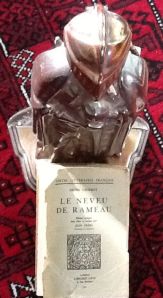
The CERN ZOO book (June 2009) originally based as an anagram of its prequel books CONE ZERO and ZENCORE, with 'Cern Zoo' *subsequently* found to be real terminology from 1995: http://www-d0.fnal.gov/~gwatts/ud0/past_speakers.html


The CERN ZOO book contains stories about the Cerne Abbas Chalk Giant and the Large Hadron Collider and Zoos. My comments on the stories from a real-time review http://weirdmonger.blog-city.com/cern_zoo__a_dfl_realtime_review.htm on 17 October 2009 that take on a retro-causal significance in the light of links below.


November 2009: HADRON COLLIDER'S OWN SABOTAGE FROM THE FUTURE - VIS-A-VIS 'CERN ZOO' plus bird with beget bread. AND NOW (Nov 25, 2009): BERNE ZOO INCIDENT AND NOW (10 Dec, 2009): NORWAY SPIRAL LIGHT. Links above that are astonishing connections that the book makes between the Large Hadron Collider and events in the world.


Well, it's good to dream. :)


CONE ZERO


The importance is not in the cause of events but that they happened at all to make a perceptible pattern of connections.

Thursday, November 26, 2009

Berne Zoo Mauling - Hadron Collider

Nobody has yet connected the recent start of collisions at the CERN LHC, Switzerland with yesterday's mauling of a man by a bear at Berne Zoo, Bern Park, Switzerland.
Quite seriously and astonishingly, the common factor is the earlier published book CERN ZOO as described and illustrated HERE.

This is also connected with recent upsurge of retrocausality TV fictions like 'FlashForward' and 'Paradox' and 'Dr Who and the Waters of Mars' - and the two scientists who recently suggested that the Collider may be sabotaging itself from the future ... and the bird that dropped the beget bread into the Collider?

Saturday, November 21, 2009

The Final Fanblade

Last night CERN turned the crank of the Hadron Collider. In the next days or weeks we shall see, through their spinning smoothly by synchronous chance or clashing with random skewed wings, what they will blow into existence of the Universe’s meaning or meaninglessness. Its demise ... or denemonisation as what? Whether ‘The Inherited Clock’ will bite and snag our curiously poking human finger or will make it new again minute by minute.

I was wondering what is the opposite of ‘collision’. Collusion?

I have long sent my stories around the Weirdmonger Wheel, some in opposite directions to others, others in the same direction as that of yet unwritten ones and head-on towards others never to be written, and vice versa, so as to discover something about ‘a-man-too-mean-to-be-me’ that I call ‘I’. A self-indulgent or solipsistic spin of the roulette wheel, the balls probably ricocheting out into endless space because I spun it too fast.

The world’s single stripe-streamed balustrade of fanblades – flash-forwarded by dint of hindsight into today’s imagined subliminal unison wheeling – is what I call scientifically ‘the last balcony’: a temporal as well as architectural term with many competing meanings of protruding frailty and symbolic strength. Of final welcome or forever’s first farewell.

The immediate bow-wave of far-future’s collision of ‘Never’ with ‘Now’.

The final spellcheck will hopefully alter collision’s first i to u.

Thursday, November 19, 2009

New Fanblade Fable (8)

The living-room felt a sense of its own perfectibility. A Haydn harpsichord sonata in surround-sound, hyper-minimalist furniture and a sculpture of an old-fashioned Compact Disc industrially slit from the centre into fanblades splayed-out for optimum air-resistance when spinning. It set the teeth on edge to imagine it inside a CD Player emitting a damaging clatter beyond even the most avant garde of composition.

There was also an old-fashioned diary or journal upon a near-invisible glass-table. The last entries – on three consecutive days – were found to be:
Zencore
Cone Zero
Cern Zoo

The previous days bore normal entries of events, thoughts, appointments and so forth. Scouring these essentially un-mysterious passages for clues as to the meaning of the three mysterious entries was a pointless activity. The fact that scouring was attempted at all must have served some purpose in hindsight, however. With no further attempts being made, untoward amounts of time were now not to be wasted in doing so by whoever.

Perhaps all entries worldwide were abruptly first left blank on the same day but how many more days were left blank between then and now?

Anything can be downloaded from anything these days, even empty minds. Flashing forward from blog to blog.