Saturday, January 02, 2016

LOST GIRL - Adam Nevill


27 thoughts on “LOST GIRL – Adam Nevill”

  1. one
    The father’s gratuitously urgent reporting (but to whom?) – by means of a text that drills fluently deadpan again and again into any sensitive reader’s brain – upon the eponym’s loss by assumed abduction from the fair-tilled tierments of his Torquay garden, this core loss being the point of focus set against the dire careless spread of fair climate’s loss seen in mass shift of near-drowning populations … and another loose loss is hanging by a relationship’s fallible thread: his own careless loss looming, aggregated to the immediacy of the core careless loss for both himself and the eponym’s mother…
    Hooked by loss.
    Nevill’s own language is, despite my blurred undercurrents, crystalline and clear.
    I will try to ensure there are no plot spoilers, inasmuch as a real-time review might let slip a spoiler before it actually becomes a spoiler.

    1. two
      Having a daughter of my own, born many years ago, I can tell that the empathisable yearnings involved here for quite a small version of what would have been my own lost eponym seem spot on, cloth cat and all. Fiction is often good at reconfirming the learnt truths of self.
      From that father’s particular core of loss to the wider spreading-out in time to the refugees and other millions populating our island and the apparent crunch of his own next stage of ongoing work are new to me but feel true. The new becoming true is what good fiction does, too.
      Both processes together, like here, are best.

  2. three, four
    The mix continues of a personal particularity and a near future’s dystopic rump that is brilliantly conveyed as accretively believable based on what we know today.
    Known only as ‘the father’, he is obsessively and ruthlessly conducting a retributive tontine: a cross-checking crusade as organised for him by a real ageing film actress towards his tracking down all those eponymously lost in translation. The language is spectacularly powerful, each word a lynching by semantics.
    Amid rooms full of oldsters’ trite ornaments, these barricaded bungalows…

  3. five, six
    “Perhaps part of his jittery inner parliament now relegated more compassionate impulses to the back benches of his mind.”
    That takes no account of the government or opposition whips, I guess. A telling metaphor, as is the text’s own graffiti, etched on a Paignton (painted) wall as well as on itself by its own words. A dead monument to once ancient hope, abstracted from dystopia. A climatic and child abuse dystopia. I literally FEEL the impulse of the father as his assisted retributive tontine spins out towards eventually finding his eponym, even if it takes years . But that ageing film star? She would indeed be ageing by now, I assumed. I still have my hopes it is her, stitched from words – not as a spoiler graffiti but more a stylish cultural image – despite counter-hints from the text itself.
    This is strong stuff, stronger by not being over the top. Not yet, anyway. Book and its accompanying dreamcatcher, alike.

  4. seven, eight, nine
    “It wasn’t only darkness they feared; it was what the darkness did to other people and to them too.”
    Our future dystopia is itemised deadpan but with vivid implications for all of you reading this book, unless you are as old as I am, and two of its concomitant migrants lurk sadly in the attic at the father’s next ‘visit’, and this is indeed a deadly tontine if only by default, with the ogreish caricature of a child molester and his thin pal taking the due wipe-out of repercussions of what had been hidden from us till now and, seemingly, from the officiating ‘film star’ on the phone. This domino rally is skilfully chocked around with an acutely styled theme-and-variations upon horror genre tropes supreme. The next and promising link toward the eponym as the tontine’s reward is set. Meanwhile, Brer Rabbit, he lay low.
    “…a red-black carousel, emitting rusty iron music, played backwards.”

  5. ten
    …and while he lies low, the father, as I do, too, for a while, we are ‘treated’ here with a continuation of a most believable, deadpan, seemingly inevitable portrait of our world around. 2050. Probably the most frightening such portrait I have ever experienced, in or out of fiction. Stronger in such words than filmic pictures.

  6. eleven
    There’s something going on here, something perhaps even the text itself doesn’t yet know or will never know. After just reading a skilfully laconic word-sketch of the laconic gangland coastal people, well-heeled, by pools et al, and the earlier graffiti and painting that now seem to entwine with some ‘King’ connection, and, today, my finding out, by googling, that the ‘film star’ facilitator on the father’s phone was born, in real life, if indeed it is that film star, on November 22…
    The father, he still lies low.

  7. twelve, thirteen
    “They needed to whisper soon, or spit the story from a reddish, tooth-splintered mouth, to lead him nearer to the one.”
    The one, the eponym.
    This continues to be strikingly dystopic stuff, factoring the evocative genius-loci of today’s Torquay into an inevitable future, a future in turn extrapolated from NOW, us, today, the IS state, the migrancy of the soul, the seeds of horror, or so I myself extrapolated from this text. Extrapolations upon extrapolations…
    But this text’s also word-slick ACTION stuff, thriller stuff, mystery crime stuff, gangs called Kings with gunfights, and individual duels. The pervasive graffiti and info-snatching with the next mysterious clue towards solving the erstwhile abduction of the eponym and its possible recovery-mode.

    • Two pages on…
      “…but there are too many of them for you to get through. I can’t let you run round the county executing the shite. You can’t play this kind of lottery for much longer before you buy it.”
      The ultimate tontine, indeed. The optimum satisfaction of the dreamcatching of books is discovering you have been on to a winner.
      Real-time reviewing hyper-imaginative literature is like placing a book on a planchette for a séance.
      I’ll be right about the Kennedy assassination date next!

  8. fourteen
    “His solipsism had been planetary in size.”
    An amazing concept, an epiphany for this real-time review, the particularity and the universal that I sensed earlier, here blended with the IS state, a Ligottian anti-natalism jihadised by the strength of hyper-literary truths.
    And emblemised on walls.
    The deepest possible sensibility of lost children particularised and universalised again and again. This is powerful writing, as the father sobs at seeing the figurative woods for the trees at last, but what trees, what wood, what word-pandemics.

  9. fifteen
    The crisis is ongoing.”
    Christmas Day doesn’t change that.
    Two separate mid-codas, the father’s nightmares about his ongoing tontine, and the itemisation of the surrounding SARs, anti-anti-biotics, desertisation &c., the migrancy of the soul, the crisis itself, all spinning round the lost eponym.
    On a personal note, one of my own Christmas visitors has brought with him a few films on blu-ray (and his own blu-ray device), including one film that coincidentally features the film star from this book’s characters, a very strange and disturbing film where you see her evolving into our world as if she does not belong to it… A foundling eponym, rather than a lost child? I rarely watch films.

  10. sixteen
    “…her little patrols for snails, woodlice and ants, the endless hospitals for the poorly insects, crushed by her own little fingers as she transported them inside second-hand plastic beach toys.”
    The eponym’s childhood game when a would-be Madeleine McCann, I guess, now become the world’s dystopia. The father, he lies low with the mother, the mother whose younger self is used in time-extrapolated photoshopped versions of the eponym…. Until he receives a new lead in the tontine from, not his handler film star name, but the earlier policemen link turning a blind eye.
    Meanwhile, it is safer in New Zealand, it says.
    Like Madeleine photos, a world’s climate extrapolated forward or backward is just part of the planet’s solipsism?
    Like today’s news of weather warnings…
    “‘Hold on to your hat though, because the rains are coming.’
    ‘It’s going to be wet for sure.’”

  11. seventeen
    “He loathed female grief because of how low it made him feel.”
    As the father reaches the next guilt-ridden, deadly decision-riven, hate-riddled, snake-pitted stage in his tontine of visits, at the undeserving municipal-care-home-sized abode, its rich accoutrements earned by a trafficker of this book’s emotions as well as of the people in it.
    And with that trafficker’s hangers-on, I realise that this book for the first time makes me really believe that this sort of depicted outcome for humanity (already set to run by today’s inverse ticking time-bomb of its own planetary tontine where all we readers exist) REALLY DOES HAPPEN IN ALL OUR FUTURES.
    The painting on all our walls.
    The father can’t decide whether killing his informers will hinder or help his taking further the information they’ve given him. Especially where death means nothing in the IS (being) state of a planetary solipsism.
    Remind me…
    “One thing at a time. Be systematic.”

  12. eighteen, nineteen
    “The horrors of his actions travelled back through his limbs like vibrations.”
    There is something powerful in this text pursuing the father … every father?
    Pursuing, or inciting.
    Horror genre tropes made from words and then made into something more horrific than any tropes or words could otherwise have become. Filters can work both ways.
    I don’t know whether I read about it in this text or I dreamt it as a separate tableau distinct from this text, but I just saw the McCann parents conniving with that pursuing thing…
    “All about him were faded pink walls, orange curtains, china oddments rimmed with black dust that still managed to hang from the dross-furred wall brackets; an antique ghost-installation of bank holiday weekends for poor couples in decades long gone.”
    So, what I do I know? I know nothing. I am just a naive child of the bulge, now grown old, born from those poor couples in decades long gone. Swept by this book’s swollen tides beyond my own future into that of my children.

  13. twenty, twenty-one
    “Maybe it doesn’t matter any more. Have you seen the news? Who’d have thought a pandemic would have an upside for someone.”
    The father dwells on the information from his latest tontine shoot, and something seems a perfect dissonance of coolness, laid-back at some of the particular implications because “the planet now seemed to be pursuing a purpose of its own.” Its own retrocausal anti-natalism as a Gaia.
    And he chews this fat, somewhat, with an oldster in a pub who sounds a bit like me if I lived that long! Even today, I gaze at the windfarm installation on the sea’s horizon where I live… And extrapolate darkly from the particular to the universal… And back again. All confirmed, at last, in a timely fashion by the book’s own installation of wind turbines voiced by its oldster in the pub…
    “An installation from a mad artist. That’s what I always think when I see them on a clear day. The ones still standing. There were two hundred out there, twenty years ago. I watched them go up. A fitting sculpture upon the tomb of a species now. The ruins of a civilization already falling, don’t you think? Red herrings, false hopes.”
    and
    “There’s no whimper or bang, just a long series of catastrophes. Year after year, decade after decade, always worsening, always leaving things changed after each crisis. The past is unrecoverable. Extinction is incremental. There is no science fiction.”
    This is a nevilla of characterisation supreme, voiced by someone like I once might have become. A pub’s laconic doomsayer, but in the book he seems not riven with my angst, as, today, I gaze, desperate for deep sleep, at the the wind turbines…
    There is indeed no science fiction any more, but what about the synchronised shards of random truth and fiction, the leitmotifs of ‘incremental extinction’, the ultimate gestalt as eponym? The dreamcatching of special books like this one.
    Meanwhile, the father’s latest ‘film star’ handler seems to have changed from beautiful to hard-bitten…

  14. twenty-two
    “…an enlumineur, and once devoted to King Death,…”
    The father’s tontine drives relentlessly onward to a hopefully still living eponym, amid all the info the new ‘film star’ imparts on the phone, dangers and hopes, many bottom lines and rare, if any at all, top lines, I guess.
    I sometimes think of the King of tall dark avenging strangers in small communities of terror as a plague, or is it the King in Yellow? But then I think of another King who others still think alive, a new celebrity handler by the name of a singing and acting legend? Just me.
    You know this section of the book talks of “one hundred thousand dead pensioners.” Yesterday, in a generally forgotten community quite close to where I live, one pensioner actually shot another pensioner in the institutional home where they’d both been harboured for care, just round the corner from a different home where a loved one of mine is thus harboured. I saw the significant police presence just down the road with my then not knowing why they were there at all. It is not just the besieging weather but all our separate personal tontines’ synchronicity with a vast migrancy of souls that beckoned this prophetic book into being… You could not make it up, even if you tried!
    “The last sentence seemed to emerge from a recently discovered pit inside himself, and it was as if his conscious mind could not catch such utterances from this pit before they left his mouth.”

  15. twenty-three
    “Through the rain’s drenching violence, a dark shape snapped out its length.”
    It seems acutely appropriate — to my sense of the particular and the universal being each side of the same filter, flowing back and forth — that I should be reading this description of the father’s next stage in his tontine, suffering the same weather, “a month’s rain in twenty-four hours,” weather that is exactly happening outside my window at this moment, the same wind, too, making the wires act like skipping-ropes, “the wind trying to lift and roll him at the same time,” following UK’s recent storm Desmond, and today’s storm Frank (my middle name being Francis), and I wonder when they get to L they’ll call that storm Lewis?

  16. twenty-four
    “And within the void, the beam of white struck a sickly yellow face first, its eyes red and vacuous, the mouth open. The face grew in the disc of illumination until the father realized it was attached to a hairless head, crudely crowned, but barely supported by a thin body, bound more than robed in red. The figure occupied a rust-coloured throne.”
    A version of the King in Yellow whose pervading presence I predicted earlier? Certainly Royal, with its own reference to “pallid shapes”. Perhaps King Death is the King in Red? A new icon for this book’s still evolving mythos? Whatever the case, this is the preamble to some astonishing passages, powerful and disturbing, nightmarish, an installation of the world’s entropic state in the mid 21st century, I guess, of which we have had some believable indications already, accreting, like notches in a geometric progression, a progression still in motion from what we know today. An installation of sometimes pure artistry, at others of admitted grotesque amateurishness as if inchoately created by a primary school child. One wonders at times if this vision or installation is over the top, exaggerated, too horror entrope-ic, until we realise that this next stage in the father’s audit trail or tontine is the essence of this text itself, the text perpetrator’s own installation in words. Installation of an installation by a crazy scribe, or, rather, a perceptive scribe empathising with an increasingly crazy ‘father’ who is creating his own installation of an installation…as the eponym sort of crystallises as part of this installation. Shockingly.
    The outcomes are still uncertain. Plot spoilers hopefully obviated by selective dreamcatching…by optimal surveillance of the plot’s optional inner worlds that may or may not apply especially while still being in-media-res, as we are.
    “…the world’s deterioration, a course set in motion that could only gain a greater momentum.”
    “…funnelled further into a hellish gullet he could not anticipate the end of,…”

  17. twenty-five, twenty-six
    “Bewilderment and fear ran his parliament today.”
    Handler versus handler, switching films, starring in different roles, or merely inevitable confusions of human betrayal? And the captive — leading the father, the father hopes, to the eponym — calls the father Red Father, yes, Red father, and this captive, a “camp puppet”, talks theosophical drivel, or is it that I myself talk such drivel deliberately in this review so as to conceal the spoilers such as the loaned scrawny underwear of death? Or is it the invaluable Ligottian tontine prize of death where the Ligottian philosophical anti-natalism has already failed to prevent your life at source? The prize of being able to become unhitched from this shitty pointless life?
    Meanwhile, whatever the drivel or nonsense reported within it, be assured that this book is compelling no-nonsense stuff in no-nonsense prose.
    “We are nemo.”

  18. twenty-seven, twenty-eight
    “No more sleep, no more resting for the scarecrow. No more disinformation from an addled consciousness.”
    The tontine pans out further into the clawback of the spoilers themselves, spoilers that I dare not otherwise divulge. A further stage beckons, a stage in the tontine no doubt to another town, another victim of the father’s tontine, to reach the eponym. I have used the word tontine so often in this review, it has ceased to mean what it is supposed to mean. Tontine tontine tontine tontine like time ticking on this New Year’s Eve of my own real-time. And tontine is a word that this book itself has not used at all. Like eponym.
    Because I am the buffer against spoilers creeping out.
    There is a madcap rooftop scene in these sections, meanwhile, that embroils the father in the form of an acrobatic homunculus wrapping legs around his middle, as if trapped within the deceptively muscular words and by the meaning of these words. Followed by some more garbled theosophical or death-evangelistic nonsense. An apocalyptic rant about dreams and death, and you never know who is more frightened – the character who is ranting or the father who hears the words from within the words or the one who reads the words from outside the words? Or even the one who WRITES the words, bringing them from the edge of thought into existence on the page? An Installation of an Installation of an Installation.
    “You are full of shit!” Someone shouts within the book.

  19. twenty-nine
    It seems right that I have crossed over some threshold of time before absorbing this effectively discrete backstory that blends into the father’s possible synergous liaison in the ‘real-time’ with the arguably crazy death-evangelist – to fulfil both their separate aims, set against the backdrop of news items of the world’s state.
    The backstory itself is an incredibly mature study of immaturity, a strong installation of a precarious installation of emotions, narcissism, revenge, selfishness between two parties, expressed by well-couched passages that would stand up in any circles of modern literature. It deals with all manner of complex but believable weaknesses and strengths between a man and a woman, something prefigured by a chink in the father’s integrity shown at the beginning of this book.
    (I wonder if the first ‘film star’ handler in real life will be hired to play one of this backstory’s two parties when it is finally filmed for the cinema?)

  20. thirty, thirty-one, thirty-two
    “The noises he made were the deep cries of an animal reaching the last of itself.”
    I sense myself in outcome-suspense as the father’s audit trail of spear carriers (formerly known as tontine) reaches towards the now hopefully glimpseable eponym. This, I guess, is what reading thrillers is all about.
    “…new involvements, possibilities, second guesses, and terrors. And all set to the soundtrack of the man’s esoteric and mystical nonsense.”
    And the father’s companion or captive is like another self with its own home truths, ulterior motives, advice, a crazy conscience, as it were. And, so. surely it is no accident that the author has given him a name with the letters for ‘ego’ embedded.
    Home truths and eye-opening homilies like…
    “He wondered why men were so poorly built to withstand suffering when its possibility had always been so assured.”

  21. thirty-three, thirty-four
    “There were no reckonings for evil.”
    I now truly dare not open my mouth for fear of spoilers spilling.
    Rest assured, though, you cannot rest assured.
    I will merely remark on an astonishing thing for me personally. I can’t remember already knowing the eponym’s actual name till now. But, if this is true, the word eponym seems preternaturally prescient by assonance with it!

  22. thirty-five
    “‘But I think you’ll agree that the clean-up they have performed in your wake has been extensive. Though the washing of their spears has had some unfortunate . . .’”
    This, I sense, is the start of this book’s extended coda, one which is potentially more deadly than the meat it follows. As it admits itself, “a new script”, as the father, now at the eponymous core, has a fresh host ‘ego’ to whisper in his ear about the home truths of foreign attack by bug as man and bug.
    “There’s just too much going on these days, don’t you think?”
    A fresh host ‘ego’ who is a sort of swaggering soul of the party with his many chat up lines and boastful ‘clear thinking’ about chaos.
    The Penny eponym’s saviour? Or a new nemonym? The Nemonymous Night? “‘This is an archetypal zoonosis, from the animal to the human animal.”
    “Cumulative collapse.”
    Tontine’s Antidote?
    “…everything is actually far worse than you think and have been told.”
    Final solution?
    The ‘is’ state of Beings and Beheadings shown in earlier scenes – we reach the new host of parasite ‘ego’s’ ‘doubt’ as instilled by the father himself….
    Literature?
    I sense — as separate, so far, from this book, but instilled by this mighty book nevertheless — that literature can itself be the antidote to that ‘archetypal zoonosis’.
    As filters can work both ways, so can ‘doubt’.
    [“Real time – when past and future twist around each other.”
    “…the connections between all things, and how those connections play a part in healing.”
    Two quotes from Christien Gholson’s story THE SPIN OF THE STARS in INTERZONE #260]

  23. thirty-six, thirty-seven, thirty-eight
    “…all those who had become empowered in the endless crisis, twisting the truth and adverse circumstances, remodelling perspective to suit their own interests.”
    They have always said that events can turn on a sixpence. Here a penny? “And for a moment, the father could believe that a great worm had finally swallowed its tail and that all had come full circle.”
    This is where arises a battle of the father’s two vestigial ‘ego’s’, a battle pitching means against ends, justice against pragmatism, blood-children against earnt-children, insanity against true faith, wrong-headedness against be-headedness, and more.
    Each element of each dichotomy so close to each other that they almost BECOME the other.
    “…this scourge is no accident either. It is a blessing. A gift from out of the chaos.”
    “What walks beside us, in the confinement of our signs, brought us together.”
    This book addresses verities – in the shadow of chaos – verities that didn’t know they were verities at all until they were thus addressed in this book to face the doubt that all verities have built in.
    And it seems we still have a few more chapters to transcend!

  24. thirty-nine, forty, forty-one, forty-two
    I’ll leave you to decide whether or not you now have the ability to follow – even touch – this book’s eponym at tontine’s end, that prize of ‘life, the universe, everything’ – as represented by this closing clutch of shortish episodes…
    Even the two fingers on the Sistine Chapel ceiling almost touch.
    All I know, for me, personally, is that this book has made me wonder whether I abducted my own children – as I watch myself, many years ago, like most of you parents often need to do, deciding to almost drag an obstreperous wriggling child towards what you feel is good for it: You.
    Present at its original natal throes themselves, I was then one of two collusive culprits to witness that event. I now witness a new storm of breaking waters from the world’s darkening sky… hopefully to wash the graffiti from the wall rather than smear it into even uglier shapes. But it often seems a hope against hope.
    The last dichotomy: afterbirth against afterdeath. Because there was nothing before or between.
    Except, today, this mighty book?
    end

    Tuesday, December 22, 2015

    Dreamcatcher favourites 2015 - out of hundreds read and reviewed by Des Lewis


    One thought on “Dreamcatcher Favourites of 2015”

    1.    
      My runners-up for 2015, those that came close:


    Monday, December 21, 2015

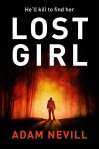
    CASSILDA'S SONG

    Cassilda’s Song

    image
    Black Stars on Canvas, a Reproduction in Acrylic by Damien Angelica Walters She Will Be Raised a Queen by E. Catherine Tobler Yella by Nicole Cushing Yellow Bird by Lynda E. Rucker Exposure by Helen Marshall Just Beyond Her Dreaming by Mercedes M. Yardley In the Quad of Project 327 by Chesya Burke Stones, Maybe by Ursula Pflug Les Fleurs du Mal by Allyson Bird While The Black Stars Burn by Lucy A. Snyder Old Tsah-Hov by Anya Martin The Neurastheniac by Selena Chambers Dancing the Mask by Ann K. Schwader Family by Maura McHugh Pro Patria! by Nadia Bulkin Her Beginning is Her End is Her Beginning by E. Catherine Tobler and Damien Angelica Walters Grave-Worms by Molly Tanzer Strange is the Night by S.P. Miskowski
    Edited by Joseph S. Pulver, Sr.

    Chaosium 2015

    My previous ‘Joe Pulver’ reviews HERE

    Strangely, I had two stories in Chaosium books… in ‘Cthulhu’s Heirs’ (1994): Watch the Whiskers Sprout – and in ‘Song of Cthulhu’ (2001): Fall From Grace.

    When I real-time review this book, my comments will be found in the thought stream below or by clicking on this post’s title above.
    22 thoughts on “Cassilda’s Song

    1. Black Stars on Canvas, a Reproduction in Acrylic
      by Damien Angelica Walters
      “A yellow that hurts her eyes if she focuses on it too long, which is ridiculous because it’s just a color, but it’s a color full of wrong.”
      This is the perfect start. A woman chosen for or condemned into an audition with the Yellow King…we are never sure. But her obsessive trial paintings – and her bosom friend who is perhaps not to be trusted in such yellow vyings? – make me literally feel compelled to eat the actual words of this story as Van Gogh was said to eat yellow paint.
      This whole book itself ‘unmasks’…with this darkly, gorgeously figurative tontine towards artistic perfection and acceptance, interval by interval…
    2. SHE WILL BE RAISED A QUEEN by E. Catherine Tobler
      “There, I listened to the echo of the world beyond the walls of this room, distant voices trying to unknot the problem of me, me who did not even have a name.”
      A rich rhapsody of Angelica’s opened raspberries and other images harvested like fruit from KiY, blending Gilman with Gillman, like women cutting gills into men, an accretively self-aware Kafkaesque Metamorphosis, except it is another who becomes a bug (“She fled me then, a skittering bug, her skirts frantic across the polished floors.”) while this self.-aware narrator finds herself discovered gradually, not metamorphosed into a bug, but into a mermaid then into a Queen born from Lake and poetic words, entering a world of inferred homely pursuits, with black stars disrupting the discoverers’ ways, a yearning, a dream, papered in yellow. There is no way any review can convey everything herein. You just have to absorb it for yourself, break it open, unbutton it. Those who stumble not and do read it to the end win all.
      (My real-time reviews usually are written after a single instinctive reading of each story, as is the case here. If I read this one again, I may write something quite different about it. It’s that sort of story.)
      “In this place, none will feel the need to regard me as anything other than what I am.”
    3. YELLA by Nicole Cushing
      Powerful, frightening, inchoate stuff!
      A sort of basement Mrs Rochester, not the attic, heard screaming, visited with carnal knowledge as she is by the Yella Angel, or so she says. Serial and deep impregnations and promise of a later impregnation for her Mr Rochester, making him “sissy”…
      All the -ing words in this text have their end g elided, that God of ending.
      My earlier interpretation of some words in THE YELLOW SIGN HERE might be pertinent to this disturbing experience of a read.
    4. YELLOW BIRD by Lynda E. Rucker
      “…a big old hole like a monster had come along and torn it open.”
      This is as creatively inchoate as the Cushing, as similarly ungraspable as Walters and Tobler, but with a deep daughter-mother yearning that permeates bereavement as well as the haunted homestead detritus and environs occupied by generations of their family.
      It is an evocatively atmospheric copy of the old Yellow book through which this yearning is ignited. filtered, near-spurned and hopefully transcended.
    5. EXPOSURE by Helen Marshall
      “Dim Carcosa. Lost Carcosa. Strange the night where the black stars rise. That’s what the guidebook had said.”
      This time, for me, Carcosa did not soar, arc or even creatively scar, but felt crass. But this story may work for others, echoing the Rucker mother-daughter relationship transposed and stranded on a tourist island…
    6. Just Beyond Her Dreaming
      by Mercedes M. Yardley
      “She still looked at the moving wallpaper and heard the whisper of dead things.”
      This is a moving, artfully deadpan account, of an orphaned woman called Hester inheriting a family through being her husband’s third wife. But she does need a simple wild token from her husband to show he has at least one feeling for her beyond giving her material comfort.
      And then she found a potential lover who is there as real like a child’s ‘imaginary friend’ striated by a yearning from this book’s fields we know. Masked, tentative, well-intentioned…
      “That was the first time she and her lover never met.”
      It seems apposite for my personal consciousness of this book’s fields we know that the first meeting with the potential lover follows this…
      “The Bible said that Mary, Holy Mother of God pondered sacred things in her heart.”
      Today of all days.
      But she still has the yearning…
      “Away from something or toward, she wasn’t sure, but what she did know for sure was that she had something to feel.”
      And the ending is purely apposite for this book’s fields we know.
    7. In the Quad of Project 327
      by Chesya Burke
      “She hated to admit it, but she was beginning to relate to the nickname, Z. It was different—unique—without her needing to have had to earn it at all.”
      A plain-spoken telling learning story of school bullying with racial implications. Meanwhile, for me, the chance preternatural finding of another book – by means of a baseball game’s scrying shot described within a different book (a book found amid the undergrowth of the two books’ combined synchronised shards of random truth and fiction) – is a literary epiphany. But…
      “Simply because one of them had imagined it and the others had allowed for the thought to prosper fully within their collect imaginary.”
      …begs a shocking question of who or what is that source imaginarium.
      The alpha and omega of Yellow Jungianism.
      223 – 327
    8. STONES, MAYBE by Ursula Pflug
      “Was he so prematurely aged, inside, to believe something only very old people believed otherwise?”
      A perfect Pflug, blending memories, regrets, and a sort of alternate world wish fulfilment, as Peter deals in his mind with a family lakeside property, its household objects, its commercial business, its clandestine affairs, its black stars or stones, its hoped-for children, one of such children, I wonder, to be that Messiah to be born, if not in reality, perhaps by means of a book…?
      “Maybe for Myrtle it hadn’t been the book but something else. The percolator parts, perhaps, or the tin spoons.”
      “Of course, there was one small snag in this offspring fantasy; you had to have a mother first.”
      “he’d briefly seen their future spread out before him, pretty and comforting as a star quilt.”
      “She wore silver dream catcher earrings,…”
      “Delusions could fall out each morning, come out in clumps in his comb. Marti had once said he looked cute balding, that he was lucky he had the right shape of skull for it.”
      There was a resonant ‘cuteness” to Mr Jefferson’s self-styled ‘ass’ in the previous story, a story that prefigured the book that threads this book’s fields we know. A book within a book found and all-blending.
      Here blending this author’s own ‘Memory Lapse At The Waterfront’ with the percolators, tins and other household objects of her story “Repair”.
      We all have to repair our lives at some stage, if not by death, by the conscious re-figuring of memories and the book found like a household object in a kitchen cupboard.
    9. LES FLEURS DU MAL by Allyson Bird
      “Dumas had the black tulip.”
      ‘The Black Tulip’ (based on Dumas) is the first TV drama serial I remember watching as a child in the 1950s.
      And that is just the start of a dark cornucopia of artistic and literary references. Probably this Bird story is the most amazing work within this book’s fields we know that you might ever read, and need to read again, but perhaps without fully transcending its apparent personal aspects (one of the paintings discovered by a writer of weird in New Zealand and “Jealousy within groups of artists”) and also its universal references – a work to be read time and time again to try find the pure base colours of its foundation canvas that truly underpins some of these creatively staccato sentences and its otherwise poetic tentacles of Carcosan rhapsody and intentional fallacy.
      I will only mention below a few of my own found references deriving from and filling out what I earlier dubbed the Yellow Jungianism…
      Bird’s time travelling Juliette who creates that very Jungianism, it turns out, by visiting Leonora at different times, both of them in a subtle Sapphic Union supporting this book’s earlier ‘collect imaginary’ thus revisited within this book’s fields we know.
      “Paris. July 1938. Fritz Henle would be here now taking his photographs, some in Montmartre, memories of a wonderful city before the occupation.”
      I have just finished reviewing (HERE) ‘The Siren of Montmartre’ by Leopold Nacht, a book that is steeped in a sensibility of German occupied Montmartre and resonates coincidentally with this, Bird’s own siren-like story.
      (This recent real-time review actually links HERE to my own Baudelaire ‘lurching together’ verselet from the 1960s. It feels as if Juliette actually visited ME when I was writing that verselet then! And perhaps even more remarkably that review HERE linked to the three Gongoozlers!)
      “Why would I live in a world created by someone else—it could turn out to be hell and I have enough of that already. I don’t even know if you really exist.”
      The explicit ability to create fiction wherein we can inhabit for real.
      And then, of course, Juliette must have visited our own little on-line coterie of the noughties, I sense, as well those Gongoozlers in 1988… It seems all there…
      “One day I won’t be left out. The women will have a voice eventually. I’ll be recognized one day.’”
      “‘Ah. He’d insulted me once a very long time ago so I thought I’d do that. Not my greatest hour but funny at the time.’”
      “‘There was another who offended you.’
      ‘The other—mmmmm there was one who played Bottom in the Shakespeare play and when he tried to remove the head it wouldn’t come off—everyone said the head looked so real.’
      ‘What happened to him next?’
      ‘Sideshow for a time then his real head was put back on. He still thought he was an ass though so he was committed to the Belmont Mental Institution.’”
      “Juliette had many enemies, too. There was one in particular who hated poets, writers, and any artists who ‘interpreted’ the yellow sign—he would try to bring about their demise in some way. Silence them. Shut them down. She knew exactly where he was and Juliette had been told that he would not catch up with her just yet. She always lived on the edge.”
      Juliette was even present, I sense, when Gilman wrote the Yellow Wallpaper and Van Gogh ate his yellow paint.
      I feel sincerely that this is an important work in the realms of weird literature. Eminently and strangely satisfying. Preternaturally startling. And I have only scratched the textured surface of its references, dealing mainly with those that are meaningful to me. Those meaningful to you may be quite different and I can easily collect-imagine that they will all be there waiting for you to find when you read this remarkable Bird work. Each ladder of references, a Yellow-seeking tontine?
      Above all, this work, unlike the earlier one above I reviewed, now does make Carcosa soar, arc and, yes, scar. Scar indelibly.
      (Meantime, beware! – Juliette may leave things in your own work to show she’s been there.)
    10. While The Black Stars Burn
      by Lucy A. Snyder
      “The sharp, cold jolt made the puckered scar in her palm sharply ache, and the old memory returned fast and unbidden:…”
      An indelible stigmata instilled by the movements of a musical work in words, instilled literally by her father real, and figurativeLy by her father yellow, combined or alternating. The former an alcoholic composer who encourages his daughter in music, leaving, after his death, violin sonatas for her to play, for she who had been made to think “that she was quite plain, good as a violinist but unremarkable as a woman.” A threnody for this book’s writers?
      This story has the common flaws of humanity transcended when blended with a Zannesque or Scriabinesque musical sensibility that tells more of this book’s fields we know than anything written in philosophy or sociology books. Here it is by the power of contemporary classical music, a factor that was likely to appeal to the likes of me. And it does with a human re-enablement that only fiction can compose within us. An arc of music between movements.
      Dabbling with diabelli.
      “…and the stark black notes transubstantiated into soaring music as nerves drove muscle,…”
    11. OLD TSAH-HOV by Anya Martin
      “The only difference was that he had a short stump instead of a curled tail like my own—its absence likely a scar from some previous battle.”
      A growing story, where the meanings of words mean something in their own tongue like the title’s colour and the ending’s self that some end up calling bad – whether or not these words are in your tongue at all, a story that continues growing its meaning upon you, as you realise who or what you are within it, and the relationships that the others have with you, and their own changing circumstances. Some things like love and birth, others like war. The accoutrements of ownership and survival, and variations between, of that holocaust in the reader’s own history if not your history, until you return full circle to the prison ‘chamber’ where you started.
      Who the King, what religion, what creed, what mongrel breed, what colour?
      Until then you never knew that you could cry.
      “I wondered if he was disappointed that I had found a savior.”
      “This place was not the color of the sun, but different colors, colors that resembled shadows to me and for which I had no names.”
      A story you keep thinking about, because you are still in it.
      In some religions, they end up throwing stones at you. Even rocks.
    12. The Neurastheniac
      by Selena Chambers
      “All the women here make poetry, while I write it like the men.
      The women hate me and the men hate me and I hate myself.
      The men who like me like me because they hate women and they can look at me and see themselves in a form they could fuck.”
      That contemporaneous example of her Ferlinghetti-like poetry (poetry that sometimes in this work approaches, to my eye, fin de siecle decadence) is a section of this delightful patchwork quilt of impressions and examples of the work of Helena Heck (1937-1968) whom KiY’s surnamesake surconscious author Selena jams for us like jazz. She even has an alternative name for Carcosa that again soars, arcs and, finally, with a fine escritoire flourish, scars with a hand from a gramophone horn, as she (author or subject) tells us strikingly of her trespasses, under the influence, into the Lethal Chambers with Ligottian anti-natalist trills. The only flaw is the inability to spell ‘stationery’ when meaning paper products.
      I enjoyed it as much as the Bird.
      I once dreamt I met Heck on the Mall. They didn’t have pizza those days, but we ordered anchovies on toast.
    13. Dancing The Mask by Ann K. Schwader
      “UNMASK THE DANCE OF DARKNESS
      She blinks at the caption a few times before realizing she’s seen it on the mall.”
      Drawn by various urban messages in urban hard times, messages writ in a mysterious hand on paper, a ballet-dancer, crippled by an earlier balletic accident, reaches a healing of dance when swaddled by a whole array of resplendently poetic images from the this book’s fields we know. You know we know such fields because you already knew the keynotes of everything already placed in this book. It is as if something you can’t do is do-able simply because you are already doing it. The masked world of we readers here is unmasked for us to see that retrocausal truth.
      Inspiring.
    14. Family by Maura McHugh
      “Once we’re off the straight roads it’s a twisting drive. Are you sure you remember the way, in the dark?”
      …as only the deep-seated feel of families can replicate upon our emotional and dynastic road maps, as this story strikingly shows, whether you are play-acting (an art form called ‘mercurial shape-shifting’ here in the growing career of the sister half of this Irish sibling relationship) or just struggling to steer clear of past family darknesses (or perversely, counter-intuitively re-entering them as a search for healing?)…
      A yellow castle in a play area, yes, but a blue door, a red door, a red towel, making this not ALL Yellow. But we as seasoned readers of books like this always know that life provides artful subterfuges or decoys to accentuate the inevitably retrocausal climax that stains deep Yellow back through the only book as play, the only play as book , the only part to ‘play’ at Destiny’s familial end now beginning.
      Some nice linguistic touches, too, as we take this Irish journey.
    15. Pingback: Story Published: “The Neurastheniac” in CASSILDA’S SONG | Selena Chambers Edit
    16. Pro Patria! by Nadia Bulkin
      “Something leather-bound and rotten, the corners of its pages curling like shed skin. He saw that she had marked it up violently as he flipped the pages,…”
      …as I have, too. This book and its book’s book.
      I have long wished that I might one day read a King in Yellow mythos story like this one, or I THINK I have thus wished. It’s hard to judge, now having just read it and been satisfied.
      It is a literary-style work of a mid 20th century ilk, housing such a yearned-for threading by the KiY Mythos, with a prose style tractable but beautifully ‘al dente’ textured, reminding me of Graham Greene or possibly Malcolm Lowry.
      A story that deals with old school Colonialism, Constitutional Governance of a new country, in a maturely mind-awakening way – full of believable characterisation – and touching upon themes like Machiavellianism, the propensity of Power towards not necessarily corruption but madness, and this story’s own glimpse of a new law that one of its characters embodies but denies: the Restitution of the Damned.
      Can you tell I am impressed?
      It also adds towards continuing to make this book a satisfying patchwork of different styles and tastes, all floating within a Carcosan sump.
    17. Her Beginning is Her End is Her Beginning
      by E. Catherine Tobler and Damien Angelica Walters
      “This is too large a tale for words alone,”
      …and, somehow, from within it, that summarises this whole novelette, one that sits outside you, beyond you, so rhapsodic, yet so intangible, so amorphous. Which of these two authors, the two Cassildas, which of the two Suns, which of the many doors, which or who is right or wrong, fiction or truth, mask or unmask, motherly or barren, scholar or king, messiah or traitor? Each a “disgusting dichotomy” or a path to a perfect truth or song? A Nevervescent Carcosa or a Croatoan one?
      Forgive me for quoting below so much from this novelette, but there is a huge amount of streaming text to choose from, and these passages as discretenesses are not only typically beautiful of the rest of the other possible discretenesses from this sprawling text but also meaningful to Juliette’s earlier travels in this book, through the doors of time, leaving bits of herself in all our memories, Anne or Nura or by another name…
      “The ink melts inward across the pages, running to the spine where it pools into a black hole. The paper breaks apart at the edge of this darkness, falling in, falling away, until there’s nothing left but a ghost image of the Yellow Sign, the sigil, hanging in the air. Then that, too, vanishes.”
      “Even so, when she looked upon her work and smoothed the linen back into place, she feared what she had done to this man. There was still no time to doubt, none, so she gave him up to his men and they in turn gave him up to the waters he had so loved. His people would make for him a tomb on dry land, but it would be forever empty.”
      “This doorway was a mistake, a subtle torment, a way for the King to show her she’d never succeed, a way to torture her with her own failure, not her greatest failure—that belonged to the writer and would that she could go back to that moment and push him from the window, erase his lies before they fomented in his mind—but a failure that drove daggers into her heart.”
      “Was then now and now then? So many doorways, so many whens, so many men and women and words and inside, she was a circle of knots and nots.”
      And tears came to my eyes at what has befallen us.
      Leaving just another Alice in Wonderland trying to fit herself into a door.
    18. Grave-Worms
      by Molly Tanzer
      “There was poetry, there was action. Things occurred, and did not occur. It was more confounding than alarming. It reminded her a bit of Antigone, which she had also not quite understood, when she’d read it in school.”
      There have already been some matchless stories in this book, and this story has the sound of a lighter at a crucial moment. The work is perfect, indeed matchless, as an example of a work that could easily have appeared in the original ‘King in Yellow’ book; it is elegant, literary, with the feel of the fin de siecle, as well as Truman Capote and Elizabeth Bowen. Those New York grave-worms, those shoals of the dead as bright young things. An apotheosis of cigarettes, and one particular brand, and the Yellow Sign thus seems here for the first ever time so exactly appropriate to smoking. And there are the business relationships (in parallel with the equally exquisitely done Colonial and Governance relationships of the Bulkin), the gender politics, the cynical sex, the glass ceiling (where starlight and skyscrapers change places), and the knotty debate between abstraction and representation in art. This is wildly good, sedate, too. I imagined when the heroine stood on the balcony with her cigarette that the climax was soon to be the balcony vanishing into avant garde nothingness and she falling to the lighted city below. I was wrong. The real ending was even better. Robert W. Chambers couldn’t have done it better.
    19. Strange is the Night by S.P. Miskowski
      “He would lie in the pale dawn while the city cast jagged shadows across the art deco building where he had lived for twelve years. He would stare at his five hundred square feet of hardwood floors and fluted glass door knobs,…”
      As satisfyingly acute as the 20th century mad Machiavellianism of Bulkin and the fin de siecle elegance of the entrepreneurs in Tanzer, this is another tractably ‘al dente’ prose-textured theme and variations of things Yellow, here retroactively retributive with a truly dramatic closing scene that the false balcony would have been in the Tanzer, if Tanzer hadn’t left the whole book’s avant garde climax for Miskowski to wreak.
      Not tangible Yellowness like paint or wax so much as Marmalade.
      Again gender and office or business politics take sway, and the abstraction versus representation Aesthetics debate from the Tanzer becomes here the different traditions of reviewing plays: encouraging versus condemnatory etc.
      This is a hilarious, page-turning story of a failed playwright who plugs away in an office’s hive of carrels, with a sense of the earlier geometric glass ceiling; he represents the bullying with racial implications from the Chesya Burke, and unlike the more subtle retributive distaff machinations of the Bird and the Tobler-Walters, there can be nothing more clear-cut as theatrical thick-cut marmalade causing all of us unequivocally to cheer on the radiant actress whom he had earlier called ‘porcine’ in his review.
      This makes a perfect witty scatology / eschatology of a Yellow coda to the whole book, and I, for one, now replace tears of sadness with tears of laughter.
      This whole book will become a historic hive of Chambers whence these sometimes scarred but stinging Queens of Carcosa arc and soar, swarming to become one of the two Suns that rise above us – and I dreamt last night that I met Joe on the Mall where we ordered them yolk-yellow sides up.