The Pain Tree and Other Stories – Charles Wilkinson
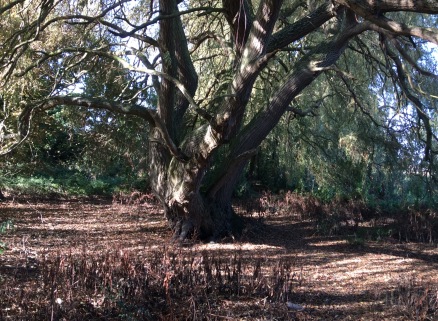
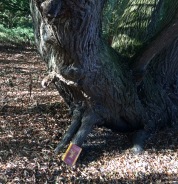
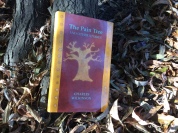
My previous reviews of CHARLES WILKINSON are linked from HERE.
London Magazine Editions 2000
When I real-time review this collection, my comments will appear in the thought stream below…
www.nemonymous.com
Des Lewis - GESTALT REAL-TIME BOOK REVIEWS
A FEARLESS FAITH IN FICTION — THE PASSION OF THE READING MOMENT CRYSTALLISED — Empirical literary critiques from 2008 as based on purchased books.


 BROKEN EYE by Gary McMahon
“Only when one had the courage to feel pain, only when one surrendered to it completely, only then would colour come back into the world.”
This novelette is exactly what I look for from literature at its optimum – or constructive pessimum? How have I managed to process through life without reading it – till now? Serious question.
At first I thought of Sarban, Henry Green, Elizabeth Bowen, LP Hartley, &c. – a patchwork of my literary passions, emanating from Ian’s patchwork of life, regathering himself from a sudden adult blank, a visit to a dentist, as if a Proustian by dint of Molars return to Le Grand Meulnes of boyhood, and now returning to that village and seeing how those children you grew up with have changed, how perhaps you changed THEM, for good or ill, or how their torturer dentist of a father changed you all by memory’s retrocausal innuendo? The sublimation of pain by referred sharing it with a tree or its roots, or your own roots? Or a canopy’s mask of childish miming and your tutelary Aunt’s tug-of-pain?
Throughout reading this work, I found myself raising my arm, from time to time.
“We always flew Quinlan Air. There were rumours that the pilots were Bulgarians who had difficulty in understanding the instructions of the air traffic controllers, but it was cheap and the planes were reassuringly full of nuns.”
Exquisitely funny, this tale of Howard’s non-End and his Mother’s End as if written by a modern-literary, this-turn-of-the-century and witty form of EM Forster, complete with reference to the gloomier Shostakovich symphonies (though I personally find his String Quartets better in this respect) and, even, Hindemith, and nosebleeds fit for the sound of Schnittke, and ice cubes for nosebleeds, and an obsession with hands. — [HANDS was the last story in this author’s other collection I reviewed here: https://dflewisreviews.wordpress.com/2016/08/18/a-twist-in-the-eye-charles-wilkinson/#comment-8029. I described at the start of that review my ‘overlap’ with this author. But I have found another connection now, as this Paintree book I am reviewing was masterminded by the late lamented Alan Ross of London Magazine, and CW also appeared in what I assume to be Alan’s SIGNALS II with this very story I am now reviewing, while a story of mine had earlier appeared in Alan’s SIGNALS I in 1991. Also, in that review of the other TwistoftheEye collection, I compared CW’s work, at least in part, to that of John Cowper Powys. I now find out from this Paintree collection’s dustjacket of CW’s connection to the the Welsh county of Powys!] — Meanwhile, this story of rain and snow is also a well-characterised study of a man called David with his wife Julie, his rather resentful friendship with the successful politician Howard, together with its backstory of childhood friendship, a patchwork of memory and today’s resentments and painful aftermath which resonates with the eponymous Paintree story itself, as reviewed above. With turns of phrase and observations to die for. Compare that story HANDS where I said earlier that there was an expression in it that should have been in a poem. This story teems and sprinkles with such expressions – but they all seem to work into a fine gestalt of prose.
“…now she wouldn’t ever find out who the murderer was.”
As I read that sentence in its powerful context, I literally cried. I rarely cry over literature, but I did here. Either my recent bereavement came into play here. Or, rather, it must show the utter power of this relatively short work, with which I would compare the power of RETURNING in the TwistoftheEye collection.
I, too, as a Grammar School boy, visited old people instead of playing games. I, too, thought there was something wrong with me and something unstable about the earth. To tell you more about this work would spoil it. Other than it is perfect.
“It was as if children imagined that teachers existed only in some parody of Bishop Berkeley’s universe:”
…or a Swedenborgian artefact in a diversionary ironmonger’s shop. I am sure I have met Swedenborg before in Wilkinson works. Looking a bit like my old Latin teacher from 1961.
This is a sad, but funny story of a history teacher with some sort of barrier between himself and his pupils – and between himself and himself? When told by his head of department to spice up his lessons with visual aids, our hero relents and finds himself at last. His wife disappears with an ex-pupil, too. I laughed, but I wanted to cry. Or dance a galliard.
“‘Well he had this vision of life, of a pattern which he believed in.”
…except he realised it was a pattern he had put together from books and things like Blake. I am a bit like Brian, with my search for a gestalt via the hawling and dreamcatching of books. Although I don’t clean my teeth as often as he does or change my shirt fifteen times a day, and I don’t stay in bed till noon nor drink myself silly. Part of me might, but I keep that part at bay. Brian is Joanna’s husband, Joanna who does go out to work and is nurtured (wooed?) by her lady boss Melanie who keeps one piece of screwed up paper in the waste bin to prove the bin was not a mere ornament. Brian is in this story for the same reason? The other characters being part of the bin itself, beset by red wine stains or the indelible smell of cat urine? I particularly relished the need for lubrication in this story, like rain for the car windscreen-wiper, moisture for parchment, sweat for desiccated flesh etc. And the vision of a sail-drenched boat, or a cartoon ship made galleon-manifest, a bit like that the children used in Sarban’s Calmahain?
A story that is another treasure to find, although, with only one reading so far, I have not explored all its treasure’s constituents. I shall make a home-made bookcase before I read it again. Try harder to be a practical husband to obviate any uxorious waywardness toward the distaff rather than the spear side.
“…and on lawns tusked for croquet only part-time gardeners admired the hoops…”
They keep on coming. This is a genuine Aickman-like classic that all Aickman lovers must read before they die or before they are buried beneath a ha-ha.
Seriously, Wilkinson may not even have read Aickman when he wrote this genuine masterpiece of literature? Yes, a masterpiece of general literature as well as of the weird fiction genre, in which way many of his earlier stories (as this one) and the more recent ones (in TwistoftheEye) actually deserve to be classified.
Let me go through some of the leitmotifs of this one, although I can’t do justice to this story in a review. A narrator who already has the genius(loco)soul of this book and also of the TwistoftheEye one, hypochondriac, preoccupied not now with Brian’s earlier wet lubrication but with green paint encroaching on surfaces real and artistic, his mother 83 years old who is far more energetic than him, off on her travels, both of them bereaved, him with a brother he did not really get on with, she with a son she no doubt preferred to the narrator, a narrator involved with theological studies, with central hearing concerns and water temperatures (ah, that water, again, after all), with a sort of walled secret garden – and, at school, in his memory, an Augustus John triptych turned into a dart board, and, as with my own school in the early 1960s, all the boys calling each other by their surnames, plus ma and mi if there are brothers at the same school – and that emerging revelation might be one plot spoiler too far for this story – so, please do read it for yourself.)
“And that’s all I can remember: the sunlight in the field, the cows lying down, the cyclist blocking our way and the laughter I didn’t understand.”
There something about that in the whole of this book so far, a sense of not understanding life by understanding its obliquities only too well!
This is another story, I am afraid (by being in fear of over-appreciation), that I admire greatly. There is nothing overtly supernatural about it or weird in the weird fiction genre sense, but it is intrinsically weird in a sense that deploys realities that become more real as outcomes of disarming strangenesses or inscrutable ‘objective correlatives’. And a sense of place and time that is a sort of no man’s land between the Second World War and, say, the early 1970s, in the Isles of or around Britain – and straddling or blending both those bookending eras.
This is a narrator’s eye view – from boy to a will’s executor – of his Uncle Val and Aunt Charlotte, through the prism of himself and through that of his own parents. A sense of Uncle Val’s sticking with loyalties and abandoning them in turns, taking on new social groups and then retrenching, along with agencies like the SAS in the background, wishful thinking, cheap bragging, resolutely hands-off cold-gardening, subtle concupiscence, recondite gambling, and a propeller in the hall … And utterly sad permutations of burden upon those who endure such behaviour or merely frown upon it. A tightening conflux of backstory events leading to the inevitable implosion.
A masterful portrait study of humanity at its most optimal, which is not saying it ever rises much above the worst. Pathos and bathos, as a way of hopeful life.
[I am definitely not saying that this free on-line text (‘Small Fry’, a story of mine written in the 1990s and published, in 2003, by Prime Books as part of the ‘Weirdmonger’ collection) is anything at all like this Wilkinson story’s viewpoint-and-plot or, of course, anywhere near as intrinsically well-written or enjoyable as a story in itself, but, for me, it has a co-resonance to offer.]
Neddaman bores the village pub locals with the cryptic clues of his daily crossword, ever twisting reality into anagrams, as I often do with my real-time reviews. As if anagrams have intrinsic preternatural meaning essential to the understanding of the ‘synchronised shards of random truth and fiction.’
Taken his wife to live near a noisy road rumoured to be an accident blackspot. She now has a phobia about going out in case the road sucks her in.
With visits from a boring, maritally abandoned daughter and a grandson who has just started walking and interfering…
All with what one would assume to be a tragic outcome for the Elder Nedda.
A sad scenario; a light touch with a dark poignancy. Even Wilkinson’s lighter weight stories carry significant laid-back literary panache. More than just a gewgaw.
(Blackspot – single out the pluraliser and switch for an old TV programme.)
…as one of this story’s three main areas of time-and-place – that campus, and another author seemed to be familiar with it in his story ‘Scrubs’ that I once reviewed here. I was familiar in real life with that same campus, too.
This work has a deadpan poignancy to conjure with, if not to die for. Thomas plaits his time trifold now from an inimically archetypal bedsit, with a landlady who has strict rules of bath and kitchen for him, despite noisily entertaining loose morals in her own room… He still tussles with the mysteries of central heating, and also Powysian mystic visions (“A scent of sweet apples”), and he recalls the missing Martin he once knew in that earlier campus, son of a railwayman-become-vicar, and does Thomas dare summon the motivation to ring the vicar to enquire about Martin? And he also recalls previous schooldays with Martin, and with a well-characterised older foreign boy who had been friend of the Shah of Iran…well, it’s not a long story but it is a full plot. In those days, people hadn’t yet really crystallised their own xenophobia…
We feel Thomas’s yearnings for a patchy past by dint of it being marginally less patchy than his present. A musical ‘dying fall’ thought of mine, and there is also a ‘dying fall’ ending to this meandering but sharply observed story.
“At the bottom of the right-hand pocket lay an iceberg of tissues, roughened with forgotten colds.”
“Monteverdi has been replaced by something anaemic by Mendelssohn.”
A man who plays the Vespers at board meetings of his candle company must be a man to admire. Yet — as a bookish man, hating barbecues and pub pool competitions at which his wife excels, hating those who make spiky dolls out of cocktail sticks with pub food — he is writing the history of his Loft family and the further he reaches heavenward, chitinously and/or eschatologically, the further he reaches the last loft of all, I guess, bedridden-comfortable like Brian, his not having been appreciated by his wife and children nor they by him. To say the least.
A removal van is coming to take him away, ha-ha.
“There were three or four quite unnecessary gates. Uncle Gustavus had erected these himself and kept them in a state of good repair accorded to no other structures on his land.”
There seems something intrinsically important about that quote in connection with this whole book and the TwistintheEye one, too. And, here, the mention of the wooden tuck box or the wireless programme called ‘Sing Something Simple’ — and the treasure hunt, as if the children in Famous Five grew up and left their uncle’s care only to become characters in Wilkinson stories.
This is another time-and-place meandering one, but sharply observed, like Friend and Foreigner. With objective correlative ‘gates’ – on the coast of what I take to be California under scrutiny by doctors in mufti, one who turns out to be Uncle Gustavus from those earlier Blyton stories and dreams of an octopus guarding treasure. And his English boyhood backstory. It as if Wilkinson himself has become my octopedal guardian angel, with my finding my ideal fiction writer, and he his ideal fiction reader. That’s the way all good fiction books should make ALL their readers feel. And this one does, judging by what I feel about it.
I have now bought Wilkinson’s latest story and I expect any day to receive a hard copy of the latest edition of the catalytic Theaker’s – or at least personally catalytic / self-transcendent in my own literary reading and writing life. I shall review that new story and link to it below in due course, after I have received it.
(My previous reviews of his work are linked from here together with those of Christopher Harman whom I placed on that link-page BEFORE I knew he had also written a Bailrigg story!)
end