Monday, October 03, 2016

The Warren – by Brian Evenson


6 thoughts on “The Warren – by Brian Evenson”


  1. Pages. 7 – 22
    “For me, memory is not only at times flawed and corrupted but also overlapped and confused, one personality hiding parts of another, blending too, so that the selves within my head…”
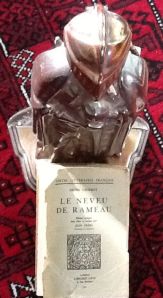
    I have not completed that quote from this book, because I am not sure whether I shall get out of this warren of words, should I do so, and if I do get out, whether I shall get back in again and be recognised for what I am — but anything containing concepts such as in that incomplete quote is certain to magnetise me further into this book, with my having had a life-long interest in Proustian selves. Equally, I can see that Proust has an over-rich tenor when compared to the sparer, leaner prose of Evenson. And then I suddenly remembered that earlier today I was progressing with my review of Samuel Beckett’s complete short fiction and my entry today here about his “From An Abandoned Work” seems coincidentally and amazingly apposite to what I have so far read in this Evenson book.

    • Pages 22 – 40
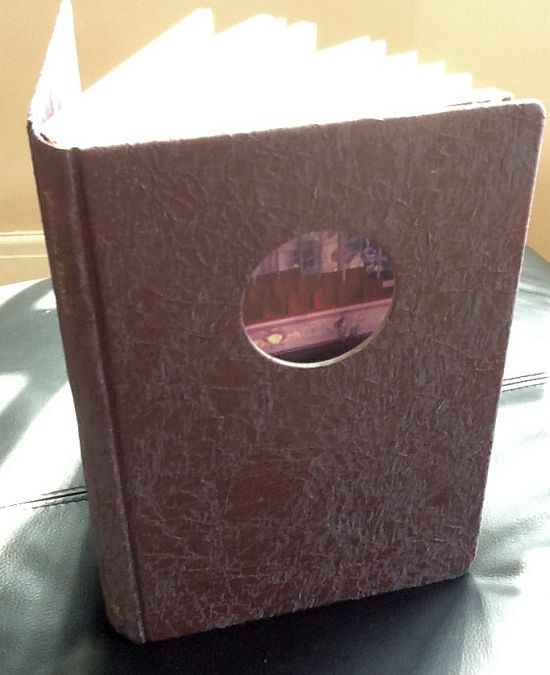
      img_2517“Everything was once connected, responded the monitor. Everything still is.
      An intriguing continuation of the narrator’s speculation about the warren, its monitor and his separateness or not from a man called Horak…
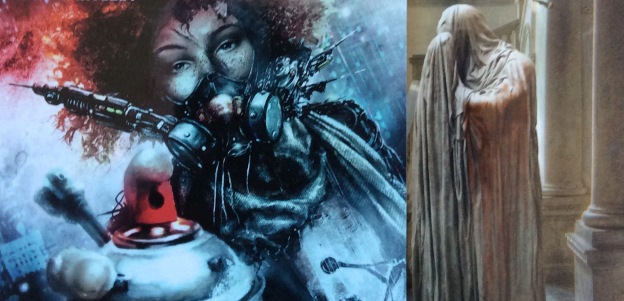
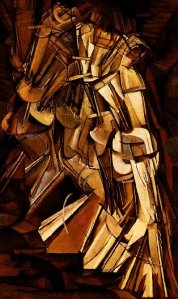
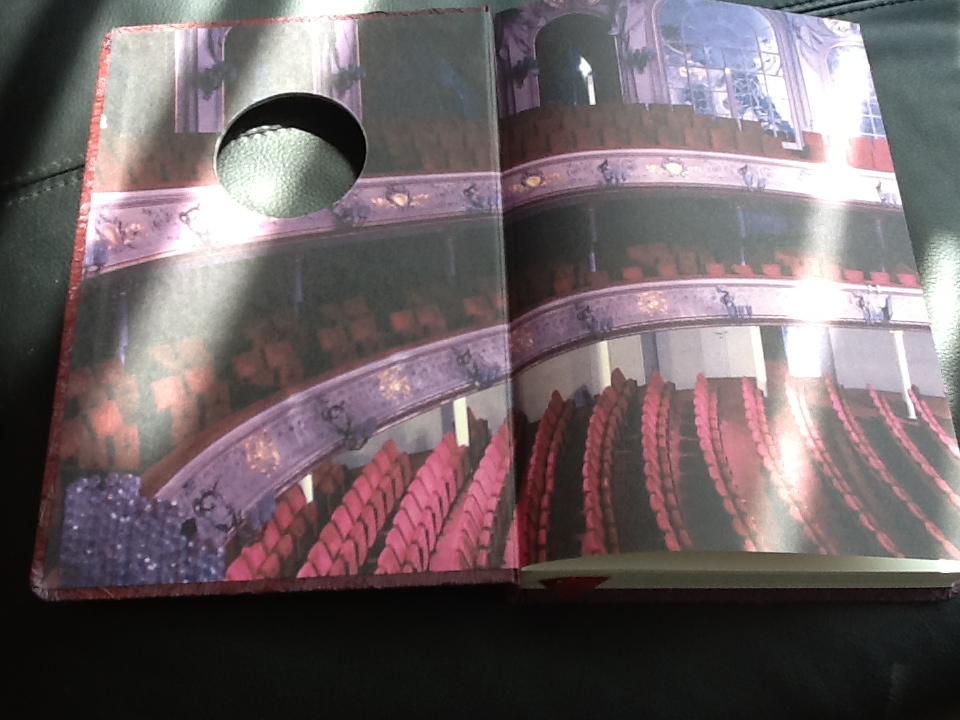
      Just as intriguing perhaps – I said earlier that this text has a spareness and leanness, at least when compared to the oft-thought over-rich texts of Proust, but of which (along with Beckett) this fictional journey so far otherwise reminds me. But sticking out like a ‘sore thumb’ here is the word ‘flavescent’ to describe the colour of some, presumably untypical, blood. The type of yellowishness, for the record, shown on the design above is an example of flavescent as a colour. Also in the Scott Moncrieff translation of Proust’s ‘The Captive & The Fugitive‘ we have this: “I raised my eyes to those flavescent, frizzy locks and felt myself caught in their swirl and swept away, with a throbbing heart, amid the lightning and the blasts of a hurricane…” [A flavescent is also the name for a sort of songbird.]

  2. Pages 40 – 66
    “The flesh will learn to be subject to me.”
    This is an entrammelling journey, a quest in a warren of words not just for the self but for the self’s body from within an alphabetical series (centred on the vagus nerve?), not an existentialism of eschatology, as in Beckett or Sartre, but rather it is perhaps uniquely an existentialism at the other end, at the point of natalism, something that has already given ironic and inadvertent birth to anti-natalism in, say, Ligotti, but in Evenson it is a trial and error of survival as a unique being. A Proustian process.
    A warren not of Chambers’ lethal chambers but of birth ones?
    I, too, am feeling my own interpretative way here, as in my own warren of dreamcatching. I am either hitting on genuine solutions in the form of plot-spoilers (for which I apologise) or complete nonsenses (for which I do not apologise). For example one of the identities here is Wollem – mellow yellow?
    “…we are vomiting a yellow fluid that slowly colors red.”

    • Pages 66 – 93
      Lie down and die, the muffled chorus within me suggested, but that other me, the one currently in charge of the body that conveyed all of us, refused to give up.”
      Like a Greek Chorus taking ownership of the statues in a de Chirico painting?
      Well, part of me feels incredibly smug (does not a Petite Madeleine cake dunked into a cup of tea make the tea more flavescent?)…
      Another part or me feels incredibly crass.
      Read this novella and tell me what you think. I dare not say more for fear of real spoilers. Other than the fact that it is a mighty work. Lean and spare as well as flavescent.
      The secret is to ask the right questions.
      end

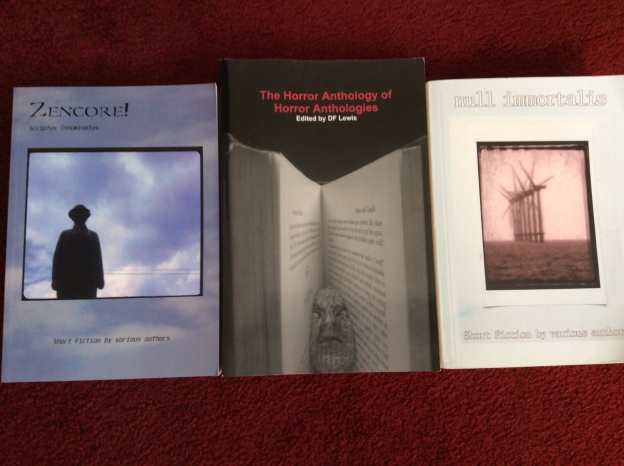
nullimmortalis Edit
I think I have found burrows in this WARREN that are not there! But Burroughs? The cut-up scissors style of William and the Martian (sub)terrain of Edgar?


    Friday, September 30, 2016

    Interzone 266 - Black Static 54


    Interzone266 BlackStatic54


    image
    My previous reviews of INTERZONE and BLACK STATIC as published by TTA PRESS are linked from HERE.
    Fiction by Tade Thompson, Georgina Bruce, Ray Cluley, Malcolm Devlin (X 2), Aliya Whiteley, Steven J Dines, Ralph Robert Moore, Julie C. Day…
    I intend to review the above fiction during October and my comments will eventually appear in the thought stream below.

    11 thoughts on “Interzone266 BlackStatic54

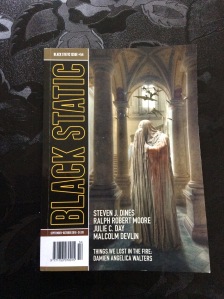
    1. img_2509BLACK STATIC 54
      I reviewed SJD’s story in Black Static #48 on 26 September 2015 HERE, showing a photograph of me in front of Salisbury Cathedral…which brings me aptly to –
      PERSPECTIVE by Steven J. Dines
      …which also features Salisbury Cathedral.
      “But if those letters were an anagram of a revelation meant only for you…”
      A powerful point-of-view collage triangulated between the man and his youthfully rape-scarred fifty something wife, now blind through stress, feeling her way in the dangerous field of life like a kitchen and in her field of dreams with its sky-river and poppy-like daisies and rotten apples holed by worms, both fields artfully conveyed. Hauntingly and disturbingly so. Triangulated with the man who raped her, the man come back now to stalk her…the words say so, the numbers say so, read them, count them up and see it all, see the things he leaves, the things her husband does in his mind with mirrors and imaginary gloryholes echoed by her own “hole inside her” and the letterbox he pokes to get at the stalking rapist, fingers straight through a magazine paper image, a paper page a bit like that Salisbury Cathedral one, if a different image, an image implicitly like the Origin of the World painting by Gustave Courbet…
      This stuff is worrying stuff, it gets at you, and I guessed the ending, but even guessing it right, as I think I did, made it seem even more surprising, even more shocking. And that is an amazing perspective,
    2. A PINHOLE OF LIGHT by Julie C. Day
      “Digital images all have the same basic limitation. They’re incapable of connecting us to the dead.”
      A moving, often poetically expressed story about a photographer, a darkroom one, not digital, who uses it to seek his deceased wife, in touching unacknowledged visionary collaboration with his well-characterised small daughter (and her teddy bears) and with his cousin friend of the family called Pete… the latter pair are in cahoots painting a mural as part of this inferred project. A mural with a red borderline between what they have painted and what they haven’t yet painted, reminding me of the dreamfield in the previous story and its poppies and rotting apples (explicit “field” and “poppy” in the Day)… The words somehow, for me, become stitched to the brain rather than passing through it, like the photographs are developed more and more by the photographer on his skin, as I learn more and more of his widowering backstory.
    3. NOT EVERYTHING HAS A NAME by Ralph Robert Moore
      “I lost track pretty early on how many hands I let grasp mine as they shuddered and went lifeless.”
      You MAY be pleased to know that this is up to the high RRM benchmark of disturbing fiction that lingers afterwards with you and continues to grow increasingly disturbing for possibly years afterward. This work has a last line that is something else – one, with its implicit meaning, exceeding even THAT benchmark.
      Without giving away spoilers, this is a tale of an 18 year old girl, a virgin in two out of the three ways, and a 30 year old swaggerer in a bar who wins her in a bet over pool play from her young diffident boy friend…
      She has four tests for him, the fourth one being a bit like coming out of this work’s closet, if fiction CAN have a closet to come out of, a closet perhaps more powerful than what the closet-leaver alreaady is. Like she has her own Dines gloryhole from earlier in this magazine’s fiction, built in as a portable voyeur. You won’t get it from that, and if you do get it before reading this RRM, you may wish you hadn’t EVER got it, depending on who or what you think you are or who or what you see yourself becoming.
      I think now that I must have seen, relatively recently, RRM’s thin things retreating while I was in a hospital at the point when I finally let go of someone’s newly lifeless hand…
    4. DOGSBODY by Malcolm Devlin
      “They fell to silence for a moment and the argument at the pool table, violence brewing, filled the gap.”
      This novelette (the third such in this magazine) has violence brewing not only at RRM’s pool table but also in the ‘rapture’ of his visions, here now delivering unto ‘grace’. For me, these are darkroom-processed – not digital – word-photographs of the fifth anniversary of a recurrently auto-correctable werewolf plague that affects a select number of the population, a new select group like ‘gays’ used to be, out of their own closet, and begun to be accepted in a deadpan way, almost a masque or a slowly pent up dance between social groups, our hero here being part of both such dances, social and wolfish, now in a workaday painter’s bib, coincidentally (?) meeting the woman, shedding her own skin of business civility, in a were-pub, having been interviewed by her for his old professional well-suited, well-garbed advertising job he had before the initial plague. That dogsbody or blue collar masque, that method-acting, that mannered interchange of mores and moods and brewing violence (and a once wolffish transmogrification that may never happen again), that masque, that lugubrious dance of social waltzing as one gets drinks in two kinds of pubs, is a whole panoply of low-key spiritual-GPS manoeuvres between, inter alia, a barroom brawl and a flirting exchange. The whole two-pubs thing In this work and the two bars’ socially acceptable miming emotions takes up a huge mind-boring (‘bore’ in two senses) chunks of this mesmerically downbeat text. The conversational machinations are like initially Feldman-like, then speeded-up, minimalist music with complex glimpses of what monsters they might turn into – or like RRM’s thin things, I imagine. A strange work, not only weird-strange, but also attritional-strange in good and bad ways of a reading experience. Intentionally so, successfully so, and more! And dare I wonder in which direction the transmute-filter works between both public sides of the above by-line? A diffident work. A disarmingly major work.
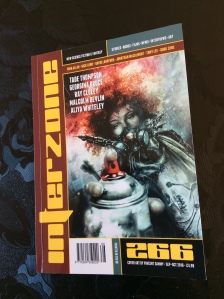
    5. img_2508INTERZONE #266
      THE APOLOGISTS by Tade Thompson
      “I ramble on, because Nico has encouraged me to free-associate,…”
      I apologise in advance for taking this advice, something that is my wont anyway, as I try to fabricate at least an impression of this story, now it has been read and vanished somewhere between the enforced ‘”variability” and the “Proustian fugue” of my mental sump. Let me tell you that I loved it, loved its hilarious vision of an Earth taken over by aliens who then apologise profusely, if with the odd word out of place, for destroying our world and helping the five surviving humans rebuild it, that is to rebuild a remembered London and its population, with a go-between alien called Nico who tries to have a Tom Jones image (Welsh singer not Fielding). I can’t go into all this work’s conceitful gems, but it starts with a pub-world bar-ethos called the Cock and Bull synchronously in tune with that in the above Devlin work. A line of expletives given to make any human simulants more realistic is another highlight. Where do I start, where do I end, in failing to do justice to this provocative (sometimes poignant) streaming of proto-empathic Tadery? I think I should perhaps consult one of its “prayer-points.”
    6. EXTRATERRESTRIAL FOLK METAL FUSION by Georgina Bruce
      “Whilst I have no objection to creative interpretation, no matter how whimsical,…”
      …But I can’t help but draw synchronous connection BETWEEN the alien’s need for language perfectibility as a transmitted human facsimile AND the Tadery above, as I ponder the intriguing Sapphic triangle here of Alien Jane (Alien only in name), Mariel of media studies and Susan the exolinguist. One of them writes a love letter to another of the trio with the more restrained, but fundamentally similar, “chemical reaction”, similar to the “suppurating” love letter sent to her by a real life alien who in humanity’s real-time is spatially-temporally extinct. Full of social satire and inter-professional tweaks of reaction and reference, and I can’t help but admire the internal “fatal paradox” of this work as well as its attitude to piano music played by Lang Lang. Still echoing in my mind, as all good literary works should.
      (And the alien’s sexual slime of the tentacles — that turn up in the transmission from an extinct world, written as if not written by anyone, the fact of being writerless making it even more evocative as a non-language sensitivity of sexual body instead of straitened mind — becomes Jane’s apricot yoghurt that also turned to slime?)
      [It seems poignant and perhaps relevant to report that as I finished writing the above, I have since been watching news reports of Rosetta’s deliberately induced crash upon the comet, still broadcasting to us even though, in its own 40 minutes’ earlier real-time, it has already crashed.]
    7. [But perhaps the Rosetta ‘delayed’ synchronicity of crashing mentioned above was really one for this story’s review….?]
      SIDEWAYS by Ray Cluley
      “There’s a big gap where I lived for a while, where my life went sideways.”
      This seems like a well-researched but marvellously extrapolative portrait of test pilots in the 1950s. It is a substantive work that I can easily imagine being recurrently anthologised; very well-characterised with the plot’s earliest backstory flying with the the near future and with a further future’s present day by turns, with believable descriptions of the new aircraft being flown, prefiguring some version of the stealth of the future, I guess, and the men who flew them, and their families, and the deeply touching aftermath of certain events, and what is seen as an unforgettable vision during the flights in one particular aircraft.
      There are here more barroom intermissions that add to this review’s treatment of such an accreting ethos with these occasions’ manoeuvres being of equal importance to the actual flights of imagination and truth that the fictions otherwise deploy.
    8. THREE LOVE LETTERS FROM AN UNREPEATABLE GARDEN by Aliya Whiteley
      “But our love is not sticky, and it does not drag me down, it elevates me. It gives me wings to rise above the slime.”
      A significant reference, there, preternaturally coincidental to the Georgina Bruce story and the Ray Cluley one!
      Here are more love letters for this magazine’s fiction, seen and read from one side of the correspondence between disparate souls, with regard to a mass sought-after flower’s bloom and its scent, and the bloom’s propensity to wilt upon each person’s inhalation of that scent. A constructively oblique poetic work that manages to have a fey, even effete, sportsman boxer as part of its concept of an ultimate tontine. Today’s SF magazine as the new fin de siècle Go-Between?
      “…the sweetest moment is the unrepeatable moment. Gardeners live for each bloom…”
    9. THE END OF HOPE STREET by Malcolm Devlin
      “…she planted it as close to the house as she dared. It didn’t block the view. Its scent was too subtle to mask the smell of bodies as they turned, but it was a gesture, and sometimes that was all that was possible, sometimes that was enough.”
      This novelette (the third such in this Interzone) is probably one of the most difficult works of fiction I have ever had to comment upon, not difficult however in understanding the plot, but only in commenting upon it, giving it a context within this Interzone’s fiction as well as alongside this author’s other novelette I read in the last few days as reviewed above. I tried to find the painting it mentions of a woman slightly disturbed to be found in her cluttered kitchen. I think I found it, but not sure enough to reproduce if here, a painting that seems to seal this book like the pre-Raphaelite painting did in Brian Aldiss’s Report on Probability A. This Devlin is a significant work, accretive, attritional, an insidious account of a row of detached houses that gradually become ‘unliveable’ in and the inhabitants have to move to other houses in the row. It has the darkness holes, stealth geometries and gaps of the Cluley. The scent of the bloom quoted above reminding me of the Whiteley. A pre-fabricated stage- or film-set as if housing simulants from the Tade Thompson. The extinct star to real-time world type of communication between discrete abodes, their propensity to drop off and become temporally extinct one by one towards some ultimate tontine, here the tontine prize being Christmas and Boxing Day (not the sport of Boxing, but surely a resonance there with an earlier work in this Interzone?)
      It is more method acting, another masque or mannered drama of events, reminding me also of Alan Ayckbourn theatre and Brian Aldiss’s novel ‘Report on Probability A.’ And more I can’t yet nail down. The work is undeniably something really special. A pattern perhaps of today’s alienation and housing crisis or a satire of residential committees? Another One End Street? A template for Brexit? Still accruing its effect upon me, even though I have finished reading it.
      There is much more in Black Static and Interzone in addition to their fiction – and, meanwhile, this is another gestalt of these magazines’ fiction that has never disappointed me since I started real-time reviewing it a number of years ago,
      ————
            

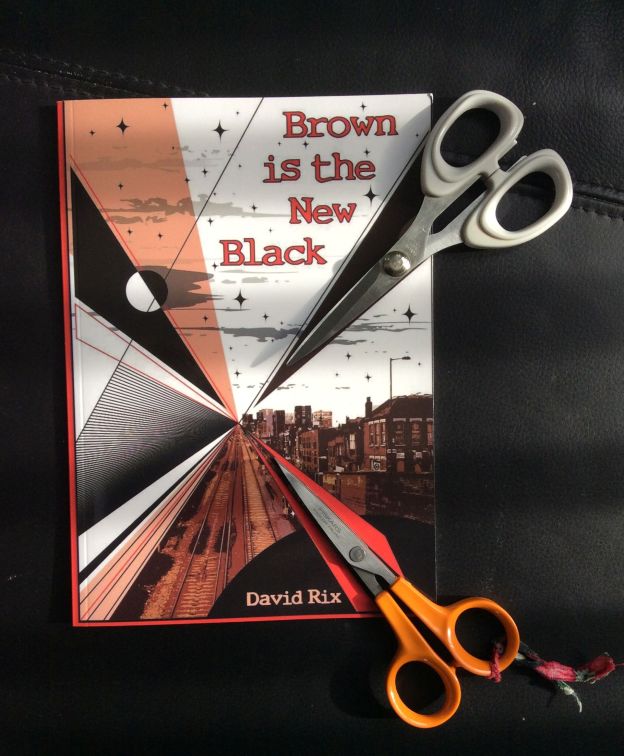
    Brown is the New Black – by David Rix


    4 thoughts on “Brown is the New Black – by David Rix

    1. Pages 7 – 21
      “‘It’s using fake shadows,’ he said. ‘Breaking up the shape.'”
      A gradually involving scenario where you soon become camouflaged as a reader – from yourself, unaware perhaps you’re reading. This is a post-holocaust London scenario, beautifully, yet somehow sparely, evoked, the girl and boy couple failing to exploit black as their own camouflage from the slightly or potentially aggressive (so far) hunters and the noble naked wanderers… moths, bones etc., all seems naturally to fall into this genius-loci of situation and place. Even the potential provision of electricity, that I questioned about to myself earlier, but perhaps I couldn’t find myself to ask. So, it is good to break off as part of a real-time review, to think of these things. Like also asking why scissors are not mentioned when the girl starts making clothes from fabrics in various shades of brown, designs without a belt line etc., as what now seems to be an alarmingly efficient camouflage.
      A delightfully oblique conjuration of an obliquity of dress.
    2. Pages 21 – 40
      img_2507“It is hard to grasp how high railway platforms are until you are on the tracks below them.”
      …like looking up from between the lines of this text, looking at its slowly revealing meaning of how the world used to be before these railways became derelict and open to a walking (or even biking?) improvisation. The couple, sexually aware as well as naive, when parading sometimes half-naked, half-camouflaged, as the girl does, in front of the tall and noble slow-motion real-time fully naked wanderers, with, also, a brush against a hunter and his gun, and a brush against art in bookish and painterly form, while missing music amid the silence. This is a hypnotic journey, half mindless, half deliberate, a sleight of mind that prestidigitates the ‘group consciousness’ that at least this book contains as some sort of bridge between then and now. I have woken from the journey, having felt I dreamt it, not read it. And I mean that as a significant compliment.
      By tear, rip or meticulously unpicked seam, a flash of flesh shows that white is the new moon…
      end


    :)

      The Hauntings at Tankerton Park – by Reggie Oliver


      7 thoughts on “The Hauntings at Tankerton Park – by Reggie Oliver

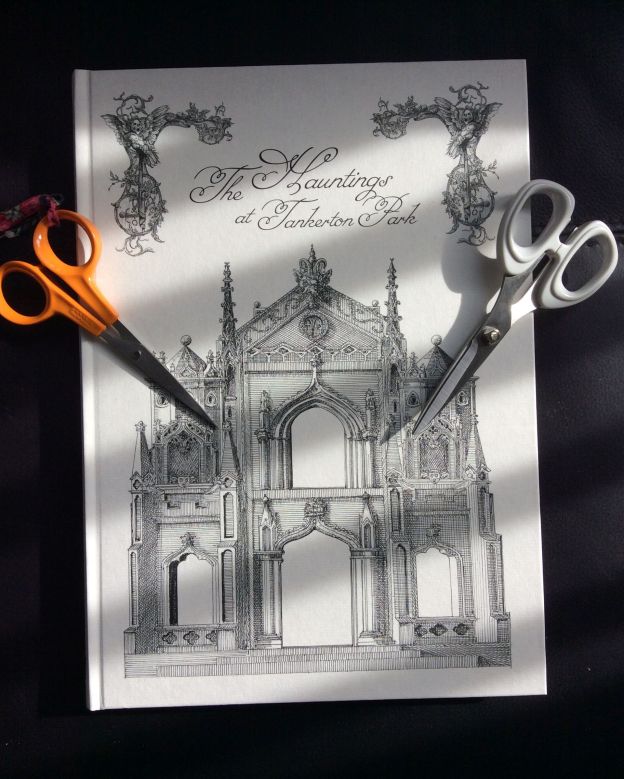
      1. This is a picture book of constructively old-fashioned drawings, often off-the-wall and haunting tableaux, led into letter by letter, passing TWICE through the alphabet, starting with “A was an armpit that loomed in the fog.” And ending with “Z is for Zadok, the Butler’s young son / Who burned the poor Zombie to ashes for fun.” For children and the child-like alike.
        I dare not photograph any of the pages as that would destroy their initial effect, intricately drawn as they are, beautifully stylised into another world that can exist only in special magic books like this one. Witty, charming, often literary-aristocratic, and grotesque, with cast spells beyond words. Each alphabetic letter is also separately illuminated. Highly concentrated representational designs, but ones in which you will spend whole lifetimes finding new curlicues and intaglios.
        I am not an expert on artwork, but I think you will be entranced – and I confidently predict it will be highly sought after and praised by those cleverer about such things than I am.
        • POSSIBLE SPOILER
          It must have been a real labour of love and taken just forever to do.
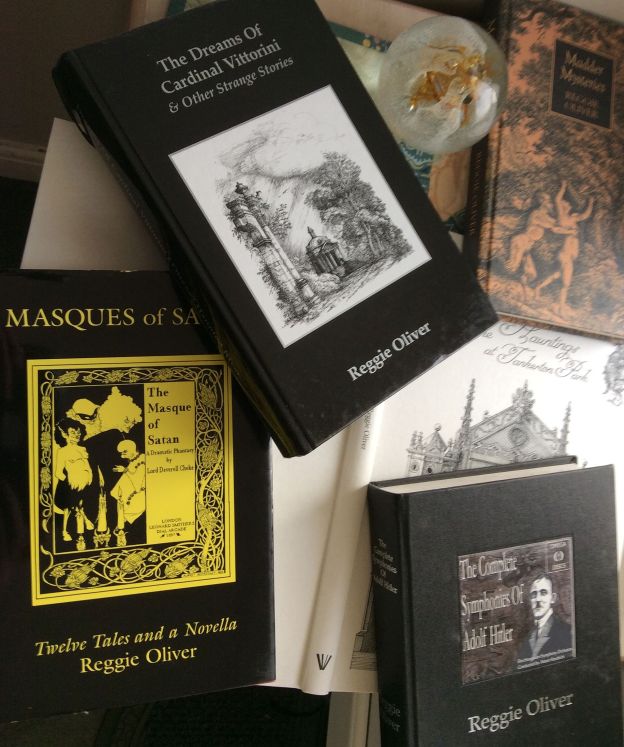
          The second alphabet shows how they tried to deal with the monsters and hauntings in the first alphabet. But that might be a spoiler. I shall get rid of the spoiler by cutting it out with scissors later.😉
            • The M.R. Jamesian Heath Robinson. Whatever the case, wonderful stuff. (Some may believe that I have cut out all the pages in fear of their having hidden spoilers. But in truth, I am still poring over them, turning the large, luxurious pages so as to reveal sprites and friendly spirits.)