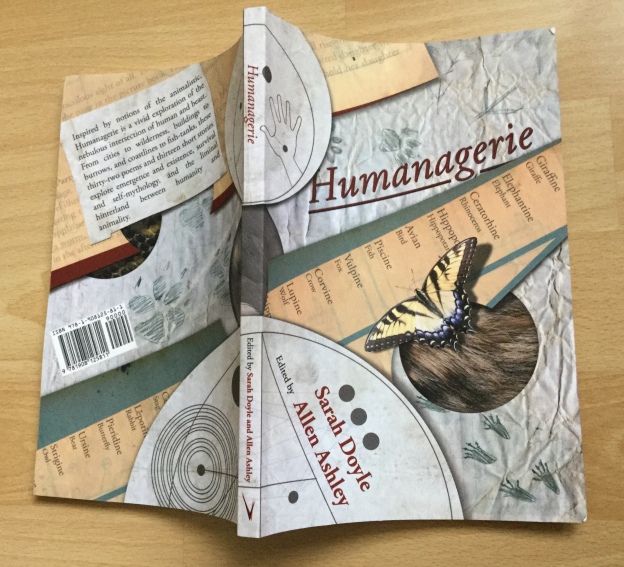
Edited by Sarah Doyle and Allen Ashley
EIBONVALE PRESS 2018
Work by Paul Stephenson, Elaine Ewart, Gary Budgen, Sarah Westcott, Cheryl Pearson, Holly Heisey, Oliva Edwards, Scott Hughes, James Dorr, Kerry Darbishire, Jonathan Edwards, Tonya Walter, Lauren Mason, Setareh Ebrahimi, Ian Steadman, Kate Wise, Frank Roger, Jayne Stanton, William Stephenson, Sandra Unerman, Megan Pattie, Kristin Camitta Zimet, Douglas Thompson, Amanda Oosthuizen, Lindsay Reid, Tarquin Landseer, Elaine Ruth White, David Hartley, Diana Cant, Mary Livingstone, Bindia Persaud, Michael G. Casey, Jane Burn, Jane Lovell, Tracey Emerson, Jenny Grassl, Kerry Darbishire, Hannah Linden, Ian Kappos, Jason Gould.
When I read this book, my thoughts will appear in the comment stream below…




My previous reviews of older or classic books: https://dflewisreviews.wordpress.com/reviews-of-older-books/
“: — what times are upon us, a real calamity!”
This massive book starts with the sentence “I was pensively penning the outline of the inkstand’s circular, quivering shadow.” When the narrator is visited by a chatty wood sprite. Chatting about its relationship with other sprites. And chatting about the state of the world and “We are all gone, gone, driven into exile by a crazed surveyor.” But I am also struck by the penning of the circular inkstand. Compare the psychogeography of a story I just read and reviewed here, another first story in a book, where such penned circles on a map create a skein of events. A Psycholiterary triangulation of coordinates being embarked upon in both books? Meanwhile, I thought myself as the narrator of the story am a man. Except the sprite or spirit spilt these words at one point when talking to me, me as the narrator: “— you lost your way once in a dark nook of my woods, you and some little white dress, and I kept tying the paths up in knots,…”
“Petya owned a tiny cinema in a sparsely populated part of town,…”
A meticulously characterised tale and tableau. Petya is the son of Martin Martinich, the latter owning a corner tobacco shop, with the eponymous sign in its show window. They are emigrés in Berlin, who kidnap – and keep in the bathroom permanently – a Bolshevik cove until Bolshevism is spent. Shades of The Unconsoled; I wonder whether this became a film to be watched in that cinema. A modest income to supplement the tobacco sales. A tale told by Martin to the narrator who, I feel, very much seemed as if he should have been carrying an ironing-board as a permanent prop. He actually sees the prisoner in the bathroom at the end of his own tale of Martin’s tale.
“On another wall hung a framed chapter from ‘Anna Karenin’, set in such a way that the interplay of dark and light type together with the clever placement of the lines formed Tolstoy’s face.”
This story text holds your face. A tract of unrequited love, I sense, the love I hold for you, and my ability to BE you, BE this story, BE someone by consubstantiating with the mole on his face, even letting your cigarette holder be left behind at old mate Pal Palych’s place where we visit him together, giving you the excuse or me the excuse for me to come back to you (you whose husband is a cloudy force in our future backstory?) after retrieving it from under my old pal’s armchair. A story of self-sacrifice. Of irresolute hairlessness. Of a steamship’s last instant. Of my comprehension of everything. Of the gestalt, in fact.
“I knew that all my surroundings were notes of one and the same harmony, knew — secretly — the source and the inevitable resolution of the sounds assembled for an instant,…”
“She repeated, narrowing her downy eyes, ‘Right up into the stars,’ and added, with a glint of her bare clavicle, ‘and now I want to dance.’”
One of those stories that strikes me as one I will never forget, so I know I have not read it before. A sort of blend of Thomas Mann and future fantasists like Clarice Lispector, where Kern (whose wife killed herself in the past) is staying at a hotel in Zermatt, a skiing snow resort, and meets flighty Isabel who is staying in the adjoining room. He thinks he hears a dog and a guitar at night next door, blamed later by Isabel on his dreams. The outcome is wondrous. Yet tragic. Mixed with cocktail chasing – and a ‘negro band’ one of whom puts on a “white mustache.”
“First-rate fable.”
Also a mind-boggling experimentation with many images.
Needs reading several times, therefore does not fall within the jurisdiction of a gestalt real-time review’s strict appraisal of a first reading, as mine always is. A first rate fable.
“His interest was aroused not so much by death itself as by all the details preceding it, and he would get so involved with these details that death itself would be forgotten.”
As it is, buffer to buffer. A Poliakoff syndrome. A railtrack attendant, cocaine sniffing, on a fast train from Berlin to Paris, in the aftermath of the Russian revolution. His wife missing, and he tries to track her. A passenger, today, her husband missing. Buffer to buffer. A matter of chance that is endemic in my Gestalt reviewing, now come home to poignant roost, all latched together by the end. As the diner is unlatched. Changing points, meanwhile. I loved the various characters and their separate points of view. Their flinching interactions. A perfect golden ring. Its loss is our gain.
Hawling: https://dflewisreviews.wordpress.com/2018/10/26/the-seat-where-i-wrote-some-of-nemonymous-night-in-the-noughties/
Thus a crucial story for me, and the plot — of the man come from Constantinople to the ancient French seaport, looking for work, his visit to the barbers, the dog with fleas, the conversation he watches with a girl called Lyalya, children with paper boats, the squalid hotel, the violin and rippling harp, the woman he later meets whom he thinks he recognises, the tantalising opaque ending — is almost incidental. Could happen in any seaport or permutation thereof.
“He approached the professor, who, lifting his heavy eyelids, recognised one of the worst and most diligent of his pupils.”
Not one of the professor’s own pupils that the eyelids revealed, but the act of seeing one of his biology students on the boat between Ostend and Kent on the way to the professor’s wife.
“, the race would suddenly darken,” — surely this is a misprint for ‘face’, not ‘race’ as this edition has it.
This is a horror story, pure and simple. The professor’s wife wrote a letter to Jack, a ghost. The professor thought she was being unfaithful and wreaks his revenge with a biological sample he brings in his orange suitcase. A vision of a woman made of thin slimy reddish tyres of skin that turn into a worm. I needed to retell it, to exorcise its effect on me. Not plot spoilers, as there is nothing that can be spoilt. But who was that student? Jack?
“I realized that the world does not represent a struggle at all or a predaceous sequence of chance events, but shimmering with bliss, beneficent trepidation, a gift bestowed on us and unappreciated.”
A sculptor in a roughcast studio inherited from a photographer, goes out photographing with the mind, collecting detailed observations of the mind , hoping to clinch a gestalt of life’s beneficence by ‘your’ arrival. But after seeing an old woman selling postcards and the tacky coffee she manages to scrounge, he sees ‘you’ with another fellah. He continues gathering observations on a sullen streetcar… even though he does not attain his gestalt, this story somehow does!
“The houses were as gray as ever; yet the roofs, the moldings above the upper floors, the gilt-edged lightning rods, the stone cupolas, the colonnettes — which nobody notices during the day, for day people seldom look up — were now bathed in rich ochre, the sunset’s airy warmth and thus they seemed unexpected and magical,…”
As I was reading this, I thought, if you should only read one short story in your lifetime, it should be this one. Mark’s happiness with Klara brought short by an unforgettable vision of death, or forgettable death itself. But then I thought — he had escaped such unexpected sorrow regarding Klara, that we knew about and he didn’t. Look up or down, chance is where the true magic is.
Made me write this FB post just now: ‘Some people say literature is too pretentious, too wordy or poetic …. not like life at all. I say it is perceived life that falls short of the true life that is literature.’
“Lost a wheel. Find it for me, will you?”
A vignette of a sudden storm in West Berlin that evokes the Thunder-God and Elijah the Prophet loses a wheel from his chariot but a discarded baby-carriage wheel that the narrator finds for him makes this vignette seem to become a mighty novel. But is the narrator you or the Prophet himself!? Trump of thunder presaged?
“Thus from constellation to constellation, from meal to meal, proceeds the world, and so does this tale.”
This is one of those reading moments! A novelette to cherish, full of everything in fiction literature that appeals to me, even a sense of the spectral, whether rationalised after or not. The ability to be part of a grand master painting, original paint and all as your flesh. The business of art, commercial, and emotional. Even spiritual, if one is a believer that what underlies the words is what truly underlies them. Whatever lies are told about it later. This country house party of five people is otherwise full of intrigue. Romantic-sexual and artistic, restorative and scraped off. A tennis match where the tensions and relationship are crafted. A father-son relationship, that we can believe is altered drastically during the course of this fiction’s monotonies and timeless rhythms of the planets, as above, so below. There is collusion with the reader, too. And vice versa, incredibly so, as I can change this story’s art just as this story creates it. Nothing uniquely effeminate and morbid about art, but it is both those things, too. Dive in, like I dived into this tale. It works! I even met the old watchman who did not interfere with the audit trail of this consuming plot. My self stitched with words.
“Someone nicknamed her the Lame Madonna.”
A strange story, slightly reminiscent of events in Ishiguro’s THE UNCONSOLED, about a stranger baggy-like composer-musician, with propensity to over-adjust his piano stool, with a manager called Sack, and a possibly even stranger married woman who has a regular love affair with him, and keeps him performing , till she dies of a fever and he becomes a player-piano busker on railway stations. Sorry for any spoilers.
“The main personages of this town were two: the owner of the Miracle Tobacco Company and that of the Big Helmet Tobacco Company.”
A dragon comes out of long-term hibernation of depression, attacks a train and is used as an advertising hoarding, in the battle between tobacco companies. Then had his adventure lanced like a boil. His mother had once swallowed a royal chef who was lanced out of her while still holding her steaming heart. A miracle that I have been able only to scratch the surface of this very short story. Well met in Hell.
“, as if there, in the burial vault, he had been even further removed from his son than here, where the countless summer tracks of his rapid sandals were preserved beneath the snow.”
A miraculously poignant account of her father mourning his son, finding a place to sit in the house he had not known existed till now, forgetting even that it was Christmas Eve, remembering the butterflies his son collected, or butterflies or moths still in chrysalis dreamcaught with this story’s inferred net….
A consuming atmosphere of a city at night, full of exquisite details and observations that captivated me, conductors on trams, trains, whores, the mad monotonous waltzes, graveyards, and much more. Its musical ‘dying-fall’ may explain why this letter to his separated loved-one may not have reached her.
At first the “blind tenderness” of the sun upon sun-bathing and swimming bodies by the lake, a meticulously and delicately tactile scene that takes the narrator beyond Discobolus games to a drinking place where a fellow swimmer serves at the bar, his daughter and another customer in seeming love, and the precise discrete moments of life’s own blind tenderness is overtaken by blind passion in a fight between two men, each moment waiting to subside back to calm precision within a blend of unthinking instinct and delicacy. No need to know the rights and wrongs of the fight. One day even such traumas as Trump and Brexit will also be bypassed, I hope. As wars once were. Till the next started.
“— and it seemed to him that happiness itself had that smell, the smell of dead leaves.”
Another truly classic story, with an ending to die in silence for.
A story of Chorb, a Russian emigré, who returns to all the honeymoon destinations, even detailed or seemingly trivial wayside items (or what I shall now in future call ‘chorbs’?) seen by his now dead wife when they passed through a few weeks before on honeymoon, returning to Germany to face telling her parents (who had just been to an opera and a wine bar) about her sudden death, her parents who already disliked him. No way I can do justice this story, nor cover all its tantalising chorbs…
“I think that here lies the sense of literary creation: to portray ordinary objects as they will be reflected in the kindly mirrors of future times;”
A work of meticulously beautiful observations (eg a streetcar, drainage pipes, a zoo, and pub talk about such things), perhaps predicting 21st century witnesses like me observing this extraordinary object of a fiction work that was created in the past!
“, the rapture of fantasy,”
A man — who ‘collects’ cute girls to have his way with, but only in his mind, collects them as he sees them — is offered by the devil (who is a woman herself and not in the traditional mode with horns) to collect some more but be given them for real in just the way he would like to have them.
As long as there are an odd number of them. Not even.
He chooses away, till he adds a 14 year old girl, then needs, at the last moment, another to make it odd…
A wonderful story. A classic.
“Yet, I could not explain to myself why that lacy laughing dream was now so unpleasant, so hideous.”
A terrifying description by a man of his mounting epiphanies of graduated terror to the projected point of supreme terror as death, embodied by life’s objects such as his loved one as a premonition of lights suddenly going off in an opera theatre, as well as triviality and dream and health, objects as ‘objective correlatives’ of such terror. The self shimmering between certainty and doubt as to self’s nature. Hideous as incrementally revelatory, never truly hiding.
“Those sentenced to death are shaved too.”
This man is sentenced to death, too, literally as well as figuratively, phrased and parsed and syntaxed to death, by this story, made to close his eyes to pretend he is invisible – forever, it seems, as a barber, who that man as customer once tortured back in Russia, finds himself alone with the snicker-snack, ‘lickety-split’ scissors and ‘metallic chirr’ blade upon his neck, alone because the boss in the barbershop had already gone off to fuck the manicurist. Not in so many words, though.
“The plots Life thinks up now and then! How can we compare with that Goddess? Her works are untranslatable, indescribable.”
A writerly story of writing plots, adapting from Life to entertain, like a film maker adapting a novel for the screen. If I did this for the screen, I would need to show rather than just tell of the otherwise unseen passenger’s varicoloured, varicose, toe-poking foot as he got into the train’s upper bunk. Recorded his sobs for me to hear from the lower bunk. Shown later the policemen who come aboard at a whistlestop to find a suspected murderer. Then I have a few drinks to think of better endings to clinch the plot’s deal?
Wasn’t in the right mood for reading this complex story, And went over my head.
But when I read this critique elsewhere: https://www.mantex.co.uk/the-doorbell/, the bell rang in my head instead and I realised what pleasure I had just missed!
“As it was, the whole thing had taken on an absurd, improper turn. Everything had been absurd and improper — beginning with the glove and ending with the ashtray.”
A wife gone astray, not ashtray, makes the husband force a duel upon the man he caught her with. The shenanigans that ensue are hilarious, and moves along at a pace, as do the lively laid-back characters of the seconds and the respective escapes of the two duellists from the formalities of death. Gives a new perspective of death, as well as of reading The Magic Mountain ‘by some German author’ on the eve of such deliberations of death. And thoughts of going on a train dressed only in one’s underpants? Reminded me of Ishiguro’s UNCONSOLED as well as of one’s own necessary deadpan approach to emotional pragmatism. Ham sandwich, notwithstanding.
…about what it’s like to be a writer writing stories. If that meta level kind of thing is a little much for your tastes, I understand. I happen to like it, and even if I didn’t, I think I’d still SAY I like this story.
Did I say that? If so, the story is also about perceived plagiarism. You see, the writer also happened to be a critic.
“…between the funereal silhouettes of twin towers, a burning sunset was revealed like a vision.”
This is a wondrous work of literature, about an abnormally tiny dwarf with a libido, and entrancing characterisations of his professional relationships with other circus or theatre performers and different interaction with the prerequisites of alluring femininity manhandling him, and, later, a Shock affair of sudden passion — that results in his own solipsistic self as progeny? Or elf!
“Night came: a slippery polished moon sped, without the least friction, in between chinchilla clouds,…”
This is the tantalising apotheosis of my DREAMCATCHER reviews, as these are. Here of a butterfly catcher in their communal net, first approaching his shop by trolley bus in Berlin, a stationers as a front for the insectery of butterflies he stocked. His wife, his marriage that took second rung to this obsession, meticulously beautiful ento-descriptions entrammelled by my gaze, his money finally garnered by a destined specialist bargain after a patient wait, money enough for his final butterfly hunting expedition to…. to where? Only his wife perhaps knows. Not the usual plot twist or post pinned to the top of the thread, I suggest to the silkworm.
This Review will now continue HERE.