Saturday, July 09, 2022

The Penguin Book of the Modern American Short Story (2)


*

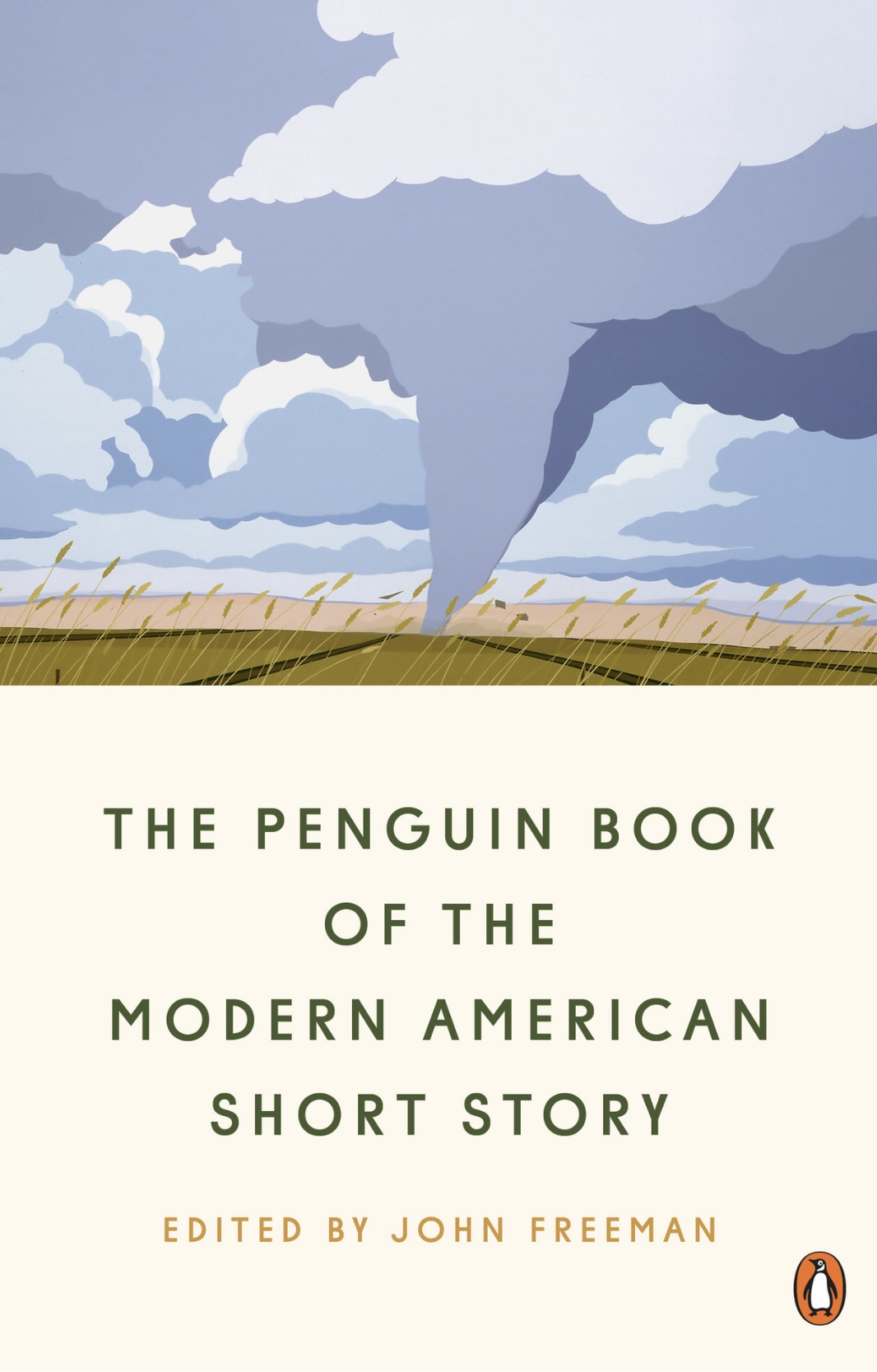
The Penguin Book of the Modern American Short Story


Part Two, continued from HERE
0BA5B140-A8B0-4F83-95AA-7B6B6A429E5A

Edited by John Freeman


My previous reviews of classic or older fictions: https://dflewisreviews.wordpress.com/reviews-of-older-books/

When I read this book, my thoughts will appear in the comment stream below…

Edit

14 responses to “*

  1. RIVER OF NAMES (1988): Dorothy Allison

    “…the three of them slit their arms, not the wrists but the bigger veins up near the elbow;”

    This powerful narration is attritionally unfurled by an explicitly named “lesbian”, a narration of her past which is at the inverse tontine’s top of an enormous pyramid of siblings and cousins caught up in an incessant skein of rape, self-harm, death by inevitable or foolhardy accidents and by design, heinous cruelty, death by child birth, torture by child abuse, where even “pricks” become manifold ‘broom handles’, et al…
    And all this is heard by her beloved Jesse, a woman today who comforts the narrator with love and belief in this wildly cruel backstory… that river of names in the head. The narrator’s head.
    Whatever the laughing gas involved.

    “If you fight back, they kill you.”

    *

    Yes, we know what momentously happened in the UK this very week, a metaphor of death by ‘same-sex groping’ of so-called ‘broom-handles’…or simply by a form of truth in the ever-flowing river of accepted self-deceit around us, a river that political narcissism at the top of the pyramid can so easily produce?

    “A full bottle of vodka will kill you…”

  2. EMERGENCY: Denis Johnson

    “…I just started wandering around, over to the coronary-care unit, down to the cafeteria, et cetera,…”

    This is so off the wall it is neither inside nor outside, a story that one needs to pluck out of the mind’s eye like a mote, if not a knife, as a clerk and an orderly in the Emergency Room of a hospital chum up and are so blindsided by the blood and guts they take some of the pills in the medicine cupboards and go to a funfair that is so utterly funfairish beyond Ligotti that they end up at a military graveyard which turns into a drive-in cinema — in the deep snow! And they effectively let eight little bunny rabbits die. A story that makes me philosophical about never being able to be philosophical. Untouchable by death.

    “There’s so much goop inside of us, man,” he said, “and it all wants to get out.”

  3. STICKS by George Sanders

    Moving, poignant, touching vignette — deploying “a kind of crucifix” that Dad put in the garden and with whatever the cycles of his life and the seasons with which he disguised it as serial costumed icons for us children to celebrate. He even became avant garde with it! But he could never disguise death itself. The next people who lived there disguised it with invisibility. Nothing ever sticks forever.

  4. FIESTA, 1980: Junot Díaz 

    “I met the Puerto Rican woman right after Papi had gotten the van. He was taking me on short trips, trying to cure me of my vomiting.”

    This summarises the plot, Dominican migrants in New York. Looking back in 1996 to 1980, Yunior a boy then and the rest of his family and his propensity to be car-sick. The day of travelling in the car to have a party with new arrived members of the family amid the golden tassels and stucco ceilings like a stalactite heaven and the nigh longest nails in the world on his aunt’s fingers. Yunior’s direct knowledge of his Papi’s affair with a Puertan Rican woman, and his love for his Mami in the front of the car with his Papi, and his older brother beside him. Papi didn’t allow Yunior to eat before car journeys, but on the way home from this wild party that we share along with its bad-ass and wussy characteristics, he ends up being sick I guess. Emotional sickness more than what he had eaten at the party? Poor loveable wusses, all, not just Mami.

    “Papi was old-fashioned; he expected your undivided attention when you were getting your ass whupped. You couldn’t look him in the eye either—that wasn’t allowed. Better to stare at his belly button, which was perfectly round and immaculate.”

  5. SILENCE: Lucia Berlin

    “Silence can be wicked, plumb wicked.”

    “In third grade I read well but I didn’t even know addition. Heavy brace on my crooked back. I was tall but still childlike. A changeling in this city, as if I’d been reared in the woods by mountain goats. I kept peeing in my pants,…”
    The multi-touching story of this mostly fatherless ‘I’, a girl-to-woman we get to know somehow as well as ourselves, and it is no surprise that she, too, ends up, in the story’s last sentence, understanding Uncle John better by dint of her own filter of strength-as-weakness. And why she’d kept silent about Grandpa and her sister. “…pinches that looked like stars”. Later a jabbing thing against her own behind.
    “…I get fiction and reality mixed up, but I don’t actually ever lie.”
    And the understanding we all develop through the strength of our own weakness, she of her Mamie and of her friend Hope, a Syrian girl who looked like a baby baboon. “We saw Mildred Pierce six times and The Beast with Five Fingers ten.” — “washing bloody menstrual rags” — “mumblety-peg” and stabbing between fingers, and later welding a sororal knot by the blood of those fingers. Petty theft et al. And the mysterious “chances” they ‘sold’ for a vanity case, and the necessary watershed of a car-ride with Hope’s elder brother… and that sororal knot broken.
    Silly moments like…
    “We saw four Siamese cats who used the real toilet and even flushed it.”
    And prophetic moments, for our own times today, like…
    “I thought the only Odessa was where Hope went.”
    And Uncle John (“If only I had understood him half as much as he always understood me, I could have found out how he hurt, why he worked so hard to get laughs.”) — with probably the most telling climactic elbow-trigger in fiction literature that already teems with elbows—

    “He had a bottle between his thighs, was driving with his elbows…”

  6. THE TWENTY-SEVENTH MAN: Nathan Englander

    “‘I’d much rather have a book than shoes.’
    They all knitted their brows and studied the man; even Bretzky propped himself up on an elbow.”

    “The lightbulb hanging from a frayed wire in the ceiling went on. This was a relief; not only an end to the darkness but a separation, a seam in the seeming endlessness.”

    This is about Stalin’s edict for 26 subversive Jewish writers to be collected from wherever they were living and taken to a place with a single light bulb ‘God’ and then executed with an exactitude of simultaneity. It is both poignant and hilarious ….and inspiring for all writers and thinkers, and I wonder if the Tractate mentioned was the Middoth of the Talmud created by M.R. James? And whether the somehow accidental inclusion of a 27th writer, a young unpublished writer called Pinchas, someone more concerned with books than shoes, was an admin error on the list OR a preternatural synchronicity of gestalt so that he could be present to write a new work under the light bulb and increase his audience by reading it to his older hero writers including Zunser just before they all died together! Or was this story itself, as a lightbulb moment, tantamount to his own work by dint of his chance presence in it, a work undetermined by any God, even by Stalin himself? 

    “Why write at all when your readers have been turned to ash?”

    “Zunser was an actual person. My God, he had seen the great seer pee into a bucket.”

    “They hated the bulb for its control, such a flimsy thing.”

    “‘But why assume the goal is to live?’ Zunser slid the mangled hand onto his stomach.”

    “‘Then,’ asked Pinchas, and to him there was no one else but his mentor in the room, ‘you don’t believe there is any reason I was brought here to be with you? It isn’t part of anything larger, some cosmic balance, a great joke of the heavens?’”

  7. BULLET IN THE BRAIN: Tobias Wolff

    “He did not remember when everything began to remind him of something else.”

    A startling story of a man frustrated by his visit to a bank and its customer care, involved in a sudden bank robbery instigating what? . . . well, the plot spoiler is built into the title, but the single memory the brain recalls — as opposed to the shuttling of missing memories of a drowned man — is tellingly trivial compared to what he otherwise are. Sic.

    “She looked at him with drowning eyes.”

  8. THE HERMIT’S STORY: Rick Bass

    “Perhaps someone viewing the tracks could have discerned the pattern, or perhaps not, but it did not matter, for their tracks—the patterns, direction, and tracing of them—were obscured by the drifting snow, sometimes within minutes after they were laid down.”

    …and that is how I try to store fiction works by gestalt real-time reviewing, so as later to transcend my abominable memory!
    This particular work is a real reading discovery, a passion of a moment now and hopefully forever, an all-sensory, dream-like trip of survival of man (Gray Owl) and woman (Ann) — as told later by the latter — in blueness-infused Canadian ice fields accompanied by dogs on point for set quails, with an eventual magical aura of a dry lake where the ice has trapped warmer air pockets, and where the lake’s water has seasonally drained away….a story fired by ‘swamp gas’ among the cattails…

    “…she speaks of her work as if the dogs are rough blocks of stone whose internal form exists already and is waiting only to be chiseled free and then released by her, beautiful, into the world.”

    “…as if submerged in another time, or as if everyone else in the world were submerged in time—and as if she and the dogs were pioneers, or survivors of some kind: upright and exploring the present, alive in the world, free of that strange chitin.”

    “—the ice was clear rather than glazed, they could see the spangling of stars, though more dimly; and strangely, rather than seeming to distance them from the stars, this phenomenon seemed to pull them closer, as if they were up in the stars, traveling the Milky Way, or as if the stars were embedded in the ice.”

    “…but there was also the hot muck of the earth’s massive respirations breathing out warmth and being trapped and protected beneath that ice, so that there were warm currents doing battle with the lone cold current.”

    “…across their sleeping brains in the language we call dreams but which, for the dogs, was reality:”

    “What would it have looked like, seen from above—the orange blurrings of their wandering trail beneath the ice; and what would the sheet of lake-ice itself have looked like that night—throbbing with ice-bound, subterranean blue and orange light of moon and fire?”

    “If the snipe survived, they would be among the first to see it. Perhaps they believed that the pack of dogs, and Gray Owl’s and Ann’s advancing torches, had only been one of winter’s dreams.”

    “…how the world must have appeared to them when they were in that trance, that blue zone, where the odors of things wrote their images across the dogs’ hot brainpans.”

    ***

    “…she had to break the ice above her by bumping and then battering it with her head and elbows, struggling like some embryonic hatchling;”

    And, after that telling ‘elbow’ moment in this story, so I will take you to another purpose in my gestalt real-time reviewing, i.e. the burrowing of synchronicities or serendipitous coincidences as borrowed from a preternatural and pareidoliac power, a power that is literature, just like those ice-miners plumbing the power of dream and of the harshness of earth itself as filtered by the nuggets of words…and today, I can report that earlier today I happened to read and review SOLID OBJECTS by Virginia Woolf (HERE), a telling comparison and contrast …

    “…not a gem given to one by some favored or beloved individual but, even more valuable, some gem found while out on a walk—perhaps by happenstance, or perhaps by some unavoidable rhythm of fate—and hence containing great magic, great strength.”

  9. A TEMPORARY MATTER: Jhumpa Lahiri

    “In the dimness, he knew how she sat, a bit forward in her chair, ankles crossed against the lowest rung, left elbow on the table.”

    That elbow marks the start of the very first in a series of scheduled temporary power-cuts at 8 pm…

    “I remember during power failures at my grandmother’s house, we all had to say something,” Shoba continued.

    And the current encroachment of aberrancy in their marriage, including a still birth, seems to start resolving itself, a relationship around a calendar of William Morris wallpaper designs and complex cuisine that he, Shukumar, conducts after he becomes a bit of a hermit and she widens her horizons, and they tell each other secrets during the recurring darknesses, home truths or failings that they had not before told each other, sessions that evolve because of Shoba’s backstory statement above. A pattern or gestalt that is also still-born? 

    There is a remarkably poignant ending in this organic story of slow-emotional, slow-motional light-and-dark strobes… finally weeping together, but why? Having watched others outside their wobbly marital bubble during the serial darknesses, this being one telling example…
    “The woman laughed, slipping her arm through the crook of her husband’s elbow. ‘Want to join us?’
    ‘No thanks,’ Shoba and Shukumar called out together. It surprised Shukumar that his words matched hers.”

  10. THE PENTHOUSE: Andrew Holleran

    “Our fantasy was Ashley—even if we were all afraid of his turning his attention on us, and could not understand what he was doing with us in the first place, so far from the Land of Ormolu.”

    “The latter category, he said, included the people who came to the penthouse; we were like dancers between songs who slow down and even stop while trying to decide if the new theme being introduced is worth dancing to. The novelist was right. The year we went to Ashley’s was a strange time: Something was ending, but nothing had replaced it, and Ashley’s penthouse seemed like an oasis.”

    This is astoundingly free-flowing prose that sweeps through your body-mind like a whole “gay” decade in New York, the seventies into the start of the eighties, watching I CLAUDIUS as it comes out on TV, with the spectacular architecture of city fashion from the towering penthouse’s vantage point with all manner of characters, including the novelist who expostulates on Proust, even writes part of this very novelette as ‘I’ someone else! And a professor writing about Edith Wharton, and many men like Village People who if they shave off their moustaches are left with thin wounded lips. Ashley becomes the Queen of the Pyramid or Tontine, until the whole ponzi penthouse panoply is brought down by being turned over to the police by the novelist himself. So much here that unrolls endlessly into your brain, “gay” or not. The end of an era that seeps into your very veins with fast-moving injections of words…

    “A siren was heading downtown in the street below; a tug was pushing a barge up the river; the sky itself was dead white; it was one of those moments of sudden stillness when you realize everything you have been saying, and doing, is a waste of time,…”

  11. THE FIX: Percival Everett

    “Thank you, this is terrific. All you used was chewing gum. Can you fix other things?”

    The page-turning experience of Douglas in his sandwich bar saving seemingly homeless Sherman from the men accosting him in the street outside, and Douglas asking him to stay and work there because Sherman had the miraculous skill in fixing things that did not work by using the blur of his fingers. Even Douglas’s wife Sheila was convinced that this stranger with the same first three initials of her own name was not dangerous when he fixed her massage machine! And then his knack at fixing things later extended to Jesus Christ proportions but only after… 

    “It began when Sherman offered and then repaired a small radio-controlled automobile owned by a fat boy.”

    “‘If you knew this would happen, why did you fix all of those things?’
    ‘Because I can. Because I was asked.’”

    “If you irrigate a desert, you might empty a sea. It’s a complicated business, fixing things.”

    Until he could not fix what I call the consequence curse of being sought out by his ability to fix anything or anyone, even today’s pervading drought in my own real-time.

    “‘I am the empty sea’, he said.”

  12. WATER CHILD: Edwidge Danticat

    “The as and os, which had been struck over many times, created underlayers, shadows, and small holes within the vowels’ perimeters.”

    An emotional tale also somehow pressed hard into the paper even if you read it on a screen. Nadine (“Ten years ago her parents had sold everything they owned and moved from what passed for a lower-middle-class neighborhood to one on the edge of a slum, in order to send her to nursing school abroad.”) deals with her pitiful parents’ heavily indented letters of handwriting and fails mostly to ring them as they so yearn her to do. Then comes their typed letter with some of its letters struck over many times… but we somehow need to read between the lines of what we are told by the story’s own writing, the constant white noise of her TV, her dealings with another ear, nose and mouth nurse at the hospital as they wait for patients to jump from windows in the Psych ward opposite, Nadine’s previous abortion, Ms Hinds who has lost her voice as a result of treatment in Nadine’s ward, Ms Hinds being as manic as a dog that can’t bark and pressing hard messages of communication on a pad instead, and Nadine’s pebble in a glass of water, a shrine to her baby, would have been born today, as Ms Hinds’ parents come to take her home, and Nadine sees herself in her…. an impression through a just closed elevator door… having recently at last rung her own parents…
    Danticat or b-a-s-e-n-j-i dog?

    “‘Is there anyone in your life?’
    ‘No, Manman,’ she said.
    ‘Don’t wait too long,’ her mother said. ‘You don’t want to be old alone.’”

    This review continues here: https://etepsed.wordpress.com/1374-2/

Friday, July 08, 2022

Elizabeth Taylor’s Complete Stories (2)


Elizabeth Taylor Stories (2)

PART TWO, continued from HERE

8F90A756-A30A-474A-8D7C-961221C91D1A


My previous reviews of older or classic fictions:  https://dflewisreviews.wordpress.com/reviews-of-older-books/

When I review this book, my thoughts will appear in the comment stream below…

Edit

13 responses to “Elizabeth Taylor Stories (2)

  1. Plenty Good Fiesta

    “I think that one of the most touching things I have read about a war was by Gertrude Stein, who remarked how the look of her French village altered in 1939. The elder brothers and the fathers went off to the front, and suddenly the lanes were full of little boys riding bicycles too big for them, standing on the pedals, their elbows in the air.”

    …being the perfect elbow-trigger that emerges just before finding a downbeat fairground in England — as nothing to the fierce colour of Hemingway’s Spain, as a couple and their baby took the nine year old boy refugee from the Spanish Civil War, a boy with the pidgin English of the title, who finds a roundabout and he eschews the usual fancy rides for its plain bicycle that no doubt reminds him of that of his brother who was killed in the war. From the innocent “gayest gaiety” of his soul to a telling roundabout ritual that seems to go round and round as if forever in a new fantasy. Yet a telling pitch of reality that stems from his Spanish backstory, his makeshift girls’ underwear that had been given him by the refugee camp and this evocative relationship of his with the married couple who are now taking care of him, along with their own baby. The legs of the Cyclist’s Touring Club sign’s ‘whirling legs’, not the swastika of the fascists that the boy’s family opposed, but more his fast pedalling ones.

  2. SIMONE

    “After an hour, though, it had stilled and grown lifeless, and she had begun that agonising time of watching the hand of the clock, so nerve-destroying to the bedridden. […] The fire creaked and whispered. Some coals fell together with a shudder. The shadows on the wall grew still. The room seemed to be dying slowly, and the clock was running down.”

    At first I thought the main bed-ridden character was called Simone.. But then…well, is it a spoiler to tell you this? — the Siamese cat her husband Fred brought home for her (gifted by one of his customers) as company for her and to fill the “blank time” that Zeno himself, I guess, may have created, between 4 pm when Mrs Dring left her alone and Fred came home from work, at 6.30… a cat that is really the spoiler, fulfilling the hatred that the room already contained, a hatred absorbed in the ‘person’ of a cat called Simone, with a ‘hatred’ that will haunt me, especially as I started reading this story half an hour after reading and reviewing (HERE) the ghost story ‘The Stalls of Barchester Cathedral’ that also seems to have a cat that seemed to have absorbed what was already there!
    Another spoiler: I sense Fred eloped with Simone at the end.

    “As the hands of the clock crawled, limped round after one another,…”

  3. I Live in a World of Make-believe

    “For Lady Luna asked questions which she did not intend should be answered; she cooed, murmured and agreed;…”

    The story of Mrs Miller with husband and son Timmy in their humble house and the bigger house opposite where Lady Luna lives with her daughter and a Nanny.
    This is the perfect depiction of snobbery, as Mrs Miller grapples with building a “library” for show and reciprocating Lady Luna’s lackadaisical tea of burnt buns (“Buns I’d not hand to a charwoman.”) by inviting that lady to tea at the Millers so as to show how it should have been done! Mrs M’s husband meanwhile thinks about a gas oven and the best comfortable way of putting one’s head into it.* And the almost shocking concept of Mrs M and her steely resolve while sewing (“She chose a strand of green silk and began to embroider an eye in a peacock’s tail. The three of them watched and listened to the needle passing through the linen.”) … not forgetting this is the era when an electric toaster was a new invention. Whatever the ‘arrowroot mould’ that somehow featured in Lady Luna’s excuse in not arriving for tea at all. The visit, on the same day, to Mrs M by Aunt Flo and little Valarie’s ringworm, notwithstanding! And the make-believe in books. “Books are such an expensive item and I don’t fancy them second-hand. You can’t tell where they’ve been nor what they harbour.”

    “I’ve always said books are the making of a room.”

    ===

    *He once said to her:
    ‘Let me show you something true for one moment. Let me help you look into your son’s heart, or your own even. And if you are always to measure your condition against other people’s, let it not be for ever against people who do not exist. For life will never be what you have imagined. Not for five minutes even.’

  4. MADAME OLGA

    The story of a man who once regularly visited — with his mother, now deceased — a seaside resort in Kent, much like the seaside resort in Essex just across the water where I live… and I empathise with this out of season version, as he tries to track down the eponymous clairvoyant who changed his life, eventually finding her in a convalescent home, with her having given up the fortune-telling business. His kidney stone and the fortune of a pools win, included. There are more than subtle changes in Madame Olga, and subtle inferred motives on both sides, which brings us back to how fate tracks the lines on one’s palm as well as some other oblique force, tellingly alongside an earlier mention, in this story, of a Hall of Mirrors.
    They end up going for a bite together…. I hope it was better than the cold ham and beetroot he got in the boarding house, the evening before!

  5. THE AMBUSH 


    “The tall clock only tocked, never ticked, Noël had said.”


    The beautifully atmospheric riverside weir of a house as substantive story of Catherine, who paints and draws, as she revisits the family, Noël’s mother Mrs Ingrams and Noël’s (now seen to be vaguely lookalike) brother Esmé — a place and people that she once visited with her beloved Noël before he died in a car accident… and also there towards the end of the visit is Esmé’s petrol can fibbing friend Freddie, another painter, and tussles with a dangerous snake that turns out to a harmless one.

    You can imagine in your mind’s eye by a preternatural instinct many of the interactions here, the beauty of Mrs Ingrams as an older version of Noël, Catherine’s approchement with more taciturn Esmé as seen to be devised by Mrs Ingrams, a sort of ambush that seems as nothing when compared to that of Mrs Ingrams’s potential farewell at the end in the form of perhaps a Sapphic kiss and hug? You can imagine also the Bowenesque accoutrements of river and house, and conversations. A major work and please revisit some of it with me below…


    “The nearest she had got to that, she reflected, was once sketching his foot when he was lying on the lawn after swimming. She had been drawing the gable of the boathouse and branches of a chestnut tree and, for some reason turning to look at him, began on a corner of the paper to draw his foot with its bony ankle and raised veins.”
    She erased Noël’s foot at the time of drawing it – with a dragonfly et al.


    First elbow-trigger, as Mrs Ingrams perhaps commences the approchement of Catherine with Esmé… “‘Don’t defer it, or try to pay off in instalments,’ Mrs Ingram said. ‘One only pays more in the end.’ She sat so still with her elbow among the litter of leaves on the table and her cheek resting on her hand.”


    “…a great, bracing, visionary ill.”
    —“Mrs Ingram was brisk, as if now Catherine was disposed of for the morning. This was unlike her, Esmé thought: but his mother was definitely up to something and he wondered for whom ill was boded, Catherine or himself. Some wonderful ill, no doubt, he thought; done for one’s good; a great, bracing, visionary ill.”


    The second elbow-trigger as the approchement with Esmé commences… “She rested her elbows on the drawing-board and covered her eyes with her hands, waiting for this moment to pass. Esmé, going along the tow-path to the pub, saw her before she heard his footsteps”… then a different trigger of two darts bullseyes she throws in one go by fluke inside the pub!…


    Later, “The same pop-eyed old codger who was selling the bull’s-eyes”, as part of the charmer and chancer Freddie’s lies about his excuse for missing lunch! His virtuoso paintings compared to Catherine’s.


    The river “locks” of time, as an Aickman-like Zeno’s Paradox wading of time to keep it longer if one needs, and to resonate with the weird weir’s resistance to flow?
    “white ghosts rose off the weir.”


    “The dead can become too important, just by dying.”


    “She wondered if she would have to face some overpowering monument, for death is alien enough in itself without some of the things which are done afterwards as being appropriate.”


    “…‘We are under the same roof.’ She had known how beautiful it can be to come to the close of the day and lie down in bed, thinking those words. Then the house itself became haunted, enchanted, spellbound with love.”

  6. THE BLUSH

    “…glancing at the clocks in one room after another, listening for her husband’s car – the sound she knew so well because she had awaited it for such a large part of her married life…”

    Zeno Paradox time again? Ironic in hindsight that waiting, bearing in mind whom I inferred to be in that car with him! Don’t ask! – especially if you don’t want a plot spoiler! 

    The story of Mrs Allen’s relationship with her homehelp Mrs Lacey, who’d lost her figure compared to Mrs Allen, that makes it seem even more ironic! Mrs A who’d regretted having never expected nor had a child, and Mrs L with several children, and even at her age today, expecting again! 

    “I’ve got my own set,’ Mrs Lacey said airily. ‘After all, he’s nearly twenty years older than me.”

    Mrs A, thinking of Mr A…
    “Her relationship with Mrs Lacey and the intimacy of their conversations in the kitchen he would not have approved, and the sight of those calloused feet with their chipped nail-varnish and yellowing heels would have sickened him.”

    …bow-legs and inflamed eyelids and pickled walnuts…

    Mrs A drenched, then Mr Lacey arrives to talk to her out of the blue, about Mrs L’s indisposition and his hinted plot spoiler …
    “Twenty years older than his wife – or so his wife had said – he really, to Mrs Allen, looked quite ageless, a crooked, bow-legged little man who might have been a jockey once.”
    …jockey! Makes the Horse and Jockey pub even more ironic, where Mrs L had her set and left her kids to look at her from outside!

    ‘It’s too much to expect.’

    Ends poignantly with Mrs A’s suddenly mirrored blush meaning more than what it means!

  7. THE LETTER-WRITERS


    “It was frightening, like seeing a ghost in reverse – the insubstantial suddenly solidifying into a patchy and shabby reality.”

    “They had written to one another for ten years. She had admired his novels since she was a young woman, but would not have thought of writing to tell him so; that he could conceivably be interested in the opinion of a complete stranger did not occur to her. Yet, sometimes, she felt that without her as their reader the novels could not have had a fair existence. She was so sensitive to what he wrote, that she felt her own reading half-created it.”

    This feels like it should be a classic short story that everyone I know should read. And this review is my version of the letters the two main characters write, evoking something for real, but what? She, Emily, had been writing to Edmund, a famous novelist, for ten years, and he to her, as they created a world between them. And she, with nervously excited anticipation, awaited their first meeting. But on the day they eventually meet, after taking the wine, that she’d got ready to be chilled on this hot day, taking it from the low water of a well, with her having evoked over the years his delightful image of seeing Mrs Waterlow through the curtains with Emily’s eyes, he turns up just as Emily’s cat had upset her expensive crockery and the lobster she’d bought for his lunch, and then Mrs Waterlow herself turns up who turns out to be an eavesdropping pest… and Edmund tries to disturb Mrs Waterlow with what I took to be imaginary events back in his home land of italy… “He began to warm to his inventions, which grew more macabre and outrageous –“

    Emily and Edmund had, I feel, been sending each other a dual Venn diagram of a novel to each other, I guess, all these years. They even later airbrush the whole meeting, so as to carry on their correspondence unsullied. Perhaps it was her unrequited love at first sight? And after he’d left, there is what I shall now believe is my favourite ‘elbow’ moment so far in reading and real-timing literature! …
    After their complaints of dry heat throughout the meeting, and now he’d gone … “She put her head out of the window, her elbows on the outside sill. The soft rain, falling steadily now, calmed her.”

  8. A Troubled State of Mind 


    “He found them by the drawing-room fire, Lalage winding wool from Sophy’s outstretched hands. Kneeling on the rug, Sophy rocked from side to side, and swayed her arms, turning her wrists deftly as the wool slipped off them.”


    Somehow the perfect prelude to the brimming situation where young woman Sophy returns from Switzerland to England in the rain to the house where her widowed father, Colonel Vellacott, has, over the years clumsily Italianised  the place, gardens, furniture, rooms, and where Sophy’s schoolgirl friend Lalla has since married Sophy’s father, unbeknownst to Sophy. Just imagine the repercussions of that situation! — especially   in Taylor’s paradoxically soft focus and sharply perceptive  style,  with the inclusion of the housekeeper Miss Sully (a woman of more than just “kitchen venom”) who might perhaps have hoped to marry the Colonel …and there are Sophy’s own reactions to Lalla as both friend and mother, all leading to utter tears, except Sophy’s going to secretarial school with Miss Priestley (a possible old flame of her father) as Sophy’s teacher, a sort of act of spite, and Sophy also plans to wed someone called Graham, a sort of act of love.


     Mischief as an element in mirth, or simply mimicry in Sophy’s erstwhile baby-talk about “‘Icky chocky bikky,’…” Not to mention Colonel’s jugged hare and Miss Sully’s multi-named puddings. Don’t go there! But it all works and coheres lethally. Just share with me some of its highlights and elbow-moments  tragiwards…


    Lalla: “Her bracelets slid down her thin arms to her elbows. Her eyes were full of pleading. […] She leant out, resting her elbows on the rough stone sill, feeling insecurely attached to space and time – the seconds would never tick on till luncheon, or the silence be broken, or the sun ever again go in. […] The room was menacing to her now and laden with treachery, its air heavy with secrets. The clock ticked slyly and a curtain lifted slowly and sank back full of warning.”


    “Miss Priestley with her chilblains was saddening and unattractive and the office was stuffy and untidy,…”


    ‘The one that assaulted that little boy and then smothered him.’ – some gossip or other in the newspaper. 


    “A long drawn-out scream came from Miss Sully’s wireless-set as Lalla crossed the hall and went softly upstairs…”  


    All parts of time’s lethal slowth …


    “….knowing before the chimes began that they were imminent; she could feel the air growing tense and the clock gathering itself to strike,…”


    “Miss Sully, mixing raisins and rice, was talking of the days when she was companion to an old lady whose footman had interfered with one of the gardener’s boys. She brought in many a Freudian phrase along with those of the cheapest newspapers and her voice dropped to its cathedral hush as it did when she talked of sex. One side of her neck was a bright red. Deftly her fingers worked and when she took up a large knife and began to chop some mushrooms, she abandoned herself almost obscenely to the job.”


    Sophy: “I wish that Lalla would try to be a wife to him and not a romping schoolgirl still.”


    “‘I have been read,’ it seemed to say.”


    ***

  9. The True Primitive

    Lily is dating young Harry as a marriage prospect, the son of Mr Ransome, and the brother of another son called Godfrey, Mr R being the lock keeper on the river, with a lock garden but, increasingly offputting to Lily, Mr R also has a near violent and almost ‘obscene’ obsession with the culture represented by books of literature and their authors, as well as painting, especially his own painting methods that he inculcates into his sons, and those art students who crowd to the lock to paint, he thinks he can mentor them, as some even said that Mr R’s own painting of the same scene was as creatively naive as Douanier Rousseau, the original ‘primitive’, but Lily senses more than just interference by Mr R upon her mind but also upon the prospect of her body, especially when she spots Mr R naked inside their house between the shutters, but she failed to see the two sons who painted him from a darkened area of the room! A startling story that starts off naive, and has superb passages like this one…

    “She [Mr R’s now deceased wife] had never been able to comprehend half of what he had offered her, she had muddled the great names and once dozed off after a few pages of Stendhal; but something, he thought, must have seeped into her, something of the lofty music of prose, as she listened, evening after evening of her married life. Now he missed her and so much of the sound of his own voice that had gone with her.
    How different was Lily. The moment he began to read aloud, or even to quote something, down came her eyelids to half-mast. An invisible curtain dropped over her and behind it she was without any response, as if heavily drugged. He would have liked to have stuck pins in her to see if she would cry out: instead, he assaulted her – indecently, she thought, and that was why she would not listen – with Cicero and Goethe, Ibsen and Nietzsche and a French poet, one of his specials, called Bawdyleer.”

    and

    “‘You,’ they [the artists whom Mr R thought he could mentor] had been thinking, ‘a man who has all the great Masters at his finger-tips and can summon from memory one thundering phrase after another, who would expect to find you in such a backwater, living so humbly?’”

    A most naively, bizarrely sophisticated unprimitive work, and I say that you need Author Elizabeth Taylor’s literary work like this to complete your own ‘culture’. Come around mine some time and I will read it aloud to you. Not for you to become my captive audience, but more something else, something far more intangible that I have to deploy for you about all the types of literature that I have been cultivating for years in Voltaire’s garden…

  10. The Rose, The Mauve, The White

    “They lifted their frocks and dropped them over their heads, their talcumed armpits showed white as they raised their elbows to hook themselves at the back.”

    At the end a girl is stroking her own smooth arms after the others had gone to sleep. But, primarily, this is a delightfully adumbrated portrait of adolescent people, the girls’ friendships and rivalries, before the New Year party wherebefore 16 or 17 year old Charles had practised his hip hip hooray climax in the open air much to the tiny twin girls amusement, who were not of course going to the party. And we focus gradually on a plain girl who everyone felt sorry for being a wallflower, I guess. A lovely nostalgic story all imbued with pastel bathroom colours. (But I wonder which one had put socks in her brassiere?)

    “Five hours earlier, they had not looked beyond the dance or imagined a time after it.”

  11. BETTER NOT

    “Another day gone. A sense of achievement in this. Going cheerfully towards the grave.”

    The male POV is amid the wondrously ET-drifty garden and house, children, mother, he a bachelor who is a family friend and done many duties to the whole family, now thinking of telling the mother in the family how he loves her before he himself leaving off his “last leave” for that wet wartime tent, I guess. And he decides better not.

    “Begin to hum, then you find you are singing and all the knots in your throat are untied …” he had earlier told the child in the family, and then he thought of his reading matter only connected to the station he was leaving from… “King’s Cross. That station suggests Infinity, Forster says. Do you remember?”
    And to ironically match with some strange power of coincidence yesterday’s L.P. Hartley butterfly-cull in a killing bottle HERE… (better fly not?)

    “About being a butterfly and not having very long to live.”

  12. Summer Schools

    “‘Dentists’ houses always depress me,’ she said. ‘I don’t think I could stay in one – with all that going on under the same roof.’”

    Melanie says this when her sister Ursula is invited there by an old school friend to both of them, called Pamela, recently married to Mike, and M is upset because she is not invited and, so, she insists on going to a summer school on English novels (e.g. Middlemarch) instead of looking after U’s cat that thus needs to be put in a temporary cat’s home, well, I could go on and on about this engaging plot and the characterful characters along the way in this split story of wondrous ET prose that is both simple and complex and tantalising with abandoned Katherine Mansfield books whilst retaining a Mansfield flavour, a split story where U meets Guy, a man like a ventriloquist’s dummy, always fast and first in his car, and we don’t exactly know how sordid this gets between U and Guy, while M has a fancy for the married Professor, whose wife knits like a sort of deputy Prof or guillotine watcher, I feel, and we don’t know if M imagines the fruition of this affair of hers with the Prof is fulfilled or not, nor whether it was a boring Mr Brundle (aka Bulstrode?) or the Prof himself she meets amid idyllic swans.
    Tantalising finales blending as no finale at all, coming together when they arrive home tails between their legs unlike U’s cat now returned, too. Any previous inner dialogues, notwithstanding, e.g “What a dreadful man he is, really, in spite of his tenderness, she thought. So hollow and vulgar that I don’t know what Melanie would say.”
    One or both sisters are seemingly trying to stave off getting like the once ageing pair of “maiden-ladies” whom they knew in the past…. 

    Highlights for me as memorable counterpoints to the otherwise tantalising set pieces…

    “…and Ursula, finding Katherine Mansfield’s Journal covered with dust, felt estranged.”

    “The scarf tucked inside his shirt was yellow, patterned with horses and when he took it off and tied it round Ursula’s head, the silk was warm to her cheeks.”

    “Even Professor Rybeck looked restless, as Mr Brundle began now to pound away at his theory. Then others, in disagreement or exasperation, began to jump to their feet, or made sharp comments, interrupting; even shot their arms into the air, like schoolchildren. World Peace they might have been arguing about, not George Eliot’s Dorothea Casaubon.”

    
The Prof’s wife “gave, somehow, an impression of not being one of the audience, seemed apart from them, preoccupied with her own thoughts, lending her presence only, like a baby-sitter or the invigilator at an examination […] She had only the Professor, and the socks she knitted were for him. She is more goddessy than motherly, Melanie thought.”

    “She pushed a very pale, boiled caterpillar to the side of her plate.”

    “I’m afraid the piece of skirt was rather gristly, Mr Bones.”

    This review continues here: https://etepsed.wordpress.com/1370-2/