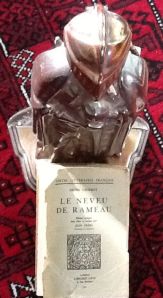
Saturday, July 23, 2022

An Episode of Cathedral History by M.R.James

 “…I almost think the effect’s better when it’s all dark-like. Seems to add to the size and heighth.”

I think I shall now have a break from real-time reviewing MRJ stories solidly for the past week or two, especially having now read, possibly for the first time, this the most frightening one of all, well, in today’s passion of the reading-moment, that’s what it seems to have done to me. Thanks, yes, thanks and not blame (!), to the M.R James Appreciation Society on Facebook for effectively recommending it to me. 

From the Datchery and Durdles of Drood to the “don’t want to be dawdling about all night” in this tale — a tale created by the narrator’s piecemeal piecing together by gestalt summary from what was spoken to him by Worby (the head verger) about his boyhood when his father was working in Southminster Cathderal, as part of the Gothic Revival, to the demands of Dean Burscough (cf similar things in the Burford of MRJ’s ‘Speaker Lenthall’s Tomb’ I happened to review yesterday).

Worby’s account that mainly features a plain Altar-Tomb with its telling gap  now crowed wider to reveal ….. what is mentioned in Isaiah 34  if not by Tractate Middoth’s 334!

There is even a boy here whistling with two fingers to match the young shilling siffleur of Burnstow! And so please revisit parts of this scary experience with me…

“‘I suppose it is Worby, and not a substitute,’ thought Lake to himself, as he walked up the nave.”  — and so, could the red-eyed lamia or satyr have by now shape-shifted into or actually become this older version of Worby, and so is telling its own tale through him? And into anyone else who tries to re-tell, even piecemeal, this tale?

“The work of demolition began with the choir screen and organ loft, and proceeded gradually eastwards, disclosing, as Worby said, many interesting features of older work.” 

Even the pulpit is removed revealing the Altar-Tomb… and then…

“Dr. Ayloff was one of the first to go, with some affection of the muscles of the thorax, which took him painfully at night. And at many services the number of choirmen and boys was very thin.”

And thinner and iller people grew….

“The structure had been most carefully boxed in under the pulpit-base, so that such slight ornament as it possessed was not defaced; only on the north side of it there was what looked like an injury; a gap between two of the slabs… […] …hateful nightmares. Gradually there formulated itself a suspicion—which grew into a conviction—that the alterations in the Cathedral had something to say in the matter. The widow of a former old verger, a pensioner of the Chapter of Southminster, was visited by dreams,…”

….and some of these dreams will remain in your own dreams should you read this story? — yes, thinner and iller…

; a great, bracing, visionary ill.” — as the author Elizabeth Taylor puts it in The Ambush, something I reviewed earlier today. A writer who often writes about dresses….

 “‘You may as well brush my skirt, Frank,’ said the lady, ‘it must have got covered with dust, I’m sure.’ He obeyed dutifully; but,…” — it was her dress that was snatched inside the tomb, just like the boys’ music score and the  frayed edge they kept back being ‘wet and black’, before they watched more horrors from the triforium.

And the boy’s dog that was haunted by ‘the crying’ ….a dog that was harboured in the boy’s bed, much to his mother’s chagrin. And I shall ever hear things from this story, as well as see them. The horror on man-legs when it is dark, and quirkier things, too, the foil of which act to make the horror seem worse.

“Well, things was rougher, you see, fifty years ago, and I got a nip from the counter-tenor behind me that I remembered.”

“…and do do when I see my opportunity.” (not a typo)

***

All my M.R. James reviews: https://dflewisreviews.wordpress.com/my-ongoing-reviews-of-m-r-james-stories/

Friday, July 22, 2022

‘Speaker Lenthall’s Tomb’ by M.R. James, completed by John Linwood Grant

 “To Burford it was that Commons Speaker, Lenthall, retired: there he built his beautiful home, now almost a ruin, and there he died and was buried.”

I was not disappointed by the many classic M.R. Jamesian frissons that this story invoked and they felt, to me, perfectly formed as a gestalt that will remain haunting.  

And there was a feeling, too, that — as I have gradually been discovering while continuing to re-read MRJ’s works (here reading this one for the first time) and as I apply my gestalt-real-time reviewing process to them — literally preternatural forces become even more powerful, such as the connections that somehow MRJ provides into the future, some of which are beyond anything he could have intended … and the more we connect with him in this way, even more forces will surely accrue. 

Here I could not help but smile at the place name of Burford being related to a Commons Speaker, with its rough Bercow assonance, and for those who have ever seen cattle fords! And used three times in this work is the word ‘erection’ for the ugly monument to Speaker Lenthall in the St Mary’s  Church, that the young bumptious even rude  Harry Cave wishes to demolish as part of the Gothic revival, (and I was interested by what I read in this work and then researched for myself about Pugin et al.)

But I believe the women in this story are the stars of it, women who favour a different approach of preservation, one being Harry’s sister Mary who has the same name as this church which is local to Burford — and the other is the only Lenthall relative left alive, a feisty lady who is around 90 years old and beautifully characterised by this story, including her male-like voice and her rather thick white eyebrows later somehow resonating with a “white window blind” as part of the horrors summoned to punish Harry for commencing the monument’s destruction… and those horrors which I will not detail here are indeed wonderfully conjured up. 

And finally I will mention this work’s explicit reference to “female taste”…and the sentiment expressed of — ”Surely there may be beautiful things made in more styles than one.”

***

This story was first published earlier this year in GHOSTS & SCHOLARS #42

My other reviews of M.R. James: https://dflewisreviews.wordpress.com/my-ongoing-reviews-of-m-r-james-stories/
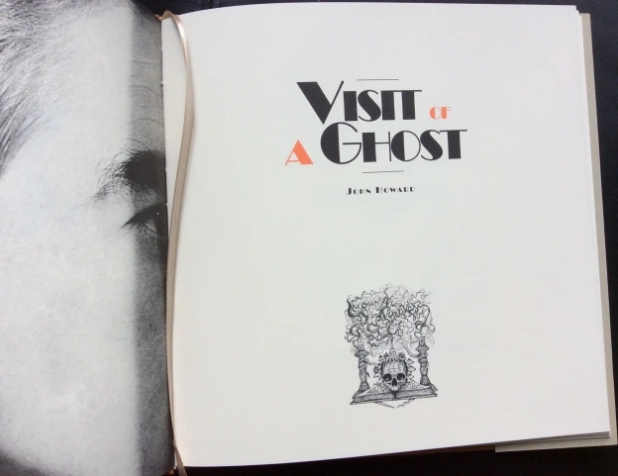
My previous reviews of John Linwood Grant: https://dflewisreviews.wordpress.com/tag/john-linwood-grant/

Thursday, July 21, 2022

Martin’s Close by M.R. James

 ‘Madam, will you walk, will you talk with me?’

Those who have read other MRJ reviews of mine may remember my focussing on the Squire’s “I don’t want to talk and walk as well” in a A VIEW FROM A HILL. And here it is magnified into smelly, toad-like directions. 

The tune of the above quoted song is whistled, yes, whistled, by the Lord Chief Justice in an Old Bailey murder trial of George Martin, a trial under this Judge Jeffreys which should, by rights, have been conducted in Exeter. The story of a respected high-born gentleman called George Martin who once asked a very uncomely, naive, common girl  to dance alongside that tune, and later supposedly murdered her with a knife he later lost, her body in a pond, and her revenant coming out at him from an inn’s cupboard. And his being dogged by her revenant even in prison and thereafter.

So much told to us by court transcripts, filtered by shorthand to longhand, and things that utterly haunt us…including a boy witness’s reference to a “wallowing sound.”

I have questions, though —

Why was the description of Martin’s Close as a precinct within a pasture germane to this story as told by the gestalt of the transcripts of the trial? Was John Hill’s habit of spelling out words connected with  Martin’s name arguably being Martyn and with the request of the accused to have a copy of the indictment?

Does this spelling theme in the story  relate to the transcription from shorthand to longhand? And why is North Tawton not mentioned until the very end?

“She had a great face and hanging chops and a very bad colour like a puddock.”

***

All my reviews of M.R. James: https://dflewisreviews.wordpress.com/my-ongoing-reviews-of-m-r-james-stories/
The Tractate Middoth by M.R. James

 POSSIBLE SPOILER

‘—weepers. Yes, that is the man.’

But with the dried tears of an unusually happy serendipitous ending!  But we don’t see the face lower down!

And teeming with unbelievable coincidences… such as Garrett’s chance meeting, via his own illness, with a complete stranger, a Mrs Simpson, on a train to Burnstow-on-Sea from ‘Oh Whistle’, and she happens to be connected with the earlier book incident in the library and thus Garrett’s illness itself!… yet, I can’t complain, as my gestalt real-time reviewing itself has ever depended on such preternatural synchronicities as a pattern for fiction truth. 

You can easily find its  plot summary set out, so I will concentrate on what struck me when re-reading it today…

The crucial library catalogue number 11.3.34. There is a novel entitled ‘334’ by Thomas Disch. And most of the novel’s characters live at 334 East 11th Street! 
Less striking perhaps, I have lived for many years in a house numbered 113. And 34 was an important number for my mother all her life.

“‘Half-past ten, this morning.’ / ‘Oh, good; and it’s just one now.’” The interesting comparison of the question about ‘a very long way’ mentioned about Garrett when getting the book for Eldred in the library towards the start and the triangulated walking route versus  that of a car from the station to Eldred’s Bretfield place towards the end. All reminiscent of Aickman’s wading through time and distance, that I have compared to Zeno’s Paradox. “‘Bretfield, sir? Yes—three miles just about. Short cut across these three fields brings it down by half a mile.’” — ”And here is Mr. Heldred’s note applying for the book in question, which I see he terms it a track.” And the Zeno’s Paradox by will-power of ever seeming to reach  that crucial fly-leaf of ‘Talmud: Tractatus Middoth cum comm. R. Nachmanidae. Amstelod. 1707. Given by J. Rant, D.D., of Bretfield Manor.’

The images connected with the ‘parson’ or ‘clergyman’ Dr Rant are very haunting, the cobwebs, the black dust, large spiders et al. And the brick room where he wanted to be buried!

All’s well that’s ends well, though, with a MISS Simpson!

‘…but for all that, books have played me a sad turn, or rather a book has.’

***

All my reviews of M.R. James: https://dflewisreviews.wordpress.com/my-ongoing-reviews-of-m-r-james-stories/

The Mezzotint by M.R. James

 5B792B8C-C3C3-4993-A5B7-AC3134AA545F

“–ngley Hall; […] , –ssex.”

As we all know, the eponymous mezzotint has been valued at £2 2s and Mr Williams needs to investigate why so much. Little did he know it was destined to feature in the eternal posterity of a M.R. James story printed in ink. And the moving of shapes and moonlight around a house as time passes within the mezzotint imputes a seemingly chilling story in the now sometimes  Gawdy part of Essex where I live!

The ‘Sympathetic Ink’ explicitly mentioned in the climax of this story about Mr Williams and the mezzotint’s production reminds me of my recent review of the new Williamson novel (HERE) wherein its themes are significantly synchronised by me, indirectly via a John Howard book, with the works of Charles Williams (the famous ‘Inkling’ connected with C.S. Lewis)! And in the Williamson book such a sense of sympathetic ink and, indeed, of inimical ink is a major feature of its plot, using such terms as “compelling ink”, ink as “compellants” or “allurants”, and “Inksmiths”, “black, black ink”, the ultimate “ink trap”…

“….and words with which we have no concern were freely bandied across the table—“

***

All my ongoing reviews of M.R. James: https://dflewisreviews.wordpress.com/my-ongoing-reviews-of-m-r-james-stories/
“It was impossible to tell if he was ink-subdued or all but dead.” – Neil Williamson

The Ash Tree by M.R. James


The Haunting of M. R. James: An “English Catholic Sensibility”? 

THE ASH TREE by M.R. James 

A story of the ”poysonous Rage” of Mrs Mothersole tried in Bury St Edmunds  during the Witch Trials era, a story of a Popish Plot and of the thus ironic Italianization of a stately home by the descendant (“pestilent innovator’) of the earlier Sir Matthew Fell who had been beset by the ash tree that ‘almost or quite’ touched the house after he saw Mrs M climbing it and cutting off its twigs with a curved knife, and thus committing her to trial. And what this story harbours are ’catarrhs and agues’ as infection, and animal distemper, and further poysons (perhaps Papal ones) as this tree forthwith seemed to harbour monstrous spiders et al and makes a white tom-cat more than just squeal in terror or pain when it fell into its hollow. Until the tree is flushed out by fire. 

It was the Vicar Crome (presumably Protestant), though, who, with a double irony, resorted to using the Bible as a fortune-cookie or I Ching, a method called ‘Sortes’! (It takes all sorts.)

A “violent Smart” in a spiritual ‘half-darkness’? 

Having already written above, I found this article on line: The Haunting of M. R. James: An “English Catholic Sensibility”?

All my ongoing reviews of M.R. James: https://dflewisreviews.wordpress.com/my-ongoing-reviews-of-m-r-james-stories/

Tuesday, July 19, 2022

Lost Hearts by M.R. James

 POSSIBLE SPOILER

“; for he never took his ‘urdy-gurdy, and there it lays on the shelf.”

 This sinister  story of the near 12 year old orphan Stephen taken on by  his elderly cousin Abney,  a man ostensibly into dark lore of various kinds, including having earlier fostered a gypsy girl and another boy, now vanished, and I infer they are linked to the harvesting of at least three human hearts as a spell to obviate death. Each heart a padlock slipping off? Yet, why is Mrs Bunch the servant (“Mrs Bunch was the most comfortable and human person”) said to have a “powerful intellect”? And, after all, she is the one who discreetly places a veil over the bathroom window. And thus I think she knew, more than she let on, about the scratches on the door and the rents in Stephen’s nightgown, and about the talking rats heard by Parkes in the wine cellar! So we now know that she actually rifled Abney, as his disloyal accomplice! Or is this old hat? Or simply wrong?

“…he felt as if an endless procession of unseen people were sweeping past him on the wind, borne on resistlessly and aimlessly, vainly striving to stop themselves, to catch at something that might arrest their flight…”

***

All my ongoing reviews of MRJ: https://dflewisreviews.wordpress.com/my-ongoing-reviews-of-m-r-james-stories/

Sunday, July 17, 2022

A VIEW FROM A HILL by M.R. James

 “You marvel at the complete stillness that attends your stoppage at the stations, broken only by a footstep crunching the gravel.”

“But I see,’ continued the porter, ‘as you’ve got your bystile, and very like you’d find it pleasanter to ride up to the ‘all yourself.”

“I don’t want to talk and walk as well.”

That last bit above is said at some stage by the Squire who, we soon learn, has invited the younger Fanshawe to come by train and to stay, so that the latter can tour the countryside on his ‘bystile’, while the bi-style here is via a narrator who thinks he knows what each of these characters are separately thinking. And it is the narrator I suspect more than Patten — after we are told of  Fanshawe’s pattern of dreams — suspects the late Baxter (“he scented anything, on the ordnance map”), Baxter who was thus once a diviner or dowser of Roman archaeological digs in this area and of ‘war-ditches’ et al, and Baxter’s boiling and sealing and filling for his concoction of ‘beastly heavy’, far-sighted, even time-sighted, glasses like binoculars, but not like binoculars, I guess…but what of  the ‘disgusting Borgia box’? 
Fanshawe sees, through these glasses, the extremely haunting ‘tower’ and, separately, a gibbet-with-a-man-hanging, both distant scenes from a hill’s vantage-point near where the Squire lives, scenes that Fanshawe somehow sees at the later cost of serial or even unmendable punctures in his bystile’s tyres….

It was Baxter, soon to be or already scalded by his own devices and with blistered tongue, who in fact walked and talked at the same time, as the Squire once feared… “…arms straight down by his sides, and talking to hisself, and shakin’ his head from one side to the other, and walking in that peculiar way that he appeared to be going as it were against his own will.”

AD792C63-F201-4754-96CE-EAC57A1AB78D

And a hand that stretches out to grab a leg, to become the character itself like the inserted entity in ‘Number 13.’ Creating a new Zeno’s  Paradox of waded-through time, as Fanshawe describes : 

“…I was in an unholy evil sort of graveyard, and I was most profoundly thankful that it was one of the longest days and still sunlight. Well, I had a horrid run, even if it was only a few hundred yards. Everything caught on everything: handles and spokes and carrier and pedals—caught in them viciously, or I fancied so. I fell over at least five times. At last I saw the hedge, and I couldn’t trouble to hunt for the gate.” — yes, someone again ‘walking in that peculiar way that he appeared to be going as it were against his own will.’ And other passages of things here that depict the sluggishly quick, or the quickly sluggish.

“Mr. Baxter never stopped to pick up his ‘at when it fell off, and yet there it was on his head.”

A story depicting a triangle of stones with square holes, like the Three Crowns and a Count’s three  padlocks. And the box with, I infer, corners that pierce you like needles just as something pierces  Fanshawe’s tyres, too. 

I, the reader, was addressed as ‘you’ at the start of this story. Only later to reach a passage about pools of ill-smelling liquid to seal or fill the glasses — to seal or fill my eyes so as to stop or at least slow down things getting into them, via the narrator’s words?

“Well, this was another way of it. But they didn’t like having their bones boiled, I take it, and the end of it was they carried him off whither he would not.”

I read this story, I somehow divined, ‘through a dead man’s eyes’. The narrator’s by-style eyes or via the front of someone’s skull as a mask.

All my M.R James reviews: https://dflewisreviews.wordpress.com/my-ongoing-reviews-of-m-r-james-stories/

Number 13 by M.R. James

 “Number 13 was, like himself, leaning on his elbows on the window-sill looking out into the street.”

“Rather late, but Number 13 was later: here were his boots still outside his door -“

This is the haunting story of an academic staying in an inn in a Danish city, upon ecclesiastical or episcopal  research, including the emergence of certain  evil forces that once infiltrated such historic areas of activity. And whether such history involves today the recurring appearance  of the inn’s room No. 13 (otherwise deliberately omitted for superstitious reasons) between 12 and 14, with resultant dimension changes and other strange effects. He could see “the dead wall opposite and the shadows upon it” of those (including himself)  in 12 and 14, and, when existent halfway between 12 and 14, the ‘shadowy third’ of 13. And they both in no. 12 and 14 hear noises of dancing and laughter (“the singer was heard seemingly to laugh to himself in a crooning manner”) from next door when 13 is present  ….even to the extent of one of them writing a poem: “But when I’ve locked my chamber door / And put my boots outside, I dance all night upon the floor.” The numbers seem to  became people or shadows of people, but who among them truly knows which is which, unless a ragged evolving bare skin of an arm comes out to drag one of them in? Even the inn’s landlord is bemused… and was the answer in the Jungian synchronicity of a documented Astrology  or in its direct cause-and-effect? And the “dead wall” opposite outside becomes the wall in the inn that derives a crowbar’s gash to kill it?

“‘…you gentlemen would like another room for tonight – a double-bedded one?’”

***

All my M.R James reviews: https://dflewisreviews.wordpress.com/my-ongoing-reviews-of-m-r-james-stories/
Saturday, July 16, 2022

The Case of Lady Sannox by Arthur Conan Doyle


“… a glass of rich port upon the malachite table at his elbow. As he raised it to his lips, he held it up against the lamplight, and watched with the eye of a connoisseur the tiny scales of beeswing which floated in its rich ruby depths.”

…probably the most elegant elbow-trigger in literature, the quiet interval immediately before an interruption in Douglas Stone’s life, eventually making “his great brain about as valuable as a cap full of porridge…”

The description of Stone’s character  as a great surgeon is masterful, as is his passion for Lady Sannox despite her being married. Lord Sannox is equally described as the inverse to the prowess of Stone…. But if you have already read this unmissable horror story, and I myself had missed it till today, you will know  that I cannot say more about it without spoiling it!

RONALD ROSS: The Vivisector Vivisected (1882)

 “I could not stand, nor move the arms below the elbows.”

This example of ‘elbows-in-fiction’ effectively forms the ‘dying fall’ conclusion of a seemingly mad mayhem  of blood that persists page after page in the guise of a manuscript within a story! 

A  Frankenstein-like revival of a corpse, but the man being thus revived turns out, I think, to be the long lost twin brother of the doctor reviving him, and both happened to be vivisectors! (They had once crossed swords over a lady, I think!)

A coincidence that staggers even a coincidencer like me!

And somehow it seems to be in some wild synergy with THIS mad-blood mayhem of a story by Denis Johnson that I happened to read and review by coincidence this very morning!

JAMES HOGG: George Dobson’s Expedition to Hell

 8F2D8A4B-CFF3-496A-A60E-E11F43B83683

“…he could not tell whether his horses were moving or standing still.”

Starting as a considered  article on the nature of dreams, the writer believes he knows about this subject more than philosophers, a subject that is an admixture of body and soul, and he gives an example conveyed by this article’s title that gradually seems to infiltrate its academic intentions with  a nightmare of Dobson who runs two horses as a sort of ancient taxi into Hell at the behest of who? And by which Toll gate that makes him have a duty to return through it  and the people he dreamed of turned out to be real people in synchronicity with his dream, into which his wife Chirsty (sic) half-appears, and his horses become  maimed or fully dead or still caught in their own nightmare of some Zeno’s Paradox of Time….The first time I have been genuinely disturbed  by a dream that I originally thought was fiction.

“Set back the clock an hour or twa, to drive him past the time,…”

My previous review of this author: https://dflewisreviews.wordpress.com/2022/06/16/james-hogg-john-gray-o-middleholm/


The Man in The Bell by William Maginn

 “…during which time my companion below was hastily called away, by a message from his sweetheart I believe, but that is not material to my story.”

…and that is probably the most poignant turning of a blind eye in this man’s whole narration of his being trapped below a giant swinging bell as it is being rung seemingly endlessly an inch away from the face. Stopping as well as starting. The hellish pit or pitch of mental torture from this massive mouth and tongue of metal, a scything pendulum, whereby the actual real-time of the experience and its subsequent effects are to the most harmful degree imaginable in the ranks of human ordeal, not the least or most of which are his ‘raw eyelids’! 

I wonder if the bell ringer who went off to see his sweetheart was subsequently married in  the same church?

The Monkey’s Paw by W.W. Jacobs


This story was originally read by me in this book. My first memory of any book, as a toddler in the early 1950s, was this book on a sparsely populated bookshelf owned by my dear Mum and Dad.

A story just re-read….

THE  MONKEY’S PAW by W. W. JACOBS

“; of wars and plagues and strange peoples.”

A paw that had only three wishes but an infinite number of people who could ask of it their own bespoke three wishes.  This famous story of an old couple with their three wishes available from the eponymous fakir-tinctured paw that twitched in the hand, by so-called coincidence or not, when any wish was asked of it,  a story spoken of to me by my late  lamented father-in-law, many years ago, as his most terrifying experience from reading any fiction. From a friendly game of chess between a father and son to a mother’s ‘impressive chords’ on a piano  to  cotton she picked off trousers and a pareidolia of faces in a fire to a Maw and Meggins machine starting up, a clock ticking a squeaky mouse or rat, a machine  that clogged up life’s flesh to the sound of a door-bolt drawn “stiffly from the socket”  by raising oneself on a chair…

A w added to ww to make www?  “…his blotchy face whitened.  ‘And did you really have the three wishes granted?’ asked Mrs White.”

“‘What’s that?’ cried the old woman, starting up.”

Canon Alberic’s Scrapbook by M.R. James

 He tried to laugh…

B99E5624-E1FA-4B4D-BAA6-4B888A2173FA

Canon Alberic’s Scrapbook by M.R. James


***

“He was perpetually half glancing behind him;”

“The left half of the picture was the strangest, however. The interest plainly centred there.”

Half-triggers as in ‘Oh Whistle’ and ‘Warning to the Curious”…


“…a thin metallic voice laughing high up in the tower.” — “‘He was laughing in the church,’…” — “Dear me! I wish that landlady would learn to laugh in a more cheering manner; it makes one feel as if there was someone dead in the house.” 

‘Laugh’ is assonant with ‘half’, and there are four separate references to an insidious laughter here. I must say I laughed, too, when I read about the “dusty stuffed crocodile that hangs over the font,…”

And I thought this was aimed at me: “a monomaniac; but what was his monomania?”

The scrapbook itself and the drawing of the monstrous demon you will never forget even though you don’t get to see the drawing itself other than in the configuration of words. And in the iconically Jamesian clinging pursuance by paranoia or by the paranormal or more likely by real demonry.

I even found a fine elbow-trigger in this work: another monomania of mine as mined from much fiction  literature in recent years. “He had taken the crucifix off, and laid it on the table, when his attention was caught by an object lying on the red cloth just by his left elbow.” —

“…he actually laughed or tried to laugh.” — “Half a pipe more, did you say?”

===

I shall listen now to the piano music that seems to me to laugh in half-measures, the Sorabji music that I once  mentioned here…

D5F46873-E8DE-436E-92E4-0A3EF259C0A3

My other reviews of M.R. James — https://dflewisreviews.wordpress.com/my-ongoing-reviews-of-m-r-james-stories/