Toby wore a monocle, which in hindsight, I suppose, was a very strange thing, his having been blind in both eyes since he was born.
But everyone like us sworn into the hidden-in-plain-sight organisation of High Suspicion (née Blind Eye) took it for granted without question. It seemed part of his personality, his very essence. We had begun slowly to realise he was not the classic scapegoat figure that all organisations needed, but soon to be revealed in our own plain sight as the manipulator and king-maker of all our levers of control and had been such from the time even before the Music pandemic and the Ruin of Ruins syndrome.
“Why do you keep in the dark, Toby?”
I asked him this, in an unexpected light moment while sharing generous helpings of Angel Wine as it was labelled by the bottlers, and this was a time when we were both between missions, if not mansions. But the latter were passé at that moment, and castles had long since come into prominence, but I retained an affection for the old ghost-hunting days in all manner of mansions, roofless or not. I meant nothing by the question, other than the fact he cast shadows over his own persona by a series of artfully positioned umbrellas or, as I later learned to call them, aiaigasas, when he invited some of us to share each umbrella one by one with him. Aiaigasa is a genuine Japanese word of yore, but I could not help noticing the ‘word’ ai twice as well as ‘gasa’ at the precise time in world affairs that I write this about Toby. Then I remembered that the Ruin of Ruins paradox related to words as well as structures, and that this very timely screed of mine would become less timely over time, if not completely altered by future members of High Suspicion masquerading as those destined to fulfil destinies that were never destined to happen. I stared at Toby’s monocle as it glinted like a wink in a chink of sunlight allowed through by an untimely misappropriation of one particular aiaigasa (the one I had been invited to share with him). Then his answer came:
“So that more people will read your miniatures before they alter and eventually vanish along with the rest of the planet.”
His voice, giving this answer, was altered by a sporadic coughing but the meaning I somehow understood. He kept us in the dark, not himself, and this was by means of leaving everyone else — including yourself reading this miniature before it started altering, via serial alternate worlds, before your very eyes — leaving everyone else, you see, in the blinding shafts of sunlight glancing unexpectedly through the cocked angel’s tail or ‘sting’ of a swirling storm that was due that day, but seemed to be ever happening already in the prevailing past. A storm like the drums in an atonal symphony.
Dying Fall has ever been a musical term, while Eutopia is a Euphemism and Ditopia a Euthanasia. Meantime, a young, newly married couple — about whom we need to know little more than the fact that they were due to divorce a few years later — had stumbled, during a random hike, upon the presumed ruins of a castle in a forest about midday, although the time is uncertain. They expected, or, rather, suspected in a romantic fashion, that they might discover a significant site of interest because their love was a Bi-topia based on a faith in serendipity.
The ruin, however, was not as a ruin should be. It was fairly recognisable as the remains of an Angevin castle like the one in Angers, if they had enough knowledge about castles (which they didn’t), but they were more intrigued with how these ruins were ‘built’ from, or into, tiers of tenuous shadows, the substance of which was only apparent the closer one reached towards it with fingers to test it. The outline was softer by gradient than might be expected but sharper, too, in some areas, and straighter in other areas, rather than curvy. The curvy areas held an inner shape that looked like a face with a monocle. But it was, in truth, a patch. The woman made it clear she thought along such lines, but the man seemed quizzical, knowing she was susceptible to pareidolia or making-much-out-of-nothing as he sometimes called it in his moments of characteristic petulance.
‘Susceptible’ was tantamount to ‘Suspectible’, although he would never have used such words, even ‘pareidolia’ being beyond his vocabulary’s capacity to contain. Which makes me think this good-intentioned, naïve couple deserve a more understanding narrator than me to depict them. I never expected to break my initial stipulation, mentioned at outset, that there was little need to know this couple better, especially as I already knew that they were both to be subsumed by some mysterious musical force in the vicinity of the strange ruins and that they later returned to their honeymoon hotel as quite different people who together lived happily ever after…
… which does not mean it was a happy ending necessarily as they did not deserve each other and lived in a hidden-in-plain-sight suppression or mitigation of what they might have become if they had never met each other or fallen within each other’s control. To be or not to be, the state of happiness or happenstance, in other words, or in other worlds, only skin deep, and simply perceived as such. It takes a gestalt of the ghosts of all authors, living or dead or artificial, to fulfil optimum expectations of narrative truth in this and other contexts, as based on the theory that the one-eyed human is God when the rest of us are blind in both eyes. An eye for an eye for an AI. An era for an era, too, via Dysfunction or Dissonance or Dincopation in the Land of Dying Falls.
CODA:
Yesterday, I wrote the above with the care and attention of what should be expected from someone who prides himself as a conscientious narrator of fiction truth. And last night, I dreamt of its ruin of ruins remaining viable in whatever continuously morphed state while the young couple whom I had created travelled into some distant future of reluctant happiness. I saw the ruins wriggle with earworms into a large cairn, then into a sound-mass that acted like a slow but feral animal riddled by volume vermin attacking the ears of any living creature in its vicinity, with relentless tuning-forks and variously expressed earthworms as well as earworms, concatenations of noise, that, when cultured like devious pearls, I almost hunted out like a drug.
I recall a different dream that followed the first dream that was inexplicably connected with it. I was alone in the bungalow house where I had lived and called a ‘mansion’ for decades with my wife, and I wondered if indeed, we had originally been the young couple who first found the ruins in the forest. I sensed she had returned from wherever she had gone with her Ladies group. We still loved each other at our advanced stages, but we slept in separate bedrooms for the sake of peace and quiet from the atonal snores, from the collateral bodily noises and from the disruptive bathroom visits of each other. I looked up the stairs to see that there was a key protruding from the lock of her bedroom door, and it was slowly turning with nobody standing there to turn it. Was she locking herself inside the room, by locking it from outside it? I think this was the most chilling dream I had ever experienced. And I had forgotten I was wearing my noise cancelling Bluetooths that I often used in bed at the depths of night to listen to the Schoenberg. And it was not a dream at all. Perhaps none of them were.

When I approached the crucial site it was still hidden in plain sight to most others. I turned a blind eye to any susceptibility to danger, and equally to the high suspectibility of a Babel tower of melting words still shimmering in the mist behind it. The ruins themselves were now spreading as still fermenting Angel Wine, not the usual red or white sort, but black — thickening and thinning at some AI’s behest — a substance sown with swaying flowers like human heads each sporting a monocle or eye-patch, take your pick as to which, and to never know what was to be or not to be.
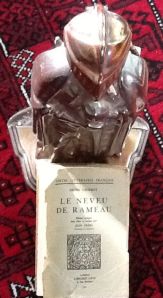


MILES GREENWOOD Islands
“feel a beating with a stick of choice,…”
a poignant, pidgin almost, story of coming and going and returning inter-race between countries, with depleted upper cases, ripe with disappointment and hope and regret and stoicism. noting, I do, simple actual and potential refrains, choosing the one with saltfish not breadfruit…
“saltfish
callaloo”
LYDIA GILL The Lowing
“A cow bell rang.”
Without the spoiling of it, that quote says all I can say about this snowy and bloodily tactile ghost story about birth and misbirth. Other than, yes, the fact the title takes on a new resonant meaning in my mind like a lot of phrases that have the start-‘the’ and the end-‘ing.’
DAVID WHELDON The Statistics Rebellion
“Suddenly I was wakened by a short whistle from the steam locomotive; someone simultaneously touched me on the elbow.”
Involving that perfect elbow-trigger, this story is one of the most delightful I have ever read.
The story of tall and non-detainable Martha, in a boring statistics lecture and also about Facit calculators one of which I actually used in real life in 1970. And I heard the workings of words, as well as numbers, in this story inside my head, and, transgressively, I hope they will detain me forever.
My previous review of this author: https://dflewisreviews.wordpress.com/2017/07/01/de-curzon-wheldon/
SHARON KIVLAND The Incorruptible
“The mob howled, oh, how that cowardly rabble howled,…”
A stylishly written extract from the historiography of the French Revolution as strikingly witnessed by a woman admirer of Maximilien Robespierre, making me think a Thermidor was also perhaps another lexically audial version of the Facit calculator…. (see the ‘rebellion’ above!)
“Hah! she did not even know her alphabet, that one.”
DJ TAYLOR Somewhere Out There West of Thetford
“Everyone in west Norfolk seemed to be estranged from somebody.”
This is a most poignant story of a seventy-something woman who lives in a seedy caravan in a car park and the lorry driver who sometimes helps her. A memorable portrait of parts of Norfolk and nearby Fens. About cold estrangement and a warm stranger. With a twist in its tail. I loved it, and, as an aside, it reminded me of the old Tesco woman who haunts my written-down dreams regularly with her shopping bags. And also a moment that echoed much more…
“… staring out across the debatable lands where warring armies lurked.”
My previous review of this author: https://dflewisreviews.wordpress.com/2018/02/18/best-british-short-stories-2016/#comment-12491
BRIONY THOMPSON The Nights
“Maybe she should try the book group. It would save on the logs.”
This is an engaging tranche of Country Matters, involving a suckled lamb babysat by a dog, a woman with a baby, two young people canoodling in a derelict property in the hills, another woman with a torch and the hint of a ghostly mole-man called Black Peter. The log here spat the bang of a bullet.
PHILIP JENNINGS Elephant
“…their respective wings of the mansion, she’d say to me with a grim laugh and a wiggle-waggle of her empty glass:”
A Mansion Miniature the Dallows Way. A Dynasty that becomes reconstituted by a large lumbering big-headed re-changeling yet gradual were-elephant by Zeno stages, as seen by a Coco (versus Compo) ethos who shared it, where alcoholic drinks and their effects are literally measured precisely, from the ‘Pearly Way’ to the ‘pearly tray’, and much more, this is a genuine comic masterpiece to be placed, with its eccentric characters, in the seasoned canon of the vintage of best British stories ever in their own right (some less comic than others, some more believable than others, but all eccentric) that I have reviewed HERE. And those that are similarly British HERE.
Ping back: https://dflewisreviews.wordpress.com/2023/10/27/philip-jennings-elephant/
KERRY HADLEY-PRYCE Chimera
“none of your beeswax”
A deeply disturbing vignette where I felt myself, as an ageing man, taken temporarily out of some sort of lockdown to places where dark or sexual habits and DJ music and young people prevailed, including one of them of the female persuasion that led me like a pet. So much more to say that is beyond my beeswax to divulge here about this and that, and about you who was in it.
My previous review of this author: https://dflewisreviews.wordpress.com/2018/08/18/gamble-by-kerry-hadley-price/
“Within the tremulous spaces of this immature dance is enacted the play of a human soul, a soul that voices the sorrow and revolt of a dying race, of a dying poet. They are epigrammatic, fluctuating, crazy, and tender, these Mazurkas, and some of them have a soft, melancholy light, as if shining through alabaster—true corpse light leading to a morass of doubt and terror. But a fantastic, dishevelled, debonair spirit is the guide, and to him we abandon ourselves in these precise and vertiginous dances.”
— James Huneker (in 1966) on Chopin’s Mazurkas
JOHN SAUL The Clearance
“– to stand importantly, leaning an elbow on the mantelpiece, where he splays the covers open at an early page. Ah, he says: Kraszna.”
That elbow moment stands at the core of this monologue by an estate agent called Mazurka and his most memorable monologue written for him by an inferred proto-Joycean author with Proustian sentences standing outside his mind but within it, too, as a property deal is gradually clinched within the seething patterns of the universe and alongside hangers-on hoping to get a good deal on the property (sounds like one of my recent mansions? ) and other relatives getting keepsakes from inside before the clearance men arrive. I always thought ceilings were stretched out ghosts, but I had not realised, until now, they may contain asbestos.
“…in the inner life of the agent and the outer life too already he knows, as an ONoMAStIciaN, as an aficionado of name-giving he knows, this house could not possibly or ever belong…” (my upper case)
My previous review of this author: https://dflewisreviews.wordpress.com/2018/02/18/best-british-short-stories-2016/#comment-12575
JIM GIBSON The Thinker
“; no one wants to be mad at Peter.”
Review without boundaries, but I need to take a hammer and do it myself. A deadpan story that features much that I enjoy in fiction, almost out of keeping with the rest of this book so far, and there is much, too, that I can’t tell you about publicly let alone think about privately, including the poetic symbols on the walls like Walter de la Mare’s etchings on gravestones, and also what was found trapped by the boundaries of a wayside cage.
“…think without ‘boundaries’ or something…”
My previous review of this author: https://dflewisreviews.wordpress.com/2023/03/27/quadrilateral-nightjars-continued/
GEORGINA PARFITT Middle Ground
“…she propped herself up on her elbows and watched the flower between those two girls’ faces.”
An enchanting tale of schoolgirls (one in particular) and their boy equivalents on the cusp of what promises to be a glorious future at High School, involving the secret powers of emergent primroses for the girls and sporadic screams on the sports pitch by boys, and the singular girl’s doll’s house as house or where Mrs Lewis “took them inside her house. People had said it was a mansion,…” I wondered if the latter could be seen in the vistas possible from a swing-boat in the spectacular fêted finale.
“…the world was a tumbling assembly of still lives:”
MATTHEW TURNER Still Life
“With a limp elbow he gestured towards a door blowing open in the wind.”
An OCD study in words as a room’s Feng Shui and a broken or breaking relationship, “like some kind of inner city beachcomber uncovering meaning and intentions in discarded items,…”, later made circular from that elbow above to the same man looking outside a house similar, but quite different, to the ELBOW man being circular in my novella LADIES written in the 1990s and simultaneously first published when this story was first published, if I can be so self-parochial.
I simply loved this original story beyond measure. Just up my street. Should have been published first by a Nightjar, I say!
“Birds were always at a glide rather than flying.”
My previous review of this author: https://dflewisreviews.wordpress.com/2021/11/09/best-british-short-stories-2021/#comment-23467
Pingback: https://dflewisreviews.wordpress.com/2023/11/01/matthew-turner-still-life/
LEONE ROSS When We Went Gallivanting
“Didn’t tower blocks usually sway in the wind?”
I have just read this synchronously at the near-hurricane height of Storm Ciarán where I live in Clacton just AFTER having posted this old picture with a screaming door as impelled by a Facebook memory!
Fearful of spoilers, I cannot tel you much about the buxom sex and the swimming lessons and the cocktails and the prehensile building, and the significant absurdist pointlessness of oblique meaning vis à vis Grenfell and perhaps prophetically of today’s horizontal strip of inflamed land when the police attach a bomb to the walking tower block with the residents still in it.
“There was no way to get past her without full body contact, and he was sure that would be like a hurricane: swept up into trouble.”
Previous reviews of Leone Ross: https://dflewisreviews.wordpress.com/tag/leone-ross/
“…gathering his forces it is Quincunx, Quincunx, all the way until the very sky itself is darkened with revolving Chess-boards” — Sir Edmund Gosse (1849-1928) on Sir Thomas Browne’s “Garden of Cyrus”
MARK VALENTINE Qx
“They had emerged from a large second-hand bookshop…”
As a miniature, this is an almost perfect fiction. It is written by an author I have reviewed several times before here: https://dflewisreviews.wordpress.com/my-reviews-of-mark-valentine/?frame-nonce=7cb9f3f82f
Why merely ‘almost’ when it so obviously perfect? Well, while it being the most perfect or almost perfect fiction ever, I know, in my heart’s instinctive love of literature as well as in my head’s sceptical spadework into it, that there is an even more perfect such work yet to be written or hidden somewhere and yet unread.
I apologise for perhaps gauchely resorting to the Suspectibility theory of there being possible degrees of perfection in such circumstances of highest expectation.
ALINAH AZADEH The Beard
The Platonic Form of Beard or a mass hairball, this is a powerfully Swiftian fable of our times veering from the Taliban to absurdist themes of trans-gender to my own personal medical need to take Enzalutamide.
From macho mysogyny politics in the West to perhaps even worse elsewhere, except the end results are “distorted musical notes” with which I can live, even welcome. Powerful is not strong enough an adjective to describe the power of this paradoxically amoral work with a moral.
As a fan of the eminent Salman Rushdie’s work, I am bound to highly recommend it.
GARETH E REES The Slime Factory
“Salt, drink, lemon. All these objects were conscious at some level. / Nia licked the salt,…”
This is an amazing Orwellian extravaganza based on a sort of Elon Musk ‘mad scientist’ concept, with some interesting other characterisations, and, arguably, it is about AI as slime alongside the explicitly interconnectedness of the human mind with inanimate things such as Salt, particularly amazing to me as I just finished my HIGH SUSPICION fiction miniatures here: https://nemonymousnight.wordpress.com/2023/10/29/high-suspicion/ a series of eleven miniatures, finished only an hour before reading this life-changing work by Rees, and that HS series has now proved to be a sort of epilogue to one of my earlier 226 Mansion Miniatures (this specific one about trains) here: https://howivi.wordpress.com/2023/09/29/there-are-no-more-trains-today/.
And this story now proves that all my miniatures linked above have now proved to be a humble prologue to the Rees work, although they were written and posted on-line long after the Rees work was first published, a work that I have just read for the first time a few minutes ago. Hope that’s clear!
Whatever the case, I am somehow doubly inspired. And all this seems perfect for the process of gestalt real-time reviewing with all its synchronicities first started in 2008 now become merging slime in 2023!
Pingback: https://dflewisreviews.wordpress.com/2017/06/08/synchronicity-rampant/
AK BLAKEMORE Bonsoir (after Ithell Colquhoun)
“moon’s only mansion”
This is a painterly Parisian prose poem at extended length. It is intensely gorgeous and tactile. Think Cesar Franck or Baudelaire or Mallarmé or a Proustian Blake. I want more Blakemore!
“commissioners of miniature enterprise”
ALISON MOORE Common Ground
“If he wanted an onion, she gave it to him on the doorstep.”
At first I misread that as ‘union’, in this insidious tale of a woman teacher being pestered by her new male neighbour, and an equivalent to the recent (more recent than this story itself!) Sycamore Gap incident, and alongside her own mothering backstory, this is a short work that deals ingeniously with finality and regret across borders as well as gaps.
My many previous reviews of this author: https://dflewisreviews.wordpress.com/tag/alison-moore/
I reviewed the next story when it was first published, as follows…
==================================
THE BULL by David Bevan
“Other times he would just say, ‘Hello,’ his deep voice dropping the word like a stone in a lake.”
This is a dual-timed relationship between a sporadically raging father and a daughter, as narrated by the daughter, Chloe, whom her father called Bluebell. “Fragmentary images began to flutter in my mind. I laid them out in sequence as I walked.” — and as I read. Father and daughter more alike than unalike. Like a commonwealth of two matching friends as potential enemies, the bull emblem of which appeared last night in our own real-time? A backstory of dysfunction, a family and her baby brother. Duplicating the walk years ago with her Dad to again encounter that shed-like container in a field, a mohican cut path near the two separate reservoirs leading to her maritally estranged father, in later years, asking her, as a barber, for a mohawk…
That earlier time when clocks stopped, and another different time when her father witnessed, with subsequent trauma, a drowning of a coworker in the meaty downside gory offal ironically equivalence to Gol’s snorkelling yesterday HERE. What did we see in that shed, alongside them then, and alongside just Chloe today? Hints of an answer within that earlier meatiness and her dad’s motorbike’s growling brute of an engine (see the chance concurrent engines of equivalence HERE) and the later contrastive pent-up silence that had “the solemn quality of a long-held oath…” A pent-up story in itself that will ever snarl in the mental background. Expressing somehow otherwise inexpressible emotions.
“What? What? What?”
==========================================
My other review of this author: https://dflewisreviews.wordpress.com/2022/07/28/the-golden-frog-by-david-bevan/
GABRIEL FLYNN Tinhead
“But then one might also see him in The Bull,…”
A substantive work that has believable characterisation of base instincts and less base intuitions and is compelling and suspenseful with an eventual musical ‘dying fall’, as if through chance connections from boots to books and back again, the narrator, after some period of years, touches base with the village near Manchester where he lived as a bit of a loner maverick youth and with the Tinhead nicknamed lad who — well, I must not describe this too closely for fear of spoilers, while the story takes us into the declining ambiance of pub closures and factories etc as a well as of Tinhead’s own decline, the nature of maps and living in one’s head and the eventual escape routes for some, either by the simulation of trains or by real trains. It was a sweet factory that made it all so bitter, so final, I guess.
A major work worthy of the traditional British short story craft embodied HERE, but, even more so, as embodied in this more immediate ‘Best British Short Stories’ canon, of which the latest volume for 2023 is a prime example, ever on a high level. Full of dying falls or not.
“That there were patterns in all things was the inevitable final topic…”
END