*
"If Handel came back to life now, he
wouldn't recognise his own music," said Clive.
"What
do you mean? Music can never change, can
it?" responded Rachel.
"Well,
today's orchestra's different than it used to be, and the training of a
singer's voice, too. The tone of
modernity alters anything old. Even Shakespeare is different today. You see,
modern people themselves, and sexual morality, civilisation, everything in
fact, would be seen through ancient filters we cannot even begin to
imagine..."
The
two speakers, a middle-aged couple, were skirting questions of art rather than
discussing something far more personal to them.
They sat in an untidy huddle, close enough to be unheard by anybody but
themselves. They were in the concert
hall: or what used to be a concert hall before the auditorium seats were ripped
out and the platform replaced with a smattering of cafe tables - tables which,
in turn, had been abandoned to the ravages of recession. Close to the site of
Fotheringay castle where Mary Queen of Scots was said to have been imprisoned.
Handel was not alive when the Castle existed.
But it was dismantled in the
same century as his birth. Now only
earthworks. The site of that Mary’s
execution – Elizabeth her executioner, or as good as,
*
Events, like history itself, had come
throughout the modern day in a seemingly random pattern, perhaps to become
history itself one day in a history book - and when Glock reviewed them during
the evening, whilst boiling milk in a saucepan, they did in fact create a
meaning beyond their separate significances.
Even the heaving milk formed frantic faces with the new-risen bubbles of
its ambition to be a drink's drink. Did
history leave behind ghosts, he wondered, that became faces you could see in
common modern things?
*
Clive suddenly stood up, kicking over his
chair in the process. The echoes
clattered, causing Rachel to jump in her seat.
She turned her neck, without moving her legs, a painful stance that
proved time was taking its toll. She
indicated that she had been startled by something else altogether - or thought
she had. However, she belatedly tried to
conceal her reaction to the effect of the invisible cause. She smiled through her own confusion, and
said:
"Where
are you going?"
"Only
for a breather - before we talk about ... you know what."
She
did know what but wasn't prepared to admit it. She could have denied her susceptibility to
any implications he was trying to make.
His words were traps, each with jaws sprung back for pouncing. Yet, as he would not leave, until she'd
responded, she waved her hand which he took as think-nothing-of-it whilst she
had really meant nothing-at-all.
*
That very morning, Glock had left for work and
was accosted by a frantic woman saying she would soon commit suicide, because
if she didn’t, someone or other – Glock wasn’t clear who that someone was –
would kill her. He merely nodded and
walked on. In the city, there were too
many crackpots and he did not want to be mixed up in anything that disrupted
the equilibrium of his day. On the bus,
there were several middle-aged women who were apparently going somewhere together. One smiled unaccountably towards Glock: not a
cursory glance, but a full turn of the head positively seeking him out. He had not dared return the smile, not
because he feared that used smiles could create more animosity than amiability
but rather since he was entirely convinced that she mistook him for someone
else. However, on departing with her
companions, amid the gossipping gabble of rising speech-bubbles, she freshly
looked at him as if sad at Glock's lack of reciprocation. In hindsight, she had indeed reminded him of
someone he'd once seen either a short while before or many years in the past.
Someone with the current Queen’s name.
*
When Clive had departed, Rachel found herself
listening to every sound that seemed to constitute silence. Here, in this hall near a vanished castle,
during her younger days, she had performed the toughest soprano roles - soaring
to pinnacles of voice which other singers could only have reached if released
from their own bodyweight.
As
she day-dreamed, the sense of headphones and, even, eyepieces, closed in
claustrophobically upon her narrow skull - and she believed that a version of
Haydn's Farewell Symphony, in which the players of the orchestra continued to
scrape and blow, as they walked, one by one, from the concert hall, was about
to be performed. Or, rather, Haydn's
Return Symphony which, to her knowledge, had never been composed.
Instead,
Mary flew in, as only women of her sleekness could fly.
*
At work, it being Monday, there were lots of
temps newly arrived. Glock was sure that
one of them was the cousin called Elizabeth with whom he had once played, when
they were both small. She had been a
pretty little girl with a sweet smile.
He had not seen her for years, since time often took its toll on those
unvalued relationships of childhood.
He
smiled at the temp in question, but she did not smile in return. Somehow, even her name had remained in the
past. And, what was more, his cousin
would be much older now than any of the temps.
During
the lunch-break, which he often passed at the pub, there was a man with a
clipboard who was measuring the pub tables and sizing up the decor. He even scrutinised Glock himself as Glock
sat, minding his own business, eating an individual pork pie and slowly supping
a tepid beer. Glock half-recognised the
man, but with only half his mind.
*
"Rachel, where's Clive?" were Mary's
immediately instinctive words. Mary was
dressed as if she were about to perform in a Wagner opera, which she probably
was, bearing in mind that she was long past the first blush of youth. She had indeed rushed here from a dress
rehearsal, because she remembered something she had forgotten to do - or that
was certainly the impression she gave Rachel.
Her blonde hair was as rigid as a helmet - yet there was a softness in
her eyes, an echo of other times which Rachel failed to remember.
"He's
slipped out for a moment - to catch his breath." Rachel smiled, although a smile was the
furthest thing from her mind.
"Have
you decided anything?"
"No,
of course not. You know him. Always dithering. He even got the strong characters he sung to
look feeble, in his time. No wonder he's
always been a has-been."
"Don't,
Rachel," interrupted Mary, "give credit where it's due. Clive did make a sort of living from singing,
which thousands of others would've given their eye-teeth for. After all, it was you who encouraged
him to get his voice trained. Before
then, it had the power, but the charm, of a power drill!"
"Yes,
Clive became a passable bass, Mary, but that was no good (was it?) when he
could only use his body like a
countertenor's - or a castrato's!"
Rachel
laughed at her own joke. She was
intrigued by those eighteenth century singers who'd sacrificed their finer
parts for what they thought were finer parts on the stage. Or had they been press-ganged into it by
deep-browed, hinge-nosed surgeons who received the pay dirt of the era's
musical patrons? Whatever the case,
there was a grain of truth in what Rachel said about Clive. That deep booming voice was housed in a man
that minced about the stage, instead of strutting. He could have stuck to wind-up or wireless
performances, but his voice, although good, was, unfortunately, just one groove
short of a record.
"Rachel,
love is a fragile thing to keep unwieldy people together." Mary grinned at her own turn of phrase. "You and Clive can surely sort something
out and put the glue back in the supergun.
And what about your children, Rachel?
They'll end up in no man's land."
Mary
bit her tongue after saying that, but wasn't sure what, if anything, she should
or should not have said. Furthermore,
she was now confused, rather than pleased, by her own expressions. She glided from the seedy stage, nose high.
*
The last event of the day occurred on Glock's
return journey from work on the 190 bus.
The woman who looked like an older version of his long-lost cousin Elizabeth
evidently used the same route home, not unlike the woman who had threatened
suicide earlier in the day. At that
precise moment, Glock really should have recognised the pattern in events. Coincidences could never be quite that
coincidental. Synchronicity with a soul
as well as buses.
*
Yes, Rachel's children. What about them? Rachel had been a child herself once and
nobody had ever bothered to give her the time of day. There had been no tug-of-love where she
had been concerned, when her parents had suffered what seemed to her small mind
to be a global fissure. And neither her
Mum or her Dad wanted to look after Rachel, or even have intermittent access to
her. But why should they have done? To be born was never as certain as to
die. What else did they owe her, beyond
the tawdry gift of existence? No, her
own children were side-issues. If
they'd been birds, they'd've flown the semi-detached nest ages ago. This matter was purely between her and
Clive. Even a bosom pal like Mary was a
loose cannon on the shifting storm-tossed deck of the good ship Marriage to
which Mary had never been party. But perhaps
there was more to Mary than met the eye.
The missing link? Mary and
Clive. Tristan and Isolde? No, Mary was Rachel's crutch. Hence Mary's well-intentioned visit to this
empty hall, this walled camera, this husk of hushes and ancient echoes, this deep
throat strangled by increasing age.
*
Now, Glock kept watch on the saucepan, as the
seething milk climbed its sides. He clicked
his tongue against the roof of his mouth and raucously gave voice to a song he
had heard on the pub's juke-box that day.
Yes, Glock himself had to be the missing link in the day's dark
serendipity, he thought. He recalled
another occasion, about a month before, which felt more like a premonition than
a memory. An ordinary evening, other
than perhaps spotting an ancient version of Concorde skimming just below the
high clouds, its characteristic deep roar changing operatic tone, as it turned
over on its side and disappeared, like a shark of the goose variety, across
towards the Inner City. Glock knew its
flight-path often traversed these particular skies, but this was the first time
he had actually witnessed it. This
brought to his mind a recurring dream where there were all manner of sky-craft
cluttering the airways above the suburbs in which he resided. Some were modern affairs with inexplicable
appendages fresh from some space extravaganza, lurching with a cacophony of
engine tones ... in mind-boggling proximity to each other. Equally, some were similar to the
old-fashioned war-time bombers and dog-fighters, with single- or double-decker
wings and multiple propellers churning the clouds into milky curds: these, too,
almost touching span to span, as they fish-boned the sky, emerging from the
past into the present like angels upon splints.
A couple of them did in fact clip wing-tips and they cartwheeled off to
land with tympanic thuds in distant parts of the city.
*
Rachel did not believe that Clive had simply
gone for a breather. Nor had he. He took a short stroll which grew longer, by
default, the further he went without turning back. Trampling those old castle
earthworks. He did not realise that Mary had awaited her cue to enter sinister
stage left, as soon as he had walked from the once communal stamping-ground:
that erstwhile echo-chamber that all three had once used as a sounding-board
or, as it seemed at the time, a Tower of Babel.
Clive missed the heady days of youth that he was beginning to replace
with false memories, many of which excluded Mary. Thoughts abseilled through his untethered
mind, while he unintentionally reached a familiar suburban road in Fotheringay
village now grown into a town or even a large city - where he had lived with
Rachel in their high-pitched hey-day - before their children were even twinkles
in the Third Eye - when Mary was simply just another best friend of Rachel's,
instead of the catalyst she had since become in hindsight. Clive wondered who owned the streams of
consciousness in his mind, because, at times, he was convinced he was trip-switching
through the background hiss of Rachel's ether.
It was a strange world when one didn't have the nous to own up to
thoughts. Even these secondary thoughts
of doubt were not necessarily Clive's own.
*
Glock questioned why normal individuals such
as himself should be able to have dreams quite beyond their waking power of
imagination. On that occasion a month
ago, he had looked down at the pavement as he continued his evening walk
towards the bus stop. It was covered at
this spot by indelible coloured markings: arrows, numbers, mathematical
designs, which he put down to workmen preparing the ground for the eventual
skull-splitting surgery of their power-drills. To build a castle in the old
style with modern materials, he wondered, with a smile. He would not have noticed these markings, let
alone remembered them, if it had not been for the fact that he was beset with
some sense of strangeness.
*
Clive wanted to peer through the net curtains
of the semi-detached house in Fotheringay and see who lived there now. The exterior was remarkably in line with his
recollection. He almost heard the same
music as Rachel had liked to play in that very front parlour to which he was
surreptitiously approaching in the orange dusk - stooping and staggering across
the garden like a burglar who had never burgled before.
Squatting
under the window-sill, he stole deep gulps of air, but not so fresh as the
breather he'd hoped to take when first excusing himself from Rachel's presence
in that erstwhile screech-hole, that hell-hall where guts were once scraped and
inner throats rasped to cylindrical rashers of burnt bacon. Stagnancy enclosed the city, sticking to the
roof-tops and plumbing the nursery chimneys for tenderer lungs to coat.
*
That month-old bus journey had been, however,
uneventful, Glock recalled as he stirred the milk to force it back to the
bottom of the pan. When he had arrived
at the pub on that occasion, it contained a group of respectable
evening-dressed people, some of the men in kilts, most of the women showing off
the top of their boobs in dresses that seemed fresh from the Fifties, cut at
the bodice like half-eight ravens, stiffened in the wings. These women, whom, in the hindsight of
premonition or the foreshadowing of subconscious deja-vu, he should have
recognised for their potentiality for coincidence, had coloratura voices in
shrill counterpoint. They kept tugging
up the front parts of their dresses, to retain some semblance of seemliness as
far as their bosoms were concerned.
Despite this, Glock could not imagine why such people should be
congregating in a down-market pub. And Scots
kilts would never seem normal in Glock's neck of the woods, at the best of
times. Such people must take courage in
numbers, he supposed. To cap it all,
after this group had asconded to the restaurant clutching wooden menus too big
for them, a couple of real toffs in trouser-suits entered, so sharp-dressed
Glock wondered why they had dreamt of coming here at all. The one who had a red handkerchief artfully
peering from his top pocket carefully opened a bottle of champagne whilst it
was still embedded in the crunkling ice tureen.
It turned out to have more fizz than was good for it. They deliberately ignored the spray cascading
in all directions, as if nothing had happened.
It would've been undignified to make a song and dance about it. They offered each other a studied
"cheers" and continued to share a ritual conversation which was
created from inscrutable bubbly patterns of pub chat, small talk and business
gossip. Glock had listened to them with
a smile.
*
Clive shook his head, to free it from the
unwelcome thoughts. Rachel could radiate
herself even at great distances of synchronicity. Or was it Mary? He could never be sure which woman was the
culprit, which had the hot-line to the autonomous muse that some called God,
others merely the breath of inspiration.
He shook his head again. His attempts
at mind withdrawal were even more ridiculous than the way the thoughts were
reworded as new thoughts. In the same
way as a sculptor's task was to release the ready-made sculpture from within
the rock, composers needed to pluck the strung strings of vibrancy in the air,
prise open the sprung jaws of cadency that many breathed without knowing it: to
make songs and souls as one.
Clive
caught the barely perceptible sound of music emerging from the front parlour:
the sound of two people casting their voices to the magic of an Elfin horn,
reaching him from over the hills of dream upon which sat a fairy-tale castle. He raised his sound-box of fragile sculptured
bone of a head with its gristly appendages, just at the same time as the net
curtains were snatched aside to reveal an ugly man’s face with folded nose
surveying him from behind the smeared glass.
The keeper of Mary’s dungeon, now ensconced elsewhere.
*
Glock had supped his beer, expecting there
would be no other surprises left on this particular evening - after the
champagne charlies had departed. Surely,
events must eventually revert to norm.
Life was not that strange.
And he was right. Except, of
course, on the way home, waiting for him at the bus stop was a vast hovering
smooth-shafted jet-liner with huge round turbines at its rear. Without demur, he boarded it and was
presented with the whole lighted panoply of Fotheringay city and its environs,
including the revuilt castle, somewhere near which he simply knew he must live,
sleeping, dreaming dreams, singing silent songs, perhaps stirring a saucepan of
milk.
It
was a delight to touch wing-tips with others.
In the distance, he saw Concorde again, twirling to the sounds of
Handel’s zadok the Priest like a young ballerina on her first stage. But as the vast giraffed fan of a beast
glided fearfully close, he saw faces at the portholes, raising tapering
cut-glassfuls of, not champagne, but what appeared to be milk. And then he spotted the target: an area of
the city where the streets wound in on themselves, circles within circles, with
the castle at its very bull’s eye. His
sky-craft wheeled gracefully, aimed itself and fired off its turbines in pent
hover.
*
Rachel, still in deepest solitary empathy,
knew that a young couple sat in the parlour, a parlour where older people had
once spent their time peering through a flickering square screen of monochrome
with drooping eyelids. Instead, this
pair of gentle people, who still lived out their tender years, absorbed each
other's tiniest features of both face and dress. They held hands, as far as that was possible
from their respective vantage-points. A
black record fell upon the revolving pad and started spinning. They heard the sapphire stylus of an
old-fashioned auto-change settle into a groove with the initial scratching,
surging sound, leading into a width of sound that pre-stereo days rarely
managed. It felt as if the identical
ancient Elizabethan Plain Chant was inside each of their cathedrals of
skullbone. Sounding as if it were being
sung for the first time. Steeped in
actuality. But which Elizabeth?
One
of the older couple smiled knowingly, or simply the smile itself knew what to
know. The other returned the smile,
knowing that moods were simple echoes, without knowing how much each smile
simply knew. This was love: stretching
from beyond memory into a diffusion of memory that only the future recognised:
a love that caused each party to forget their names. They leaned forward in unison - and kissed, a
new kiss which, if mediaeval lovers kissed, they would have recognised as a
kiss they knew to be among kisses they knew.
*
Back home in the certainty of the present
moment where dreams and memories were correctly pigeon-holed, Glock forgot the
milk in the saucepan, while he retrieved the tape-measure from his top pocket
and went to take the size of his empty bed.
He then fetched the clipboard from his office brief-case with arcane
figures and devices upon it, to see if he had really been minding his own
business in the pub that day or whether he had indeed captured the significance
of finding another version of himself outside the realms of a mirror. A man too mean to be me, he thought.
*
The older couple were startled by a background
hiss on the record. A hiss which hid the
hiss of breath - from just outside the parlour window.
Rachel
switched off her fabrications of empathy with that couple and emerged from the
unpeopled past into an equally unpeopled future, trusting that the present
could fend for itself. Old age was
younger now than it had been in her youth, she thought. In her heart, she knew that the ancient
concert hall tonight had been and was to remain empty - except for a solitary
figure sprawled in an erstwhile cafe seat: a figure bearing one of her two
stage names. She refused to cry. Truth was relative to belief. Only ordinary people were stars. She smiled and sung Dido's Lament quietly to
herself. Then Handel's Largo. The Mary she had once kissed had been dead
for centuries. As in Shakespeare, even Juliet had a Nurse like Rachel.
*
Glock eventually decided, from all the
evidence, that there was no option but for him to withdraw gracefully from the
world.
As
he filled the bed with a shape of self, he heard the gentle sizzling of the
saucepan and then the even gentler hiss of naked gas, with the gentle
angel-flames of blue having been doused by the seething-over of milk. Reality had received its offering, its
sacrificial victim, its scapegoat, its wild card, its bribe ... so that it
could continue on its straight and narrow flight-path towards its
determination. But not exactly a bribe,
more a reckoning without Glock.
Sometimes, Fate faltered - but was never duped more than once. It may have all turned out differently if he had
actually swept that distant cousin Elizabeth with the sweet smile off her feet
and thus allowed both of them to live happily ever after. Something he'd nearly done all those years
ago when they were both still young.
Rachel was her name, he remembered at last. Into Amateur Dramatics or something like
that. Tried to drag him along to
rehearsals, with that awful female friend of hers.
Glock
heard the skull-splitting roar of power-drills drawing near - to the tune of a
song he couldn't sing - even in the falsetto of unmeasured man. Life was a ruined castle.
At least Elsinore still stood. Hamlet not
Handel. However, Shakespeare’s truly greatest play – the only one of
contemporary history he wrote – was entitled 'Fotheringhay', now long lost
to posterity.This was a history play he might have changed even as he wrote it. And a clipboard of
fact and fiction, coloured lines and other markings.

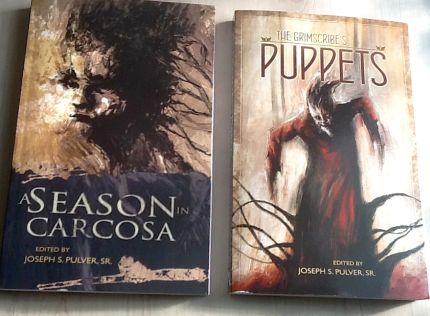


This is a deeply haunting nocturne on guilt and remembrance, a reunion anniversary with the lugubrious seaside home town (like mine) and with one of its lit building-top sigils, one that is conjoined, circuit to circuit, with that conflux of streams, beyond any home or ohm resistor. A memorable start to my leisurely personal journey here, I predict. Blue star as an electric knot of neutrally dark complexes where guilt of existence feeds as well as drains. By day, for me, it is a flower not a star.
“Alas, alack.”
That quote is one whole paragraph in the story. Luckily, it is not as self-referential as some other things in this heavy metal lodestone of a story, things like this wannabe-alpha horror author who dreams personal dreams about Stephen King but does not stop at merely dreaming of screwing his lady editor he calls ‘E.’ This nerve-trampling story is its own doppelgänger. It came out of the toilet and hit me. Satirising the Horror Hothouse, it makes me feel that the Heuristic approach to books is only as good as the books themselves and the readers who triangulate them. Bum tickers or not, they need to be brave readers and do it all publicly, to get the stories nailed down, before they come out of the closet and ‘read’ the readers’ innards first. Here the sigil is not a blue star but “a Rorschach pattern of Hell.”
“The colour perhaps that had made Van Gogh go mad with his blessed sunflowers?”
He ended up drinking the paint of that colour, I think. As I do eventually drink it from this story, as its author crafted that the pages seep or even ooze with it, her heroine, a balconyless Juliette, perhaps eventually melting into the walls of her Parisian hotel room, into its wallpaper? Men haunt her, true, with their intentions that she imagines or simply knows, and one man who actually haunts this room…a room let to her by Madame Rachou, Barron’s Rorschach come to life along with a cat’s sorcery. Hell is what colour? I am already thinking hard about this skewed Proustian threnody artfully threaded, inter alia, with Rimbaud or even perhaps Ginsberg, thinking of this and that … of this story’s ‘excelsior': an explicit reference to that writers’ Hothouse again wherein few avoid “THE fall”.
Not only the explicit “rings on her fingers and bells on her toes”, but also “Upstairs and downstairs / And in my ladies’ chambers…” Read the whole rhyme and see if I am wrong.
“Gerda had a feeling many objects somehow made their way back to New Zealand.”
And from one colour seeping and oozing throughout the above Bird story, we tellingly come to another pervading colour in this fairy-storyish reality, the colour of a bookmark, weed, kimono, wine, pillow, rash… And there is sometimes barely any space at all between the end of a knotted string of words on the page and any full stop or period, as the female half of the ill-born twins “thought of little monsters with no neck, and smiled.” But like Juliette above, her version of word-wallpaper reveals another invasive man in its patterned weave… The one who ties and unties the kimono’s knotted bow, treats her as his puppet, and if the authorial backdrop to this whole book is to be summarised, it may indeed be with the single word ‘Gailestis’. I think I know what it means. It means more than a self’s definitive subsuming against having once been born but, I infer, there is also a pervading pity or remorse that, seeping or oozing from the very self-destructive act, remains in the peopleless air, as it were, in the form of a residual Rorschach sigil of a life once had – still insulated against death, incubating itself for its own sake. I once was and so, without suffering, I still am. You see, the eternal river of life, as well as Gerda’s river, takes on that same colour, too – bringing everything back to where those things began.
“A: Which stories were … those kinds of stories. / B: By the sign. / A: Right! By the sign in each story.”
…which makes me think that this story of solipsistic sophistry only works in the context of this book, in the context, even, of only this real-time review, bearing in mind (whose mind?) the above ‘sigils’ (or ‘emblems’ as this story also describes them) that evolved already in the previous stories. This work reminds (re-minds) me of the times I have recently attended what in the UK we call ‘Murder Dinners’, where we have to role-play set parts in an independently prescribed whodunnit involving fictional characters and real costumes, while doubling up in normal social exchange as our real selves, while juggling the consumption of the food courses, and trying to hold the whodunnit plot in the mind, and if you are host or hostess, cooking and serving the food itself (someone’s pet dog or cat?). Each of us dreamcatching the ghosts we are and are not. Then guessing who killed the dead person (who earlier became the first ghost, real or imagined), dependent on which territory you have sniffed out for yourself or pissed upon to mark it as yours (too busy to go to the Kantian washroom?)
Yes, just like gestalt real-time reviewing…
“As I say, my hypothesis is that the supernatural resembles us only coincidentally, and could be construed in a completely alien way if we offered it completely bizarre tropes to occupy.”
“Can you tie a noose?”
A brilliant relatively short short bringing up short by an eventual jerk called death, poignantly telling of a Dad and daughter leaving home and her Mom’s grave for a colder clime in the next state along, I guess, this being subcidal Corporateville, Corpus County or wherever… Not much company at the Company.
“Similar buildings lined both sides of of the road, adorned with signs revealing them to be ROPE STORAGE and PILL STORAGE.”
The former for the knots, I guess, the latter sadly for the Ebola.
“…as though maintaining a strict death per birth replace-the-race-policy…barring the occasional mass murder that is.”
…and that is as if, with the ‘Soft Black Stars’, this work is attempting to obviate or encourage (I am not sure which) the Islanders’ inbreeding by letting these two books breed with each other…as I am also letting them breed, perhaps, and, in hindsight, breathe. This tessellated text is a pent-up, human-skitter-bone, human-dumb-bone, soft and hard tectonic “puzzle-box” of an experience, as the template researchers reawaken the monster on the islanded Island that they simply knew would be the outcome of their land-prying, native-aided, later native-attacked, without knowing that outcome at all, ‘cos the author didn’t tell ‘em! But far from being a J-FROG, this story benefits from its main fusion mentioned above, and its backstop “black-slop” and the ‘fontanelles’ like, I infer, Clark Ashton Smith’s Yoh-Vombis cradlecaps – backdropped by explicit Innsmouthianisms all as a secondary fusion… Fusion upon fusion, sigil upon sigil. Soft blue stars.
There are three incredible things about this story that are mainly personal to me, I guess. And I was somewhat disturbed by its synaesthesic ‘hypertext’ to the extent that I don’t think I have yet read it properly, or even properly ‘realised’ its internal oubliettes or Internet caches. An Internet diary about treatment of madness as written by the so-called mad or depressed one – combined with a type of exterior collage about all manner of mental conditions and approaches to death and dream images. Although it disturbed me, I appreciated, even enjoyed, its gestalt.
The three things? It significantly relates to something called ‘Signalism’ and it is very strange that I have already majored this real-time review so far upon sigils, signals, emblems, signs… Secondly, there are references to ‘knots’ – and here is my earlier short treatise on knots and my theory about their connection with the author’s name and the author himself who, I believe, is designed to underpin one of these two books that I am reviewing. Thirdly, this story deals with the condition of seeing signals in everything (like faces or messages in objects or skylines etc that my blog photos try to show, and signals like connections ever accreting as I tend to allow to happen in my DREAMCATCHER reviews?)
Below are some quotes from the text that relate it to the previous Files story and the rest of the stories in these two books I have read and reviewed so far. There are other aspects to this story that I will not itemise and you will have to read for yourself.
“The way my perceptions kept on altering, as though filter were laid on top of filter on top of filter…” (Fusion on fusion, sigil on sigil).
“The signal cannot be stopped…” (And numerous other quotes along these lines)
“…a white void pocked with black hole stars…” (Cf ‘Soft Black Stars’)
“…a swirling knot of stars, too tangled to untie themselves…”
A dangerous story, unless my own form of Signalism has misinterpreted it. Meanwhile, the Internet itself remains teeming with signs and symbols and codes and avatars and obsession…