Tuesday, August 18, 2015

Death Camp Dream Songs

Death Camp Dream Songs

image
.
DEATH CAMP DREAM SONGS
By Matt Leyshon

Dunhams Manor Press 2014
My previous reviews of Matt Leyshon works HERE
I intend to real-time review this work and, when I do, it will be found in the thought stream below or by clicking this post’s title above.

7 thoughts on “Death Camp Dream Songs

  1. THE PLACE OF MY DREAM-SONG
    “Whilst the death camp remained a very European solution to the European problem, its repugnant honk could still have competed globally.”
    An iconoclastic theme and variations, I judge, upon ‘The Willows’ by Algernon Blackwood; a densely poeticised prose about the Swede, as she and Rat negotiate the scatological / eschatological undergrowth of words just as much as they do the islands and willow-moles of the Danube itself. A mulch of a corpseland that echoes the European migrant drownings and camps that have happened possibly since the book was written, as well as the non-didactic art for art’s sake reprises of all such mass flashmobs that spread across European history. Marcel Schwob’s ‘strigae’, Brendan Connell’s cannibals, now expressed in Weirdtongue. An oozing dereliction of a Narrative Hospital as written by Tarr and Tzara as well as Fether.
    I have read only one story in this book so far, but I already know it is definitely being added to this honoured room HERE.
  2. GOD’S DERELICT ELECTRON
    “An intense quietness raped the mould, rising and falling with the incomprehensible strangeness of a papal Antichrist.”
    I can’t quite believe I am reading some of this! But it all seems to flow into the brain and make a sort of froth on the dream, a rough-beast-slouching-toward-the-sargasso sort of carnicky gruesense. A sort of CERN Zoo crew of the Higgs boson, masterman unready, midshipman hard, upon all manner of roads across the ocean, plus gooey song-lines incubating the roadkill of the depths, with wet towels slapping the side of the hull like waves.
    Honestly, if this is not literature, there is no Hope left for a middle name.
  3. THE ROUT
    “Murder, cannibalism, feasting upon horses on Good Friday and causing sickness in yew trees.”
    An apocalyptic post-holocaust scenario? Not so much that but an extrapolation of the Way We Are Now whereby even presumably good people turn out to have been bad towards good things like children and yew trees: a picaresque journey across the UNDO LUCK land to the background, perhaps, of Bartlett’s WXXT on the radio? I felt spoiled by reading this, a continuous relentless plot spoiler in itself, without any help from me. From Rite of Passage to Write of Pain. From Tour to Rout. A dysfunctional dystopia. And to be spoiled is to be renewed? ‘Fell to the floor and danced’.
  4. HANDS IN YOUR DARKNESS
    “The sky above Nantwitch is a rare and bloody steak that drips its juice all over the old town of Leddenton.”
    Joanne, from living in her sty, travels the Land, amid peni bears and borderland pigs and perhaps migrant willow-moles, seeking the Nantwich Munter. A sort of JC Powys version of Pan Horror with elements of James Joyce and Saki, as well as Leyshon himself: and I try to vocalise it as an audio book within my head. In fact I would LOVE to read it aloud. There would be no need for sounds effects. The words are their own sound effects.
    I might listen to it at night on earphones while in bed before falling asleep. Like hands inside my skull, I am sure I would not notice at which point I travelled from waking to dreaming. Sleep itself would cower in the corner of my bedroom not daring to come near.
  5. OH GOAT LAD, COME WHISTLING TO THE RATS
    “When he stopped for an instant to look at the sea his thoughts sent out a buttery cone and the landscape seemed to glow within it.”
    I warn you. Don’t read this book lightly. Curiosity killed the cat.
    A Professor in a MR Jamesian mission to rid the place of HPL’s rats in its walls, involving a Goat Lad, whistling and various acrostic incantations.
    I am off to the beach now, my head full of words that stick to the sides. I need to get them out, somehow.
  6. HORLUNDOO
    “It had all begun a few weeks previously when he had been unpleasantly assailed in his bed. Waking from an afternoon nap his brain had been disturbed by an interloper from within, a Thought so intense that he could almost feel it.”
    I think I sort of predicted that Thought within the skull preternaturally by my previous entry or two, written before reading this section!
    And this final aberration of the ‘Death Camp Dream Songs’ book with its THOUGHT seems to encapsulate the ‘red pit’ (or Cartesian Pineal Gland) from ‘Cannibals of West Papua’, as well as the religious angsts, heresy against heresy, orthodoxy versus orthodoxy, various permutations, spiritual and fleshy conflicts and hook-ups, many creaturely concoctions and cannibalistic, hellish implications, scatologically and eschatologically splattering the page. Rider Haggard, seasoned with soupcons of Graham Greene, and Guy de Maupassant’s The Horla and, of course, Luckundoo by Edward Lucas White. And LEYSHON as a new LANGUAGE.
    There is no practical way the authors of HORLUNDOO and CANNIBALS OF WEST PAPUA will already have read each other’s works with those titles, but they should do so without delay. While they are totally different works, they have the ‘red pit’ or THOUGHT snatched from each head respectively and blended after the event to produce each of their works RETROCAUSALLY.
    An actor should read the works aloud on Radio WXXT.
    The Leyshon book as a whole is a stunning horrorisation of horror, and horrors fight back against their wild satires of themselves and vice versa, including Connell versus Leyshon, perhaps cancelling each horror out, back and forth, until providing a new blank canvas for a new life, a new world. The ultimate Narrative Hospital. Seriously.
    end
           

Sunday, August 16, 2015

The King in the Golden Mask - Part Two

DREAMCATCHER REAL-TIME REVIEW CONTINUED FROM HERE

schwob

DREAMCATCHER REAL-TIME REVIEW CONTINUED FROM HERE

THE KING in the GOLDEN MASK and other stories
By Marcel Schwob (1867 – 1905)

Carcanet (1982)

Translated by Iain White

THE REVIEW CONTINUES IN THE COMMENT STREAM BELOW….

17 responses to “*

  1. EMPEDOCLES, reputed god
    “…he had already lived four existences in our world, and that he had been plant, fish, bird and young girl.”
    A mesmerising portrait with a straight face of this healer and diviner, whose apparent last act, before engulfment by Etna, was bringing back to life from death by plague the beautifully-breasted Panthea. I guess both the beauty of her breasts and that this was indeed Empedocles ensuring his own further reincarnation as hinted by the quote I gave above!
    Interestingly ironic, I wonder, in the light of this further quote: “For the world we know is the work of hate, and its dissolution will be the work of love.”
  2. HEROSTRATOS, incendiary
    “His lamp illuminated the terrible, erect-breasted cone.”
    In sumptous prose, this work can be seen as a mirror image of the previous one – here a pyromaniac iconoclasm through a woman’s breasts again, or, rather, a goddess’s … toward a new reincarnation, this time of a king.
  3. CRATES, cynic
    “…she would without repugnance lick the bloody wounds of the afflicted.”
    Crates has the personal journey of the maharaja in ‘The Dom’ and also the soul of the concept ODJIGH. The flensing of himself to the bottom bone as mendicant or near animal existence, and encouraging others, too, including his friend’s sister, she who lay with animals, naked, and I wonder if she suckled them, in tune with the reincarnative emblem of breasts in these ‘imaginary lives’ so far? I am certainly glad so far that I was persuaded to pursue this section of the book!
    Seems also significant that Crates has that name in English, when he carries his home like snail or like Diogenes’s barrel!
    When just re-exploring ‘The Death of ODJIGH’ for the purposes of comparison with this Crates work, I came across this telling quote that I had not noticed before: “The world’s bones were stripped of their flesh, which is made up of the earth, and the plains lay extended like skeletons.”
  4. SEPTIMA, enchantress
    “Phoinissa’s tomb was narrow as her body. The stone constrained her breasts, that were supported by bandages.”
    Can you believe it? This story is rich with breasts reincarnative as well as vulnerable; “She offered her breasts to the biting of the salt sea-wind.” And more! For example, the perverse or inverse conflict of Eros and Anteros over the existence of love itself. Even an intervention by Hathor, an Egyptian Goddess indirectly significant in my own life…
    This is a highly condensed work that needs reading several times (and, so far, I have only read it once as I always do before real-time reviewing any text) and – dependant on the efficacy of its translation into English, which I have no reason doubt – a most important work altogether.
  5. CLODIA, shameless matron
    “…to cover his head with a little bonnet of golden threads and bind him under the breasts with a supple girdle;”
    Scene: Rome of Caesar and Catullus. Clodia as catalyst.
    I have never before encountered such wall-to-wall permutations of incest or multi-sex, or sapphic or cross-dressing concupiscence or otherwise, grinding on and on and on in such a short space of text. All for its own sake. I can even imagine them grinding on after they receive death’s come-uppance. My inference, not necessarily the text’s.
    This page’s header almost now seems prophetic!
  6. PETRONIUS, novelist
    “He had the hands of an artisan and a cultivated mind. Thus it was that he took pleasure in shaping words…”
    And this is a scintillating, eventually explosive shape of words, performing a rich language about Petronius as Petronius would perform it about others, I guess. The dichotomies here of artisan and artist, of slave and freeman, of lust and restraint, supplement the accrued dichotomy – expressed by much of the rest of this book – of body as mask and the skeleton within.
  7. SUFRAH, geomancer
    …and performer of “suffumigations”.
    “The idea then came to him to trace in the sand a figure of geomancy and demand of it whether he was destined to perish in the desert.”
    Just escaping, by the skin of his teeth, his dreadful fate sealed by the already told story of Aladdin, Sufrah provides, by his actions, an entrancing and telling proof that by trying to foretell one’s future changes that future but seals the truth of that foretelling itself. Involving a ‘dried corpse’, the seal of King Solomon and a ‘porphyry corridor’. And a Prison more imprisoning than one’s own body. A prison within?
  8. FRATE DOLCINO, heretic
    A stunning portrait of a Christian heretic which I read immediately after reading the story ‘Preacher’s Legend’ by Truman Capote (my review of it (HERE) written just before reading this Schwob story), with each work tantalisingly complementing the other, if sometimes obliquely so.
    It was as if the dual reading was simply meant to be. I feel like a literary heretic, sometimes.
  9. CECCO ANGIOLIERI, malevolent poet
    This story’s eponymous poet hated his father. But when he said “if I were death, I would seek out my father”, did he realise that he was expressing this wish in the same book as a story about ‘Sufrah, geomancer’ whose own wish turned out later to be retrocausal with all manner of logical tangles!
    I am afraid that is all I could garner from this otherwise dry text. Other than the fact, perhaps, that I always wanted to read a story featuring the Guelphs and Ghibelines, with my now learning of the Guelphs fighting between themselves as Blacks and Whites. Even a frustratingly tangled tale has a silver lining of unexpected knowledge. A pattern towards becoming wiser?
  10. image
    PAOLO UCCELLO, painter
    “…he laid bare a whole world of combinations.”
    From dryness, to the most fascinating work in the whole book – probably.
    I used to work near the National Gallery in London and every lunchtime I would gaze on this painter’s painting of St George and the Dragon. I am now surprised that the dragon doesn’t look like a camel!
    Seriously, I fear my own reviews, although making sense to me, are becoming lines and squirls between circumference and centre, and vice versa. But I can sense the intrinsic soul of this painter. It is ironic, though, that they called him the bird man, and allowing a girl, say, to die of hunger merely through his or her naivety, makes it seem appropriate that this book’s first keynote story contained the ‘strigae’…
    “For the bird man did not know the delight of limiting himself to the individual; he did not remain at one place; he wished to soar, in his flight, above all places.”
  11. NICOLAS OYSELEUR, judge
    This one didn’t make much sense to me, until I realised that Jeanne in this ‘imaginary life’ must be Joan of Arc. But it still doesn’t mean much to me, I’m afraid.
    I did discover though, as a result of my research, that bones believed to be the holy remains of Joan of Arc in fact belonged to an Egyptian mummy and a cat.
  12. Katherine La Dentellière, whore
    “One night a bully who feigned to be a soldier cut Museau’s throat for her girdle. But he found no purse in it.”
    To find out who Museau is and whether the bully only looked into her throat for her purse, you need to read this poignantly regretful life story of a lacemaker become whore, one who ends up loitering around and brushing up against tombs. Why do all Schwob’s characters end up dead or nearly dead or near the dead? Each an eschatologically or skeletally coarse lace of bones waiting to find their resting place, if not a renewed regretful life story?
  13. imageMajor Stede Bonnet, pirate by vagary
    A retired military gentleman develops a passion or obsession about pirates of the open sea, and all their accoutrements. But he knows nothing about the sea or ships. It is a hilarious account of press ganging his workers, forcing them to drink pints of rum, and run the gauntlet of the waves with him in his ship. He eventually meets Blackbeard …and God’s justice.
  14. BURKE AND HARE, murderers
    After the cannibals in West Papua elsewhere (and the plane gone missing there today), this is a timely tale not only of black slaves and their salting of the remains they cut off from victims but also of Burke and Hare themselves, that famous double act where I live, explaining the differences between them as well as the art for art’s sake of their murders when cutting off their victims’ stories, and FOR THE BENEFIT OF THIS WHOLE BOOK’s GESTALT also using a mask as the murder implement plus later supplying the bodies for professional anatomisation and dissection – enabling, I guess, their souls to be discovered in the form of skeletons…. A bigger profit of scientific and spiritual knowledge than mere money? Although the money no doubt came in handy for the couple.
    A story that appropriately ends, as the last story in this section, before its dying fall had set in. A story cut off, too,
  15. THE CHILDREN’S CRUSADE (1896)
    “There are wicked people who put out children’s eyes. And who saw off their legs and tie their arms, so as to expose them and implore pity.”
    “I often dream of blood: I could bite with my teeth: they are uncorrupted. […] That is why I lay in wait for those children…”
    About 15 pages of eight short narrations or monologues triangulating the possibly historical gestalt of – or ‘oratorio’ about – what appears to be a crusade by children, across the sea from Europe towards Jerusalem and the Islamic State of yore. Involving entrails, viscera and religious angsts germane to the Cannibals of West Papua, together with the so-called migrants who TODAY are travelling in the opposite direction and drowning in their thousands. It also seems a bit ironic that the Church had this baleful effect on children for centuries, not just recently.
    “The constituent parts of the world are as guilty, one as the other, when they do not follow the lines of goodness; for they proceed from Him.”
    “Consecrated sea, what have you done with our children?”
    Leprosy as a white. White as purity.
    “”…and drew out the heart, from which he expressed the black blood. […] …and drew out the viscera, which he purified.”
    “…and I opened my teeth under my hood, and I leant over towards his cool young throat…”
    “And the Lord will let all my little children come to his tomb. And the white voices will be joyful in the night.”
    “Lord, all these innocents will be delivered over tio shipwreck, or to the adorers of Mahomet. I see that the Sultan of Baghdad lies in wait for them…”
    So, yes, a premonitory work by Schwob, combining absurdity and truth, a combination representative of what life always is – and this crusade is coda to this book’s heat-seeking soul in the meaty and bony bits that are us.
    “…we saw many poor birds stretched on the frozen earth.” — Full circle from the=is book’s outset with ‘strigae’?
    “What shall we do here on earth? There will be an expiatory monument, a monument to unknowing faith.”
    A dead monument to once ancient hope.
    end

The Anniversary of Never

The Anniversary of Never – Joel Lane

image

THE ANNIVERSARY OF NEVER by Joel Lane

Swan River Press MMXV

My previous reviews of Joel Lane works HERE.

My previous reviews of books published by the Swan River Press HERE.

I intend to real-time review this new collection of stories by Joel Lane in due course. My comments will be found in the thought stream below or by clicking on this post’s title above.

16 thoughts on “The Anniversary of Never – Joel Lane

  1. With about 140 pages, this is a neat, aesthetic, dust-wrappered hardback, with 13 uncollected stories, three of them previously unpublished. The introduction is by Nicholas Royle and my copy is numbered 33/100.
    SIGHT UNSEEN
    “I always walked away before they had the chance to abandon me.”
    Leisurely, yet fast-moving and exegetically eclectic with literary polishing, this work is a touching fictional account of ‘reconnection’ by the protagonist with his long-estranged father, a father who was into Fortean and Paranormal paranoia, as it were. Haunting, and word perfect about dereliction. One image that will stick with me is the discrete nature of the eyes as something alien, which rings true to someone who has suffered sporadic iritis for about 40 years. I once described this potentially serious condition as the curse of Cthulhu.
  2. CROW’S NEST
    “And those dark nights just before the New Year were as bare and needy as a shaved pubis.”
    Sometimes, words work or they don’t work. But it is the context that counts. And the context here is the darkest part of North Birmingham, perhaps the darkest place in all Lane, as thirty-something Kevin spends Christmas with his parents in an area where he lived as a kid, each loving clinch silhouetted as a private brawl, and where he had all the usual groping connections, but now, with the throbbing bass line of some new pub band, there is a tenuous romantic reconnection from the old days and, later, the most awful vision in a public convenience (from on high) that makes some great literature itself a public convenience, that of purging or catharsis, hoping yourself to be yet another one cut short down there at the bottom of the paragraph.
  3. ALL THE SHADOWS
    “Nathan looked like a ballet dancer: thin and pale, wrapped in his own stillness.”
    This story if fully told would spoil it for you. Yet, as a miracle, the story when fully told works well as an inversion of what or whom you expect to be haunted. A love story, by return to the seaside hotel where it all happened, with graphic references, and ‘traces’ that linger like ghosts of known and unknown souls – but whose souls and sensed by whose second sight? Even the reader has to question his or her own ‘traces’ and which transactions of the flesh, like electrical plugs and sockets, carry the charge from soul to soul best.
    Prefigures or echoes certain other ‘drowning’ tropes in the Lane canon…
  4. MIDNIGHT FLIGHT
    Regarding the next story in this book, below is my editor’s commentary upon it (from the whole commentary here) written almost exactly four years ago after the story had first appeared in a horror anthology with stories ABOUT horror anthologies:
    [[ Midnight Flight – by Joel Lane
    Paul looked down at the menu card and immediately saw the words: Thom Creighton Parr. He adjusted his glasses and read: Torn Chicken Pasta.”
    The above quote is simply, if inspirationally, more of this book’s made-up stammering or word-bending. Indeed, this classic Lane story is crammed with words of wisdom, phrases and concepts that will haunt you forever. I’ve not chosen them to quote as I am seriously spoilt for choice but I do ache to do so; so, may the above mere book-context quote suffice as taster. You need to read this story to read all its words in context. A major work, however slight its size. The haunting by a horror anthology of the old school, with concrete wings or asleep in a concrete bed, a smell of decaying leaves, a senile synergy of memories being lost in tandem between generations (young and old) amid the riot-riven communal soul of a guessable city’s shattered paving-stones. Academic research to catch the midnight flight to a bigger city (of nostalgia?) is half-halted, half not. And the subsuming mentioned above on page 73 takes a new turn of subsuming in the last sentence of this story (one of literature’s truly great endings to die for), a subsuming that only book lovers in today’s circumstances will be able to appreciate to its full. (21/8/11 – another 2 hours later) ]]
    I have just re-read it and I have found even more in it, as I approach my own symptoms of older age that have gradually started besetting me during that four years. I know I am biased but the story is a masterpiece.
    Biased, or demented!
    As an aside, Joel had two other stories in my own edited publications: THE DROWNED in Nemonymous Two in 2002 and, as reviewed by me here, a story entitled THE DROWNED MARKET in ‘Null Immortalis’ (Nemonymous Ten 2010). I believe the latter has never been collected.
  5. ASHES IN THE WATER with Mat Joiner
    “A bin liner swollen with rubbish or gas was floating just below the water surface.”
    Tracing-paper, palimpsest, paper cut-out, sketch, words used, this story conveys the nature of the Midland canals and their narrowboats, fully tracing their soul upon the surface of my own memories about them, many years ago. This is a series of sketch itself, one upon the other, of bereavement, love, the chances taken and missed in the pattern of the people you just meet or wreak passion with, some with mystic patterns or beliefs, others clear cut, but with a hidden audit trail that many of us fail to audit because we don’t know it’s there following our currents from beneath like a ghost ship, until we enter its realms and come back from it able now to see what that trail is, knowing that the patterns can be repeated, some pointilliste, breaking up, then coming together in perfect definition, others abstract streaks like static, through which one sees the shapes in hazy definition, more like scars than definition at all. This story is still resonating with me as I write this and will likely do so after I stop. But who the eyewitness, whom the witnessed? The drowner or the drowned? Dream or dreamer?
    “He’d always had an analogue mind where Josh was digital.”
  6. FOR THEIR OWN ENDS
    “The blank expression of the HR manager, like someone trying not to be sick.”
    In this black satire or absurdist didacticism, it is best not to fall sick at all, especially if you are destined to end up at this story’s hospital, and for personal reasons I am not going to dwell for long on this nightmarish extrapolation upon today’s business culture in health care. I do feel however that since this work was first published in 2011, things have improved in many hospitals, perhaps BECAUSE of this very work. I do trust so.
    Not a black comedy so much as a frighteningly misgrown culture of cure racked with revictimised victims in failed escape.
    “A concerto of silence.”
  7. BITTER ANGEL
    “All the time it was like you were dancing together and the music had just stopped for a moment.”
    The moment you meet a couple you address as ‘you’, knowing that they will return to their dancing after you’ve left them. A bit like meeting them in this story itself, with your rhetorical monologue reflecting how they had jumped — from their last balcony of a city centre tower block beset around with Britain’s revived unrest — as an attempt to transcend their own unrest with more than just falling but angling out like angels…
    An anguished vision, in hope of surviving without guilt. You as witness of their act.
  8. AFTER THE FIRE
    “People are annoying when they fall in love. Whatever they were before changes into half of some deformed-couple thing with its own bad habits and false memories.”
    This story is a case study of such a phenomenon as described in that quote, a work seen from the point of view of a male student friend of a girl at university, a girl who hooks up with an insidiously cloying male partner from Hungary. But we only know the situation from her point of view via the male narrator’s. A complex symbiosis of viewpoints and polluted landscape, polluted by narrative filtered viewpoint and not by a reality itself that we can grasp for certain as the reader.
    It has a strangely effective but oblique ending with no real climax – with an inferred ‘objective correlative’ set of objects I will not give away here in case they are meant as a surprise. Or it is a story that is actually unfinished? Also a story with an arguably irrelevant title.
    ‘After the Flood’ was the title of a published story by this author elsewhere. A complementary work to this ‘After the Fire’?
  9. THE ANNIVERSARY OF NEVER
    “That wasn’t a real memory, he was sure. Because he knew where the real ones had gone.”
    A perfect vignette, of Matt’s encroaching winter’s return in April, a cruel month at the best of times, not a whitening blankness but a black one, an urban nightmare – as things mix dream and omission with increasingly less and less reality between them. Including some neat wordplay, such as the ‘cherry-pick’ at the end with the story’s beginning. Even the name Snow Hill takes on a new resonance.
    A lost gem, now found. Or vice versa,
  10. THE MESSENGER
    “Soon I’ll work it out. There’s just a few more facts I need. What they left out of the books.”
    A work that is classic Lane (I reviewed this story HERE three years ago, and I haven’t yet reread my review) and, like Lucy’s father speaking above in the story itself, I think I have reached some sort of epiphany about this whole scenario: the narrow but deep family house, where (and as what) Lucy’s brother Paul might have ended up, plus the landfill, the chemical undercurrents, the connectors or messengers between us and those down elsewhere, the tenuously masked figures, the tessellation of the environment where we all live amid ‘cancer clusters’…
  11. FOR CRYING OUT LOUD
    “There was always the sense of being witnessed.”
    An under-the-skin, Lane-like threnody, where various people, two in particular who hook up, hear cries of despair in various place, but they don’t mention the g- word. Sounds too glib or gauche to do so, I guess, to describe these important cries for help, all to the backdrop of the serious urban city riots also shown in ‘Bitter Angel’ and — “At least winter meant things would stop changing…” — the encroaching omissions between reality of “The Anniversary of Never.” Those riots started with “eyewitness” accounts of a police shooting of a black man…
    The ‘listening community”, those grouping together as having heard those crying refrains. With a desperate irony…
    “The this community, the that community, every website, every Yahoo group, every bunch of people with a hang-up or a shoe size in common is a community. It’s all just a way of disguising the fact that there’s no community, not any more.”
    The ending of this story is a genuine masterstroke, as is so often the case with this author’s work.
  12. ALL DEAD YEARS
    “Very quietly, she said: ‘When I look at the Underground map, I can see the real map.'”
    A portrait of two women, one with a phobia of the London Underground, the other her cognitive therapist, I guess, as they try together to transcend that phobia and a past abusive relationship, connecting Exeter and London, and Joel Lane’s 2003 edited anthology Beneath the Ground syndrome.
    I found it very effective, particularly the onward resonations from the story’s oblique ending. More tractable than that very strange, somewhat (in hindsight) unsatisfying oblique ending of ‘After the Fire’.
    ‘All Dead Years’ also has elements of an endless summer to compare with the endless winter of ‘The Anniversary of Never’…
  13. SOME OF THEM FELL
    “Despite the occasional holiday in Wales, I was so used to the city that an absence of walls disturbed me.”
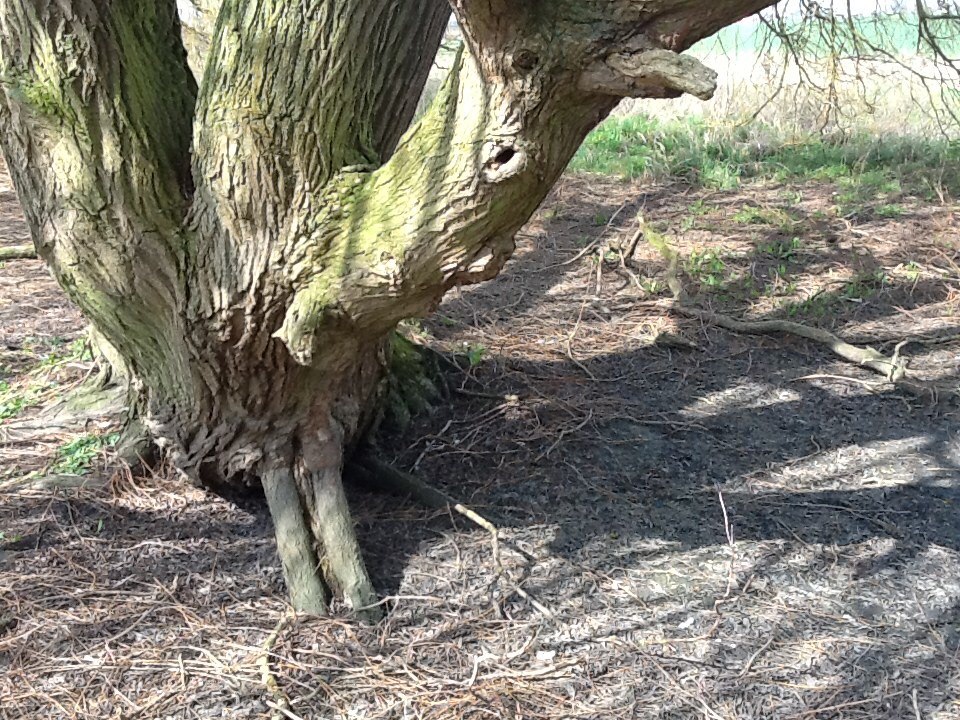
    Another iconic Lane story (my earlier review of it a few years ago HERE, that I have not yet reread) – one that resides beside this book’s own shifting and faltering English seasons, that for a basically urban writer like Lane, are uncannily significant, “that winter hadn’t worn through.” A group of city teenagers in the seventies I guess (later we see them older around the time of the Falklands war) – escaping from the city to the dead tree in the countryside, with their joints and free love etc. imageAnd one boy’s “Castaneda shit”, culminating in a gruesome find that later in life almost allows a gay relationship to give a form of dark catharsis, perhaps even a form of ritual childbirth or escape for children that were tied to that spot, via some spiritual connection with the area near the dead tree, a connection that transcends as well as uses that character’s so-called ‘Castaneda shit’. A fine conclusion that not only embraces Lane’s incomparable canon of work but also extends it positively beyond perhaps what even the author himself had dreamt? All the customary tropes of dereliction and death, but with a seed of hope, I hope.
    “I waited with him near Snow Hill…[…] I knew our affair was over, but it didn’t matter. For him, it had only been a means to an end. Maybe that’s true of most people, if you accept that the end is more than the obvious things.”
    end