Thursday, January 07, 2016

Welcome to the Arms Race - Justin Isis

14 thoughts on “Welcome to the Arms Race

  1. WELCOME TO THE ARMS RACE
    Pages 1 – 12
    Don’t yet know what I’ve got myself into!
    Optimisation of sexual looks into ECT ai androids after crossing Japanese squid with sustenance abuse?
    Whatever, I seem to be suffering some sort of senior moment. Got mixed up between alterpeople and altarboys, it seems!
  2. Pages 12 – 30
    “And I don’t want people swapping their minds with each other, that’s boring. It’s more fun to do it with animals, especially invertebrates.”
    Panning out now – I may be represented in the story by Mr Charity of grandfatherly mien (“he’s not so boring as he seems”) – as I gather the idea of ‘cross’ (cross as an abstract transition by a form of drug and not a hard gnostic ankh) blending a form of Feng Shui with a transaction via the Animal Money concept I’ve learnt about recently in another review – so as to syphon the soul of, say, a pussy called Raisin into yours, or vice versa? Robotics, too, or alterhumans. Or zoonosis, a word learnt from another recent review of mine, or a form of Nemonymous Night?
    I am just brainstorming, as some of the story’s characters also seem to be doing at the moment about future taking of ‘cross’ purposes..
  3. Pages 30 – 53
    “With the help of a biosampler and some creatively modded tissue vats, their interior mansions were given exterior form, the altars on which they consecrated the body and blood of Christ grown from their own bodies and blood.”
    This is some startlling stuff, new physical, mental and spiritual extrapolations seen through the filter of earlier Japanese ethos scenarios such as that I earlier reviewed here in a book about white ants and the ‘Catastrophism’ that I happened to review here in a Father Brown story yesterday, two books that couldn’t be farther on their respective literary spectrums! This Isis author’s own book I reviewed years ago here, too. If you can see past this story’s heavy sexuality and the staccato intermissions of Dos Passos headlining, this Isis state will stretch your mind felicitously – to a constructive, then dangerously destructive, breaking-point. Then calm, measured Mr Charity is indeed the frail aged reader, I feel, but one gradually intuited with a ‘biochurch’ hinted at by the above quote, weddings and funerals, a conspiracy of ‘hatred’ as ‘Clever Murder’ with an imputed ‘antinatalism’ more lethal than the Isis State itself, or Robert W’s Lethal Chambers, because you know it all makes sense! Radicalised by fiction. A gang war without human participants. Simulations, sublimations, symbioses, cryptocurrencies, random motivations upon a Coptic cross not a Gnostic Ankh, predictability as unpredictability, fusions of sea creature with man, compassion as alterhuman, altarhuman…
    I deal with all this in a calm and measured, if off-the-wall, way. The only way is by real-time dreamcatching.
  4. Pages 53 – 76
    “A goblin-shaped anthology attached itself to his leg, demanding to be read: Homestead: A Neo-Confessionalist Tribute to John Updike. Disgusted by the visible sentences dribbling from its mouth like ropes of spittle, he kicked it and sent it sprawling.”
    …like this story itself as it divagates towards this its end?
    I now finish reading this story, reading it as if I am a conduit suffering again that senior moment, not knowing if I am Mr Charity, or a writerly God, or an ordinary reader who thinks he is a conduit or someone big-headed enough to be God – someone indeed who recognises the aforementioned Japanese ethos but not the genius loci in which all this ethos takes place, whether it be Scarborough or Fremantle. (I am going to Scarborough next September on a writerly jaunt should I survive the Anti-Life League that long.)
    Meanwhile, I am torn between the verities and the illusions, between the real Isis State and its fiction …
    “If you tell a seven year old boy that Heaven is magical and he believes it and then you shoot him in the head, does that make him an ADORABLE MARTYR?!”
    Or an altar boy singing in a choir? Or a victim of “secular martyrdom”?
    “In place of the ‘delusion of utopia,’ he endorses a Sadeian devaluation of personal sovereignty:”
    …and a devaluation of Bitcoins or Animal Money at the “pink altar”?
    They say charity starts at home.
    But where is my home?
    “I don’t know. I wasn’t myself at the time.”
  5. SOME NOTES ON THE ARTWORK OF CHRIS WILHELM
    Starts as notes, yes, even academic, with footnotes, then personal and emotional. A strange, inchoate beast.
    Yet I found this ‘story’ compellingly page-turning, a very strong candidate for being a masterpiece in ‘The HOUSE of Leaves’ and ‘The Vanishing Life and Films of Emmanuel Escobada’ school of literature. I don’t say that lightly.
    It concerns an artwork that once shown causes strange or lethal effects on its witnesses. For me, the artwork results in what I would call a CONE ZERO, and I once published an anthology with that title including a story called “The Point of Oswald Masters” by Neil James Hudson. That is a thematic ricochet, nothing more.
    But, no, ultimately, I suggest that the mysterious Wilhelm artwork contained in this story is this story itself. But that would be a spoiler. But in a slowly dawning way, I contend that it is impossible for that suggestion, if true, to be a spoiler at all.
    This Isis story is a giant of a story.
  6. The next story is one I read and reviewed nearly four years ago (quoted from here: https://nullimmortalis.wordpress.com/2012/05/12/dadaoism-a-new-anthology-from-chomu-press/)
    M-Funk Vs. Tha Futuregions of Inverse Funkativity’, by Justin Isis
    “It’s like dancing in reverse! / Except not in reverse / And without the dancing.”
    A mind stretching novella by one of the book’s editors: and when I say stretching, I do mean stretching. Combining Rhys-Hughesian fictionatronics, Laurence Sterne’s Tristram Shandy taking typographical lessons in reverse from torch-bearer Brendan Connell, where music is the new reality and ‘funk’ becomes the new Witold-Gombrowiczian Cosmos of “berg” (whom I took to be Alban) – a space opera worthy of ee doc smith sown with “HEAD-NODDING” (cf the hand jive in the 1950s I used to do) and visions like the psychedelia walls of discos in the 1960s together with Jeremy-Reedian ‘Here Comes The Nice’ (all of which I also experienced for myself in real-time if not retrocausally), and my own collaborative ‘silver saraband‘ – and “chromatic Wagner techniques“. A Star Trek funkathon.  The language is stunningly Joycean. The mind-stretching eventually becomes Whovian onanism with vast civilisations, nay the very religions involved with mind-Proustianising, at stake that you survive the moto-perpetuo-stimulatory, simulatory read.  Plus “drone clone workers” escaped from ‘Autumn Jewel’… (14 May 12 – 1.45 pm bst)
  7. THE STARS AND YELLOW DOUBT
    “Remember Jih and the opaque intentions it imputed to the People of the Laughing Wave.”
    Echoing the symbioses of this book’s first story, Msa and Ama move through each other… And here the Economania aspect (Animal Money review here re-opens today in honour of THIS story), market forces, cryptocurrency, synaesthesic colours of doubt or certainty, predictability or unpredictability, a Bitcoin virtual reality stemming from those ‘intransigents’ and bullies on social meania, and forums, and a whole new ability for a reader to skim text and still understand it in detail.
    “The gestalt is poor at solving the puzzles presented by patterns in the dust.”
    This is mad stuff. And with the ‘People of This and That’ listed out in the text of this story, it seems appropriate that I ‘read’ it today after hearing the news that North Korea have just tested a proper H bomb and that, like the Isis State, NKs don’t really care about being destroyed themselves as long as they hit us first, or is it because (as the news reports say today) that they have many transparent tunnels in their land that make them immune to attack? (Also that I ‘read’ it today when I begin to comment on the latest Celebrity Big Brother here? Makes anyone become an ant-natalist.)
    “‘Illegal immigrants use the tunnels,’ I explained. ‘When discovered they stop moving, in the belief that if they do not move, they cannot be perceived.'”
  8. I read and reviewed the next story four and half years ago and a copy of my review from https://nullimmortalis.wordpress.com/2011/07/20/the-master-in-cafe-morphine/ is shown below…
    The Heart of a Man – by Justin Isis
    “Kolesnikov, ensconced for years in the office of the Mir journal, had long been famous for his negative reviews.”
    A story I need to read again (review, literally) – Hegel, meta-fictionary existences, Eyes Wide Shut rites-of-passage – and anthropomorphism explained by a human heart being placed within an animal – reviewing books making them what you say they are, bad books good, good books bad, everything is its opposite, a reality-creation rolled out as meta-meta-meta…-fictions , more Bulgacoffian cafés, fiction (when demetaed – not demented – to its bottom bone) as the only reality, illicit love-affairs nodded through as part of an over-riding plot of fates one ultimately wants to come to fruition – and this story is not worth reading. It stinks. For, read it and sink into nothingness, namelessness. “Within each apparent unity is a corresponding duality, and vice versa.” The Schubertiad of a Grand Duo again (four hands on one piano or two pairs of hands on two pianos)? The ultimate negativity. This story will need re-reading forever, so for God’s sake resist even reading it once! “- he’s considering writing reviews and publishing them under your name. Would you agree to that?” (23 Jul 11 – another three hours later)
  9. BRENT BECKFORD VS WRITING
    “; he felt as if trapdoors had opened inside him and his organs had fallen out, leaving only empty pits of nerveless jelly.”
    An intriguing, suspenseful science fiction tale about a science fiction tale (cf the cone zero story in a previous story), here entailing a gun heist upon a family man train-commuting, an act either to fulfil the SF in which the family man features or, in real life, to halt the dangerous SF-like research he is doing for his company. I won’t spoil the ending other than to say one of its spin-offs concerns gravity…
    “…everything seems lighter now.”
  10. THE PORTRAYED MAN
    “He woke up at six every morning, but by then it was already too late, and he acted out a version of Zeno’s Paradox in his mind, seeing how many times he could divide the thirty minutes he gave himself to get ready.”
    I LOVE Zeno’s Paradox, and often refer to it in my real-time reviewing (just one example being here)…
    Meanwhile, I found this a terrifying fable about the nature of identity, self, routine, duplication, relationship, working methods, the fallibilities of being laid-back, purpose and purposelessness, and much more – with an otherwise ostensibly simple moral to this fable. Halving each lapse of identity as in Zeno’s Paradox…
    A very entertaining story for story’s sake as well as a genuine classic to join the one about Chris Wilhelm.
    On a personal Nemonymous Night note, I saw the name Mr Nemond as a truncation of Nemo(Des)mond….
  11. THE PLOT
    “First of all, the author is irrelevant, the text is the only thing that matters.”
    …something I have believed vis a vis the Intentional Fallacy since I first thought about it around the late nineteen sixties, those headiest of heady years.
    So it is good to see this striking story develop from the fluid symbioses etc. of the Arms Race story in this book (whose is the real arm racing against which artificial arm?), the self-actor symbiosis in ‘The Portrayed Man’, the fiction-reality symbiosis in the Brent Beckford, the author-aithor symbiosis here in ‘The Plot’, the story and story within a story of cone zero, human money versus animal money, and reflecting, too, by implication, the realbook-ebook symbiosis of the noughties, those least heady of heady years, I propose. (For ‘symbiosis’ above, please read all manner of alterpeople upon the programmed pages of headline text and plain text.)
    The ‘serenity of the grave’ in this story, reminds me why the word grave is so close to the word gravity…
  12. THE WILLOW
    “I had not recovered from my first sight of the willow when I looked at it a second time, noticing the insensible stillness of its base. Looking closer at that base column, I saw that it terminate in a system of thin, elongated claws that stretched through the ground itself.
    imageimageimageimage
    I seem to have entered very special ground here, and I would need to read it again to be sure of that very ground. But here, by my own dreamcatching rules, is my first impression. For a few years now, I have been showing photographs of my own willow, calling it my yieldingtree, a special discovery near where I live, and I am unaware of any other person who is equally aware of it as I am. This seems to match the animalistic willow in this incredible story, a story of a far future world, a sort of utopia, where the narrator (letter writer) explores incursions from our animalistic past, incursions on this far future utopia. As powerful as the exploration of Area X by Jeff VanderMeer, in Annhilation, Authority…
    “In their drawings, children often imprint mundane objects with the protean terror of their nightmares: murderous ovens lined with teeth, for example, or a great tower with spindly arms stretched to snatch them from the ground.”
    “It existed as I suppose a cancer must exist, in a state of mindless and malign expansion.”
    Area X and The Willow: a pair of coincidentally symbiotic literary works. Both mighty and separate. Both worthy of attention, although this Isis one is more an inspirational glimpse than the epic vision of Area X. But the inspirational glimpse does feed off the rest of its containing book’s surrounding context that I have hopefully adumbrated well enough above in this overall review in now apparent readiness for this story. (There is, however, one more story that I still have to read.)
    “…the existence of ‘poplars’, ‘geraniums’, the terrifying ‘willow’ and other ‘vegetative’ matter cannot be reconciled with the counsel of any reputable scientific authority,…”
  13. DEFENCE / PROSECUTION
    “An and Non made Anon who attempted an exchange of transmission-sculptures with the lesser light, extruding pictures of identical size, shape and cardinality and insulating them with hard, slow, shallow blocks of sequencing.”
    …being my alterboys above? Hymnen?
    This is the book’s coda that gives a unique experience of reading becoming like listening to Stockhausen, as I happened to be doing by chance when reading it. He has been Composer of the Week on BBC Radio Three during this week’s New Music Season, a period that also happens, sadly, to contain, as reported yesterday, the death at age 90 of Pierre Boulez. Pli Selon Pli. So apt for this theme and variations with, for me, words themselves acting like electronic music …… followed by a woman — shown on the back cover of this book as a stylised cartoonish or ‘flintstoned’ design of when she was younger and before she was pregnant — methodically interviewed in now straightforward meaningful words about a type of ‘HOUSE of Leaves’ experience she has undergone. With layered ghosts and ghost glue.
    The two halves of the story are thus as discrete as the defence and prosecution in most trials of symbiotic right and wrong?
    Or transmissions-sculptures now made into a cartoon?
    This book needs assiduous confidence to fully assess its gestalt, and I am not yet sure I have managed it. But there are separate works within the book that will astonish the attuned reader one by one,
    end


    Saturday, January 02, 2016

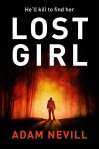
    LOST GIRL - Adam Nevill


    27 thoughts on “LOST GIRL – Adam Nevill”

    1. one
      The father’s gratuitously urgent reporting (but to whom?) – by means of a text that drills fluently deadpan again and again into any sensitive reader’s brain – upon the eponym’s loss by assumed abduction from the fair-tilled tierments of his Torquay garden, this core loss being the point of focus set against the dire careless spread of fair climate’s loss seen in mass shift of near-drowning populations … and another loose loss is hanging by a relationship’s fallible thread: his own careless loss looming, aggregated to the immediacy of the core careless loss for both himself and the eponym’s mother…
      Hooked by loss.
      Nevill’s own language is, despite my blurred undercurrents, crystalline and clear.
      I will try to ensure there are no plot spoilers, inasmuch as a real-time review might let slip a spoiler before it actually becomes a spoiler.

      1. two
        Having a daughter of my own, born many years ago, I can tell that the empathisable yearnings involved here for quite a small version of what would have been my own lost eponym seem spot on, cloth cat and all. Fiction is often good at reconfirming the learnt truths of self.
        From that father’s particular core of loss to the wider spreading-out in time to the refugees and other millions populating our island and the apparent crunch of his own next stage of ongoing work are new to me but feel true. The new becoming true is what good fiction does, too.
        Both processes together, like here, are best.

    2. three, four
      The mix continues of a personal particularity and a near future’s dystopic rump that is brilliantly conveyed as accretively believable based on what we know today.
      Known only as ‘the father’, he is obsessively and ruthlessly conducting a retributive tontine: a cross-checking crusade as organised for him by a real ageing film actress towards his tracking down all those eponymously lost in translation. The language is spectacularly powerful, each word a lynching by semantics.
      Amid rooms full of oldsters’ trite ornaments, these barricaded bungalows…

    3. five, six
      “Perhaps part of his jittery inner parliament now relegated more compassionate impulses to the back benches of his mind.”
      That takes no account of the government or opposition whips, I guess. A telling metaphor, as is the text’s own graffiti, etched on a Paignton (painted) wall as well as on itself by its own words. A dead monument to once ancient hope, abstracted from dystopia. A climatic and child abuse dystopia. I literally FEEL the impulse of the father as his assisted retributive tontine spins out towards eventually finding his eponym, even if it takes years . But that ageing film star? She would indeed be ageing by now, I assumed. I still have my hopes it is her, stitched from words – not as a spoiler graffiti but more a stylish cultural image – despite counter-hints from the text itself.
      This is strong stuff, stronger by not being over the top. Not yet, anyway. Book and its accompanying dreamcatcher, alike.

    4. seven, eight, nine
      “It wasn’t only darkness they feared; it was what the darkness did to other people and to them too.”
      Our future dystopia is itemised deadpan but with vivid implications for all of you reading this book, unless you are as old as I am, and two of its concomitant migrants lurk sadly in the attic at the father’s next ‘visit’, and this is indeed a deadly tontine if only by default, with the ogreish caricature of a child molester and his thin pal taking the due wipe-out of repercussions of what had been hidden from us till now and, seemingly, from the officiating ‘film star’ on the phone. This domino rally is skilfully chocked around with an acutely styled theme-and-variations upon horror genre tropes supreme. The next and promising link toward the eponym as the tontine’s reward is set. Meanwhile, Brer Rabbit, he lay low.
      “…a red-black carousel, emitting rusty iron music, played backwards.”

    5. ten
      …and while he lies low, the father, as I do, too, for a while, we are ‘treated’ here with a continuation of a most believable, deadpan, seemingly inevitable portrait of our world around. 2050. Probably the most frightening such portrait I have ever experienced, in or out of fiction. Stronger in such words than filmic pictures.

    6. eleven
      There’s something going on here, something perhaps even the text itself doesn’t yet know or will never know. After just reading a skilfully laconic word-sketch of the laconic gangland coastal people, well-heeled, by pools et al, and the earlier graffiti and painting that now seem to entwine with some ‘King’ connection, and, today, my finding out, by googling, that the ‘film star’ facilitator on the father’s phone was born, in real life, if indeed it is that film star, on November 22…
      The father, he still lies low.

    7. twelve, thirteen
      “They needed to whisper soon, or spit the story from a reddish, tooth-splintered mouth, to lead him nearer to the one.”
      The one, the eponym.
      This continues to be strikingly dystopic stuff, factoring the evocative genius-loci of today’s Torquay into an inevitable future, a future in turn extrapolated from NOW, us, today, the IS state, the migrancy of the soul, the seeds of horror, or so I myself extrapolated from this text. Extrapolations upon extrapolations…
      But this text’s also word-slick ACTION stuff, thriller stuff, mystery crime stuff, gangs called Kings with gunfights, and individual duels. The pervasive graffiti and info-snatching with the next mysterious clue towards solving the erstwhile abduction of the eponym and its possible recovery-mode.

      • Two pages on…
        “…but there are too many of them for you to get through. I can’t let you run round the county executing the shite. You can’t play this kind of lottery for much longer before you buy it.”
        The ultimate tontine, indeed. The optimum satisfaction of the dreamcatching of books is discovering you have been on to a winner.
        Real-time reviewing hyper-imaginative literature is like placing a book on a planchette for a séance.
        I’ll be right about the Kennedy assassination date next!

    8. fourteen
      “His solipsism had been planetary in size.”
      An amazing concept, an epiphany for this real-time review, the particularity and the universal that I sensed earlier, here blended with the IS state, a Ligottian anti-natalism jihadised by the strength of hyper-literary truths.
      And emblemised on walls.
      The deepest possible sensibility of lost children particularised and universalised again and again. This is powerful writing, as the father sobs at seeing the figurative woods for the trees at last, but what trees, what wood, what word-pandemics.

    9. fifteen
      The crisis is ongoing.”
      Christmas Day doesn’t change that.
      Two separate mid-codas, the father’s nightmares about his ongoing tontine, and the itemisation of the surrounding SARs, anti-anti-biotics, desertisation &c., the migrancy of the soul, the crisis itself, all spinning round the lost eponym.
      On a personal note, one of my own Christmas visitors has brought with him a few films on blu-ray (and his own blu-ray device), including one film that coincidentally features the film star from this book’s characters, a very strange and disturbing film where you see her evolving into our world as if she does not belong to it… A foundling eponym, rather than a lost child? I rarely watch films.

    10. sixteen
      “…her little patrols for snails, woodlice and ants, the endless hospitals for the poorly insects, crushed by her own little fingers as she transported them inside second-hand plastic beach toys.”
      The eponym’s childhood game when a would-be Madeleine McCann, I guess, now become the world’s dystopia. The father, he lies low with the mother, the mother whose younger self is used in time-extrapolated photoshopped versions of the eponym…. Until he receives a new lead in the tontine from, not his handler film star name, but the earlier policemen link turning a blind eye.
      Meanwhile, it is safer in New Zealand, it says.
      Like Madeleine photos, a world’s climate extrapolated forward or backward is just part of the planet’s solipsism?
      Like today’s news of weather warnings…
      “‘Hold on to your hat though, because the rains are coming.’
      ‘It’s going to be wet for sure.’”

    11. seventeen
      “He loathed female grief because of how low it made him feel.”
      As the father reaches the next guilt-ridden, deadly decision-riven, hate-riddled, snake-pitted stage in his tontine of visits, at the undeserving municipal-care-home-sized abode, its rich accoutrements earned by a trafficker of this book’s emotions as well as of the people in it.
      And with that trafficker’s hangers-on, I realise that this book for the first time makes me really believe that this sort of depicted outcome for humanity (already set to run by today’s inverse ticking time-bomb of its own planetary tontine where all we readers exist) REALLY DOES HAPPEN IN ALL OUR FUTURES.
      The painting on all our walls.
      The father can’t decide whether killing his informers will hinder or help his taking further the information they’ve given him. Especially where death means nothing in the IS (being) state of a planetary solipsism.
      Remind me…
      “One thing at a time. Be systematic.”

    12. eighteen, nineteen
      “The horrors of his actions travelled back through his limbs like vibrations.”
      There is something powerful in this text pursuing the father … every father?
      Pursuing, or inciting.
      Horror genre tropes made from words and then made into something more horrific than any tropes or words could otherwise have become. Filters can work both ways.
      I don’t know whether I read about it in this text or I dreamt it as a separate tableau distinct from this text, but I just saw the McCann parents conniving with that pursuing thing…
      “All about him were faded pink walls, orange curtains, china oddments rimmed with black dust that still managed to hang from the dross-furred wall brackets; an antique ghost-installation of bank holiday weekends for poor couples in decades long gone.”
      So, what I do I know? I know nothing. I am just a naive child of the bulge, now grown old, born from those poor couples in decades long gone. Swept by this book’s swollen tides beyond my own future into that of my children.

    13. twenty, twenty-one
      “Maybe it doesn’t matter any more. Have you seen the news? Who’d have thought a pandemic would have an upside for someone.”
      The father dwells on the information from his latest tontine shoot, and something seems a perfect dissonance of coolness, laid-back at some of the particular implications because “the planet now seemed to be pursuing a purpose of its own.” Its own retrocausal anti-natalism as a Gaia.
      And he chews this fat, somewhat, with an oldster in a pub who sounds a bit like me if I lived that long! Even today, I gaze at the windfarm installation on the sea’s horizon where I live… And extrapolate darkly from the particular to the universal… And back again. All confirmed, at last, in a timely fashion by the book’s own installation of wind turbines voiced by its oldster in the pub…
      “An installation from a mad artist. That’s what I always think when I see them on a clear day. The ones still standing. There were two hundred out there, twenty years ago. I watched them go up. A fitting sculpture upon the tomb of a species now. The ruins of a civilization already falling, don’t you think? Red herrings, false hopes.”
      and
      “There’s no whimper or bang, just a long series of catastrophes. Year after year, decade after decade, always worsening, always leaving things changed after each crisis. The past is unrecoverable. Extinction is incremental. There is no science fiction.”
      This is a nevilla of characterisation supreme, voiced by someone like I once might have become. A pub’s laconic doomsayer, but in the book he seems not riven with my angst, as, today, I gaze, desperate for deep sleep, at the the wind turbines…
      There is indeed no science fiction any more, but what about the synchronised shards of random truth and fiction, the leitmotifs of ‘incremental extinction’, the ultimate gestalt as eponym? The dreamcatching of special books like this one.
      Meanwhile, the father’s latest ‘film star’ handler seems to have changed from beautiful to hard-bitten…

    14. twenty-two
      “…an enlumineur, and once devoted to King Death,…”
      The father’s tontine drives relentlessly onward to a hopefully still living eponym, amid all the info the new ‘film star’ imparts on the phone, dangers and hopes, many bottom lines and rare, if any at all, top lines, I guess.
      I sometimes think of the King of tall dark avenging strangers in small communities of terror as a plague, or is it the King in Yellow? But then I think of another King who others still think alive, a new celebrity handler by the name of a singing and acting legend? Just me.
      You know this section of the book talks of “one hundred thousand dead pensioners.” Yesterday, in a generally forgotten community quite close to where I live, one pensioner actually shot another pensioner in the institutional home where they’d both been harboured for care, just round the corner from a different home where a loved one of mine is thus harboured. I saw the significant police presence just down the road with my then not knowing why they were there at all. It is not just the besieging weather but all our separate personal tontines’ synchronicity with a vast migrancy of souls that beckoned this prophetic book into being… You could not make it up, even if you tried!
      “The last sentence seemed to emerge from a recently discovered pit inside himself, and it was as if his conscious mind could not catch such utterances from this pit before they left his mouth.”

    15. twenty-three
      “Through the rain’s drenching violence, a dark shape snapped out its length.”
      It seems acutely appropriate — to my sense of the particular and the universal being each side of the same filter, flowing back and forth — that I should be reading this description of the father’s next stage in his tontine, suffering the same weather, “a month’s rain in twenty-four hours,” weather that is exactly happening outside my window at this moment, the same wind, too, making the wires act like skipping-ropes, “the wind trying to lift and roll him at the same time,” following UK’s recent storm Desmond, and today’s storm Frank (my middle name being Francis), and I wonder when they get to L they’ll call that storm Lewis?

    16. twenty-four
      “And within the void, the beam of white struck a sickly yellow face first, its eyes red and vacuous, the mouth open. The face grew in the disc of illumination until the father realized it was attached to a hairless head, crudely crowned, but barely supported by a thin body, bound more than robed in red. The figure occupied a rust-coloured throne.”
      A version of the King in Yellow whose pervading presence I predicted earlier? Certainly Royal, with its own reference to “pallid shapes”. Perhaps King Death is the King in Red? A new icon for this book’s still evolving mythos? Whatever the case, this is the preamble to some astonishing passages, powerful and disturbing, nightmarish, an installation of the world’s entropic state in the mid 21st century, I guess, of which we have had some believable indications already, accreting, like notches in a geometric progression, a progression still in motion from what we know today. An installation of sometimes pure artistry, at others of admitted grotesque amateurishness as if inchoately created by a primary school child. One wonders at times if this vision or installation is over the top, exaggerated, too horror entrope-ic, until we realise that this next stage in the father’s audit trail or tontine is the essence of this text itself, the text perpetrator’s own installation in words. Installation of an installation by a crazy scribe, or, rather, a perceptive scribe empathising with an increasingly crazy ‘father’ who is creating his own installation of an installation…as the eponym sort of crystallises as part of this installation. Shockingly.
      The outcomes are still uncertain. Plot spoilers hopefully obviated by selective dreamcatching…by optimal surveillance of the plot’s optional inner worlds that may or may not apply especially while still being in-media-res, as we are.
      “…the world’s deterioration, a course set in motion that could only gain a greater momentum.”
      “…funnelled further into a hellish gullet he could not anticipate the end of,…”

    17. twenty-five, twenty-six
      “Bewilderment and fear ran his parliament today.”
      Handler versus handler, switching films, starring in different roles, or merely inevitable confusions of human betrayal? And the captive — leading the father, the father hopes, to the eponym — calls the father Red Father, yes, Red father, and this captive, a “camp puppet”, talks theosophical drivel, or is it that I myself talk such drivel deliberately in this review so as to conceal the spoilers such as the loaned scrawny underwear of death? Or is it the invaluable Ligottian tontine prize of death where the Ligottian philosophical anti-natalism has already failed to prevent your life at source? The prize of being able to become unhitched from this shitty pointless life?
      Meanwhile, whatever the drivel or nonsense reported within it, be assured that this book is compelling no-nonsense stuff in no-nonsense prose.
      “We are nemo.”

    18. twenty-seven, twenty-eight
      “No more sleep, no more resting for the scarecrow. No more disinformation from an addled consciousness.”
      The tontine pans out further into the clawback of the spoilers themselves, spoilers that I dare not otherwise divulge. A further stage beckons, a stage in the tontine no doubt to another town, another victim of the father’s tontine, to reach the eponym. I have used the word tontine so often in this review, it has ceased to mean what it is supposed to mean. Tontine tontine tontine tontine like time ticking on this New Year’s Eve of my own real-time. And tontine is a word that this book itself has not used at all. Like eponym.
      Because I am the buffer against spoilers creeping out.
      There is a madcap rooftop scene in these sections, meanwhile, that embroils the father in the form of an acrobatic homunculus wrapping legs around his middle, as if trapped within the deceptively muscular words and by the meaning of these words. Followed by some more garbled theosophical or death-evangelistic nonsense. An apocalyptic rant about dreams and death, and you never know who is more frightened – the character who is ranting or the father who hears the words from within the words or the one who reads the words from outside the words? Or even the one who WRITES the words, bringing them from the edge of thought into existence on the page? An Installation of an Installation of an Installation.
      “You are full of shit!” Someone shouts within the book.

    19. twenty-nine
      It seems right that I have crossed over some threshold of time before absorbing this effectively discrete backstory that blends into the father’s possible synergous liaison in the ‘real-time’ with the arguably crazy death-evangelist – to fulfil both their separate aims, set against the backdrop of news items of the world’s state.
      The backstory itself is an incredibly mature study of immaturity, a strong installation of a precarious installation of emotions, narcissism, revenge, selfishness between two parties, expressed by well-couched passages that would stand up in any circles of modern literature. It deals with all manner of complex but believable weaknesses and strengths between a man and a woman, something prefigured by a chink in the father’s integrity shown at the beginning of this book.
      (I wonder if the first ‘film star’ handler in real life will be hired to play one of this backstory’s two parties when it is finally filmed for the cinema?)

    20. thirty, thirty-one, thirty-two
      “The noises he made were the deep cries of an animal reaching the last of itself.”
      I sense myself in outcome-suspense as the father’s audit trail of spear carriers (formerly known as tontine) reaches towards the now hopefully glimpseable eponym. This, I guess, is what reading thrillers is all about.
      “…new involvements, possibilities, second guesses, and terrors. And all set to the soundtrack of the man’s esoteric and mystical nonsense.”
      And the father’s companion or captive is like another self with its own home truths, ulterior motives, advice, a crazy conscience, as it were. And, so. surely it is no accident that the author has given him a name with the letters for ‘ego’ embedded.
      Home truths and eye-opening homilies like…
      “He wondered why men were so poorly built to withstand suffering when its possibility had always been so assured.”

    21. thirty-three, thirty-four
      “There were no reckonings for evil.”
      I now truly dare not open my mouth for fear of spoilers spilling.
      Rest assured, though, you cannot rest assured.
      I will merely remark on an astonishing thing for me personally. I can’t remember already knowing the eponym’s actual name till now. But, if this is true, the word eponym seems preternaturally prescient by assonance with it!

    22. thirty-five
      “‘But I think you’ll agree that the clean-up they have performed in your wake has been extensive. Though the washing of their spears has had some unfortunate . . .’”
      This, I sense, is the start of this book’s extended coda, one which is potentially more deadly than the meat it follows. As it admits itself, “a new script”, as the father, now at the eponymous core, has a fresh host ‘ego’ to whisper in his ear about the home truths of foreign attack by bug as man and bug.
      “There’s just too much going on these days, don’t you think?”
      A fresh host ‘ego’ who is a sort of swaggering soul of the party with his many chat up lines and boastful ‘clear thinking’ about chaos.
      The Penny eponym’s saviour? Or a new nemonym? The Nemonymous Night? “‘This is an archetypal zoonosis, from the animal to the human animal.”
      “Cumulative collapse.”
      Tontine’s Antidote?
      “…everything is actually far worse than you think and have been told.”
      Final solution?
      The ‘is’ state of Beings and Beheadings shown in earlier scenes – we reach the new host of parasite ‘ego’s’ ‘doubt’ as instilled by the father himself….
      Literature?
      I sense — as separate, so far, from this book, but instilled by this mighty book nevertheless — that literature can itself be the antidote to that ‘archetypal zoonosis’.
      As filters can work both ways, so can ‘doubt’.
      [“Real time – when past and future twist around each other.”
      “…the connections between all things, and how those connections play a part in healing.”
      Two quotes from Christien Gholson’s story THE SPIN OF THE STARS in INTERZONE #260]

    23. thirty-six, thirty-seven, thirty-eight
      “…all those who had become empowered in the endless crisis, twisting the truth and adverse circumstances, remodelling perspective to suit their own interests.”
      They have always said that events can turn on a sixpence. Here a penny? “And for a moment, the father could believe that a great worm had finally swallowed its tail and that all had come full circle.”
      This is where arises a battle of the father’s two vestigial ‘ego’s’, a battle pitching means against ends, justice against pragmatism, blood-children against earnt-children, insanity against true faith, wrong-headedness against be-headedness, and more.
      Each element of each dichotomy so close to each other that they almost BECOME the other.
      “…this scourge is no accident either. It is a blessing. A gift from out of the chaos.”
      “What walks beside us, in the confinement of our signs, brought us together.”
      This book addresses verities – in the shadow of chaos – verities that didn’t know they were verities at all until they were thus addressed in this book to face the doubt that all verities have built in.
      And it seems we still have a few more chapters to transcend!

    24. thirty-nine, forty, forty-one, forty-two
      I’ll leave you to decide whether or not you now have the ability to follow – even touch – this book’s eponym at tontine’s end, that prize of ‘life, the universe, everything’ – as represented by this closing clutch of shortish episodes…
      Even the two fingers on the Sistine Chapel ceiling almost touch.
      All I know, for me, personally, is that this book has made me wonder whether I abducted my own children – as I watch myself, many years ago, like most of you parents often need to do, deciding to almost drag an obstreperous wriggling child towards what you feel is good for it: You.
      Present at its original natal throes themselves, I was then one of two collusive culprits to witness that event. I now witness a new storm of breaking waters from the world’s darkening sky… hopefully to wash the graffiti from the wall rather than smear it into even uglier shapes. But it often seems a hope against hope.
      The last dichotomy: afterbirth against afterdeath. Because there was nothing before or between.
      Except, today, this mighty book?
      end