Des Lewis - GESTALT REAL-TIME BOOK REVIEWS A FEARLESS FAITH IN FICTION — THE PASSION OF THE READING MOMENT CRYSTALLISED — Empirical literary critiques from 2008 as based on purchased books.
Breakfast “‘Behold, I die daily,’ thought Mr. Rossiter, entering the breakfast-room. He saw the family in silhouette against the windows; the windows looked out into a garden closed darkly in upon by walls. There were so many of the family it seemed as though they must have multiplied during the night; their flesh gleamed pinkly in the cold northern light and they were always moving. Often, like the weary shepherd, he could have prayed them to keep still that he might count them.” …as we do, as we try to count the many different things happening in this otherwise static realistic tableau of a breakfast, a feast of gossip, a recounting of last night’s dream (worth a whole surreal story in itself), the loss of collar studs, relationships pregnant with innuendo, plus much more – and that passage I quote above is the start of this amazing story and, alone, it takes up nearly half a page of a 12 page story. Why else ‘amazing’, you ask? Well, be there, and see. The language, paradoxically fractured yet smooth, meticulously picks images out of a pixelated painting of deeper and deeper things that you begin to feel and, yes, want to count or itemise. Plus a jabbing Ivy Compton-Burnettish dialogue. Eventually, you, too, leave this breakfast room, along with its characters, dissatisfied but equally full up. ***
HAVING JUST happened to finish today my exhaustive gestalt real-time reviewing of the Robert Aickman Fiction canon by means of re-reading it, here: https://dflewisreviews.wordpress.com/2021/10/05/the-canonisation-of-an-author/ (Aickman published Bowen in his Fontana Anthologies and he considered her to be the greatest exponent of the ghost story, I think he wrote in the intro),… WELL, I fully intend to do the same service to Bowen stories!
I continue to read this appropriately Bowen-difficult book, and inasfar as I understand it unacademically, it bears out much of what I have always thought instinctively about her work.
— renée c. hoogland
Seems relevant to my preternatural or fearless faith in fiction that has been engendered by gestalt real-time reviewing as an instinctive or naive process…
Having read and reviewed THE DOLT’S TALE yesterday here: https://elizabethbowensite.wordpress.com/my-huge-bowen-story-review-2/, I looked up the story’s title in the index of this book (there not being much at all on-line about this amazing story) and was truly fascinated by Laurie Johnson’s substantial take on it!
The Telephone in Bowen as an embodied Drogulus?
Bowen as Unromantic Princess.
This book tells me too much, this book tells me too little, tells me things I had not observed before, but I can tell this book new things, too, about her work. Both humble and bumptious, too abstruse yet with straightforward moments, myself objectified as well as the book itself, and I feel this book is an object to fetishise, but never to finish. Zeno’s Paradox and half Aickman being example factors that need factoring in more than it does. The theory is that we never get more than halfway through it, by dint of the things we thought we’d skipped over.
In the last few months, I have been gestalt-reviewing every single story by Robert Aickman and every story in his edited Fontana Anthologies.
The nature of time, and sex, marriage and gender, catharsis, eschatology, eating meat etc., but above all great absurdist and weird literature that should be canonised. All linked from here, including his three novels: https://dflewisreviews.wordpress.com/robert-aickman/
“…it was as if most of these people had been with one another for a long time, during which things to talk about might have run out, and possibly with little opportunity for renewal through fresh experience.”
I am utterly delighted to re-read, re-value this ultimate classic of weird literature in the context of ‘The WEIRD’ and of my own late middle age / accreting old age. It is of a male protagonist in an era without King’s FD,NS sat-nav / gps contraption sent on a short cut and arrives at this private hotel (with petrol low in his car’s tank from having become lost) – (and no mobile contraption or even a phone in the ‘hotel’) – (and contraptions inadvertently unmentioned in my Third of the Way report above) – now faced with a claustrophobic concupiscence between the sexes, strikingly heavy meals (unexpectedly exaggerated but typified by the picture of spam soup earlier above), shapes in the night – but, earlier, anxiety sitting in the restaurant like a fish out of water (cf Dirk Bogarde in ‘Death in Venice’ hotel restaurant) and a sense of people of my general time-of-life in “God’s waiting-room”: the common nickname for the area where I live. There is a pub nearby where people of my age regularly eat – a large steaming roast dinner a day. Not that I go there very often, myself, but when I do it is teeming with people I recognise from when I went there before – except for those accretingly absent… An Age of Anxiety. The story’s weird unsettling grows artfully. The dust settling grew on this story, until I exhumed it today thanks to this book. It is a “bad dream“, true, but it is also the best thing since sliced bread. “‘…I have seldom seen a more gorgeous dress.’ / ‘Yes,’ she replied with simple gravity. ‘It comes from Rome. Would you like to touch it?‘” (19/11/11 – three hours later)
And another of my pages in 2013 about it —
Today, 4.Oct. 21 …
THE HOSPICE by Robert Aickman
“…going round and round in large or small circles, asking the way and being unable to understand the answers […] By rights he should have been more than halfway home…”
Insufficient answers, then?
Aickman does not do farces by halves. Stranded because Lucas Maybury’s car runs out of petrol … and confusion between diesel and petrol: seems a prophecy of our times today! And with this last story in my massive re-reading of Aickman (a famous story about the nature of his ‘hospice’ refuge for the night), I say that we at last attain this canon’s eschatological goal that indeed may bury Lucas as he hitches a lift with a hearse at the end, one leg perhaps shorter than the other (from a cat bite) — please see my previous review of INTO THE WOOD to get the leg reference — and now he is sitting next to the wood of a coffin! … need I say more? This classic of over-eating and over-heating is equally over the top like a Whitehall farce, yet it is so creatively and darkly absurdist it delights those of a literary taste, its most horrific moment being the gratuitous smashing of a plate of food on the floor, and where there are also confused identities at night and inferred sexy shenanigans, but Maybury remains true to his wife back home, with whatever conclusion you would like to draw from this in the dubious light of Aickman’s themes on marriage elsewhere in his canon, and the always ’insufficient answer’ to life, the universe, and everything not even being 23 (the room number he was given by a lady he fancied) let alone 42!
Eating as if life depended on it. “They lived for eating.” And the big slab of turkey with five vegetables does deaden life but does not awaken Maybury’s sleep into being but somehow he is rescued from the man who shared the room with him and, later, from perhaps a woman in the room dressed as a man… Don’t go there.
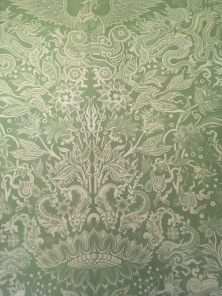
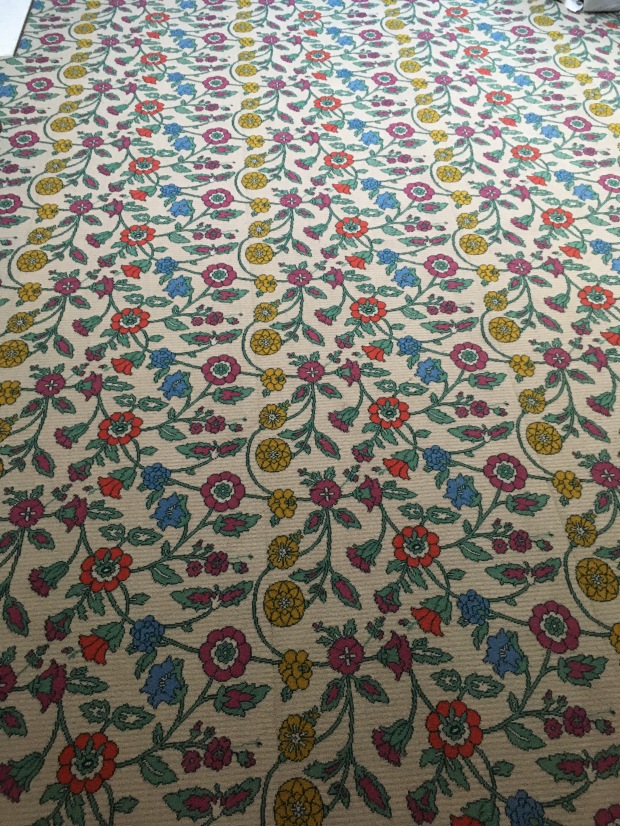
Heavily over-decorated, too, this hospice is said to be; even the curtains in Maybury’s room are decorations rather than useful! Like in ancient crematoria?
And the hearse in the morning, was it a co-vivid dream? And Maybury’s own murder as whodunnit with a half-stifled scream, clutching at himself, were they dreams, too? No, they were real. You see, Aickman did it.

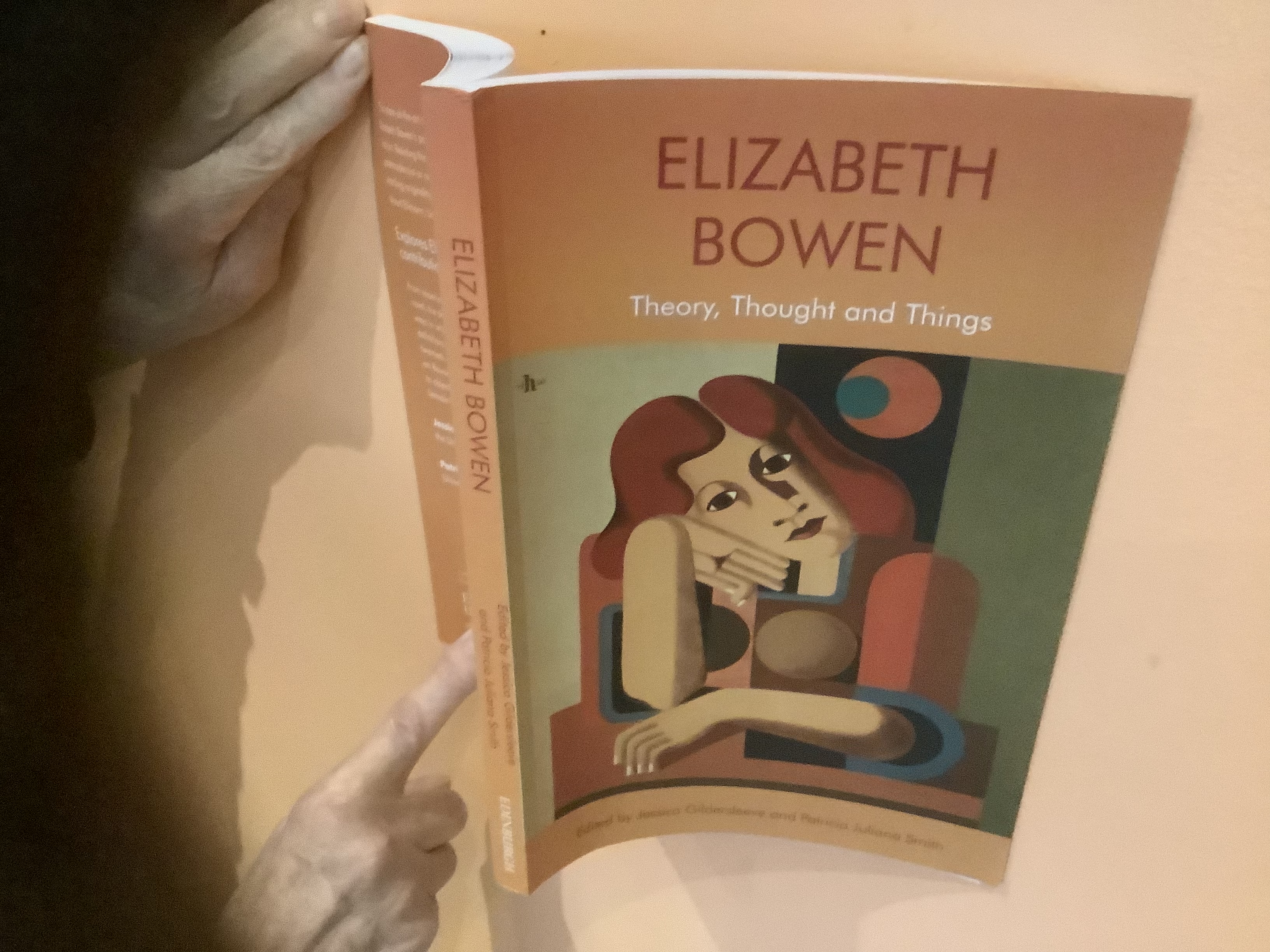


I haven’t really started reading this Bowen book yet, but I relish the chance to do so before long.
But I have noticed that the Introduction starts off with thoughts on her BREAKFAST and I noticed this is one of the few stories of hers I have already written a review about, seven years ago here: https://dflewisreviews.wordpress.com/2014/12/16/encounters-early-stories-by-elizabeth-bowen/#comment-3682, as follows:
Breakfast
“‘Behold, I die daily,’ thought Mr. Rossiter, entering the breakfast-room. He saw the family in silhouette against the windows; the windows looked out into a garden closed darkly in upon by walls. There were so many of the family it seemed as though they must have multiplied during the night; their flesh gleamed pinkly in the cold northern light and they were always moving. Often, like the weary shepherd, he could have prayed them to keep still that he might count them.”
…as we do, as we try to count the many different things happening in this otherwise static realistic tableau of a breakfast, a feast of gossip, a recounting of last night’s dream (worth a whole surreal story in itself), the loss of collar studs, relationships pregnant with innuendo, plus much more – and that passage I quote above is the start of this amazing story and, alone, it takes up nearly half a page of a 12 page story. Why else ‘amazing’, you ask? Well, be there, and see. The language, paradoxically fractured yet smooth, meticulously picks images out of a pixelated painting of deeper and deeper things that you begin to feel and, yes, want to count or itemise. Plus a jabbing Ivy Compton-Burnettish dialogue. Eventually, you, too, leave this breakfast room, along with its characters, dissatisfied but equally full up.
***
HAVING JUST happened to finish today my exhaustive gestalt real-time reviewing of the Robert Aickman Fiction canon by means of re-reading it, here: https://dflewisreviews.wordpress.com/2021/10/05/the-canonisation-of-an-author/ (Aickman published Bowen in his Fontana Anthologies and he considered her to be the greatest exponent of the ghost story, I think he wrote in the intro),…
WELL, I fully intend to do the same service to Bowen stories!
I guess, ironically, my job with Aickman turned out to be a casting of a weird genre writer as a great literary one, which he is surely is, given the evidence.
It is going to be vice versa with Bowen! https://dflewisreviews.wordpress.com/2021/10/05/the-collected-stories-of-elizabeth-bowen/
I continue to read this appropriately Bowen-difficult book, and inasfar as I understand it unacademically, it bears out much of what I have always thought instinctively about her work.
— renée c. hoogland
Seems relevant to my preternatural or fearless faith in fiction that has been engendered by gestalt real-time reviewing as an instinctive or naive process…
Pingback: Elizabeth Bowen, Katherine Mansfield, William Trevor & Robert Aickman | The Des Lewis Gestalt Real-Time Reviews Edit
Having read and reviewed THE DOLT’S TALE yesterday here: https://elizabethbowensite.wordpress.com/my-huge-bowen-story-review-2/,
I looked up the story’s title in the index of this book (there not being much at all on-line about this amazing story) and was truly fascinated by Laurie Johnson’s substantial take on it!
The Telephone in Bowen as an embodied Drogulus?
Bowen as Unromantic Princess.
This book tells me too much, this book tells me too little, tells me things I had not observed before, but I can tell this book new things, too, about her work.
Both humble and bumptious, too abstruse yet with straightforward moments, myself objectified as well as the book itself, and I feel this book is an object to fetishise, but never to finish. Zeno’s Paradox and half Aickman being example factors that need factoring in more than it does. The theory is that we never get more than halfway through it, by dint of the things we thought we’d skipped over.