
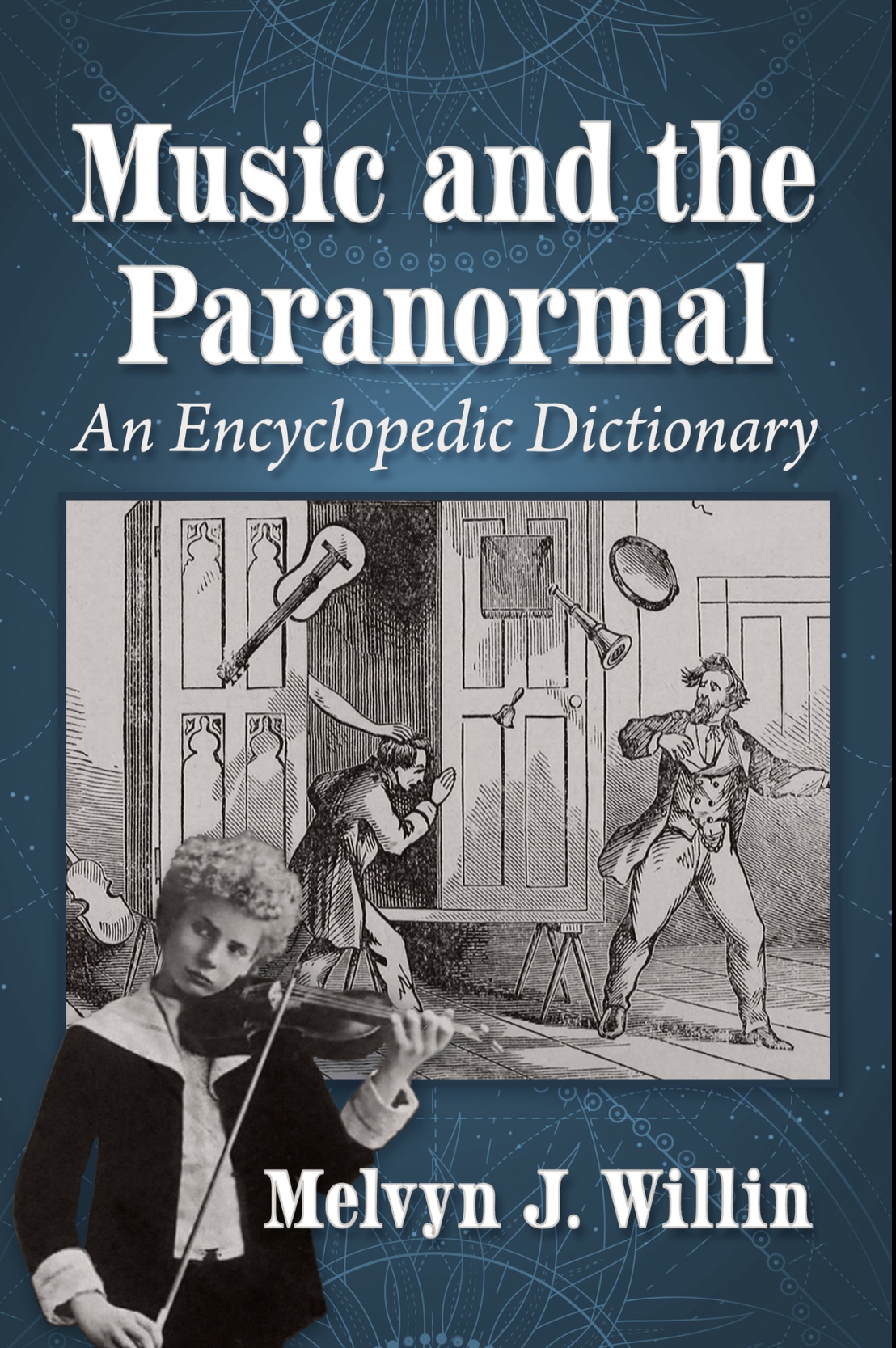
McFarland & Company, Inc. 2022
Any comments I may have in due course on this book will appear in the comment stream below…
www.nemonymous.com
Des Lewis - GESTALT REAL-TIME BOOK REVIEWS
A FEARLESS FAITH IN FICTION — THE PASSION OF THE READING MOMENT CRYSTALLISED — Empirical literary critiques from 2008 as based on purchased books.
McFarland & Company, Inc. 2022
Any comments I may have in due course on this book will appear in the comment stream below…
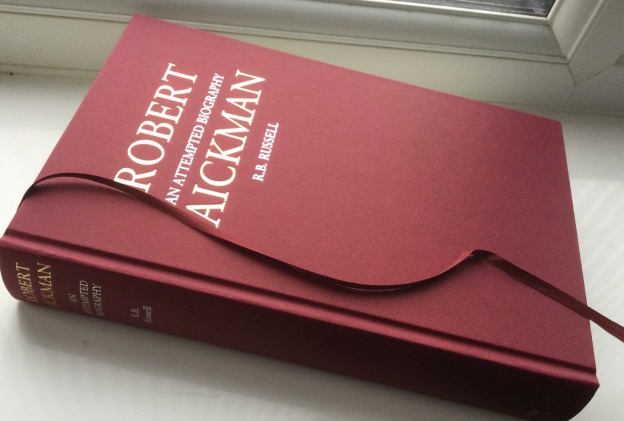
TARTARUS PRESS 2022
My previous reviews of Robert Aickman and of Tartarus Press / R.B. Russell
Chapter Eleven: Waterways Dramas
Much more about disputes between Aickman and Rolt, and anecdotes about being on the Waterways, including a ghostly sound as a symptom of occult power, and about IWA events and politics, and the people involved, all quite fascinating. And illuminating.
I was even more inspired by the information of the paranormal beliefs of Aickman and his belief in the occult gifts of EJH, although she probably never admitted to them. As an aside, I sense that, even if Elizabeth Bowen did not directly feature bodily / emotionally in Aickman’s life, she affected him spiritually as a result of his admiring her fiction work — and perhaps paranormally, too, after she died! And, as I hope I have already shown in my many reviews of their work, one can discern the Bowenesque throughout Aickman’s work, and the Aickmanesque in Bowen’s work during her later life, till she died in 1973. In timely manner, yesterday, one or both of them somehow communicated to me that this was indeed true!
Chapter Twelve: External Battles
Chapter Thirteen: Internal Battles
Chapter Fourteen: Civil War
Much unmissable material here about the cut and thrust of the IWA, some of it socially and politically high profile, the broad picture of which I already knew to some extent (believe it or not, I did not know about his paranormal beliefs before reading this book and that has been quite a revelation for me!), and about the now RA’s waning relationship with EJH. A sort of fatefully literal journey in these chapters where ‘we are for the dark’….? I am now more fully apprised of how RA worked as a businessman and ‘salesman’ of public-facing, commercial concerns as well as a personally passionate cause in RA’s case (one I can empathise with, having done Canal cruises myself, too) — a public-facing business role as I once did, in different ways, but with my equivalent conflicts of a singular self.
Which makes me think I rather jumped the gun earlier regarding my review of the THE TRAINS as a possible prophetic code for TRANS in RA’s life as demonstrated by what were then forthcoming (cross-dressing etc.?) themes in his fiction and, in these chapters, this particular story has now fully come out in public, and now I wonder, with regard to his schisms and complexes, to what extent he was what we now call neuro-diverse, or did he have closet (misguidedly guilt-felt) things going on in his life quite different from neuro-diversity? But that takes me into conflict with my own faith in ‘the intentional fallacy’ as a literary theory, a theory that bolsters my own perhaps eccentric and still developing Jungian gestalt theory of literature!
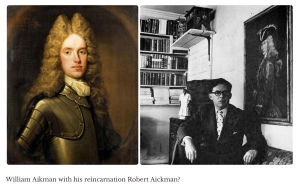
Perhaps connected to my comments earlier today above, and concerning this photo of RA that was recently posted publicly on-line by one of the moderators of the Robert Aickman FB forum and now included in this Russell biography, I immediately wondered about the provenance of the painting on the wall. My theory was that it might be by a painter with a Wikipedia entry called William Aikman, whether a self-portrait in drag or not. Having said that, the identity of this painting remains unknown, despite others trying to identify it.
Chapter Fifteen: A New Chapter
Barbara Balch, who worked for RA, is quoted at length about RA’s personality as she saw it and makes very illuminating reading in interface with some of the ponderings I made above. This also tells more of IWA after RA changes his role within it. And there are also intimate details of his waning marriage with Ray, and her later turning to Christianity, matters that I found almost startling.
In further interface, Russell makes some adept descriptions of two RA stories (the links below being to my own recent reviews of them):
THE VISITING STAR: https://dflewisreviews.wordpress.com/2021/06/07/the-visiting-star-robert-aickman-1966/
YOUR TINY HAND IS FROZEN: https://dflewisreviews.wordpress.com/2021/08/10/waiting-for-the-bread-delivery/
I have read so far in this chapter up to: “Aickman neatly distilled his own interests, preoccupations and neuroses into an effective, memorable and contemporary tale of the supernatural.”
Chapter 15 (cont.)
Many more IWA business matters and escapades on canals and so forth. Even John Betjeman as a new member whose work RA was to include in one of his Fontana anthologies of ghost stories — and no doubt there will be more about these anthologies later in this book, all of which I have reviewed in detail recently, with my describing overriding themes of all the stories that RA chose in the eight volumes, including the truly brilliant, somewhat Aickmanesque, Betjeman story!
The escapades on the canals in this chapter make me think of a question someone asked recently in a forum – why did not RA write stories about the English canals? Someone suggested that it was his day job, so he wanted to avoid it in his creative work.
If anyone is interested in an Aickmanesque story that features these canals, then they should read Elizabeth Bowen’s HUMAN HABITATION. A recent revelation for me. And whilst on this subject, in this chapter there is this crucial statement by Russell about a social gathering …
“Aickman was impressed by the august company he kept that evening. Asquith’s other guests included eminent authors Elizabeth Bowen, L.P. Hartley and Lord Dunsany.”
Surely this means that RA met Bowen at least once! The implications are manifold.
Chapter Sixteen: Felix
“… Bulkeley-Johnson attempted to follow Fowler, and there was talk of a breakaway organisation.”
All organisations can have their turmoil! And much more here about Aickman’s dealings with the IWA, including what sounds to be inspiring – a ceremony for the opening of the Stratford Canal, “and the presence of Elizabeth, the Queen Mother, who had agreed to attend an extensive programme of events.” Almost perhaps like a fictional festival from John Cowper Powys or A.S. Byatt, or, in music, the Immortal Hour by Rutland Boughton (a few stories of Aickman and Bowen are based on ‘The Lordly Ones’)…
And there is material here on RA’s involvement in the founding of the Delius Society, and other music matters, that has fascinated me, of course.
And the shenanigans with committees of IWA etc. remind me of RA’s story RESIDENTS ONLY (my review: https://dflewisreviews.wordpress.com/2021/10/04/history-turned-inside-out/ )
Chapter Seventeen: Strange Stories
Many may consider this chapter to be the ‘meat’ of Aickman, and indeed there are some theories elsewhere about veiled cannibalism in quite a bit of his fiction! Russell fulfils a supreme job dealing with and documenting the material discussed here but I don’t necessarily agree with everything he writes where he deals with opinion rather than fact, e.g. The Late Breakfasters. Also, I found most instructive what is written here about RA’s Fontana anthologies. I recently studied these anthologies drawing out, inter alia, what I now call ‘gluey Zenoism’!
I have reviewed myself all Aickman’s output (linked HERE) including his longer work, and particularly Bowen’s THE DEMON LOVER chosen for Fontana; the intro for this volume shows RA deeming her to be a major force in Ghost Story writing. And I would also mention the major influence that I once called AickMANN, of Thomas Mann, particularly in THE HOSPICE and TO THE WOOD.
Chapter Eighteen: A Tainted Star, and a Fascination for Fascism
The material surrounding Leni Riefenstahl’s ‘The Blue Light’ (1932) and RA’s possible ‘infatuation’ is completely new to me. Bravo! to this book. I just saw a public comment by someone I greatly respect stating that this Aickman biography will always be the definitive one. I agree.
Chapter Nineteen: Sub Rosa
Chapter Twenty: Fandom and Fantasy Conventions
Regarding chapter 19, please see what I say above about chapter 17.
Particularly interested here on the story RAVISSANTE in tune with the suggestive ‘closeting’ thoughts I had above, and on RA’s attitude to the BBC’s broadcast of RINGING THE CHANGES, retitled: ‘The Bells of Hell.’
And more about his belief in the paranormal. Much on his literary tastes. And his distaste for ‘horror’ fiction as sadistic! (He should have read my erstwhile edited anthology: ‘Horror Without Victims!’?)
And his travelling widely.
The fascinating and fulsome material in Chapter 20 is new to me except for a few snippets I had already heard. Names of people I have myself met, such as Ramsey Campbell, are instrumental in helping the biographer with many of the events described here. Indeed, I have met a number of times the biographer himself!
Chapter Twenty-One: Abiding Interests
Chapter Twenty-Two: Love, Friendship and the Artist
Chapter Twenty-Three: Tales of Love and Death
Chapter Twenty-Four: Gledhow Gardens, Illness and Death
Chapter Twenty-Five: Posthumous Reputation
I think I am going to leave the final five chapters (and any appendices and other supporting material) quietly fertilising within my head, without the benefit of your real-time company, as I think I have said already above all that I need to say about this definitive Aickman biography. Just to add, though, that I feel there is still room for further developments in Robert Aickman’s posthumous reputation, and perhaps in Elizabeth Bowen’s reputation alongside it. One from genre to literature, the other from literature to genre, with each retaining the ingredients of both. Paranormal tentacles across the Jungian literary gestalt that I believe in.
If this review ever seems partial (in both senses of that word), please keep in mind that I normally only review fiction itself, not non-fiction about it. I have made an exception for this book.
end


There may be a delay in commencing this and other books in the wake of my Elizabeth Bowen and Robert Aickman projects…
1. As once publisher of this anthology and a compulsive music listener (ranging from all forms of modern classical music to The Crazy World of Arthur Brown and Scriabin and Beethoven and Napalm Death and Black Sabbath &c.), I feel that this Willin book promises to be just up my street, judging by its already inspiring Preface. And I look forward to exploring its alphabetical Encyclopaedic references and Appendices and reporting back here about at least some of them…
2. I have now started exploring these entries as if reading a linear book, starting at A.
I intend to eke out into the future the undoubted fascination of this book, slowly savouring and recording my aberrant thoughts below intermittently.
For example, the entry on ABELL, with illuminating quotes, about the trance-like state of composing music etc. reminds me of my own faith in the preternatural powers of literature and fiction as part of a Jungian gestalt.
3. “The opening of Philip Glass’ film music Koyaanisqatsi was felt to be conducive to Samhain rituals…”
I have long been a fan of Philip Glass and saw AKHNATEN live in the early 1980s at the opera house in London. I was laughed at by my liking of such so-called Minimalist music in those early days. But it has become generally popular since, but still retains a preternatural power as backdrop for my delving into literature and my constructing devices to tap its intrinsic magic.
And some fascinating references regarding music and telepathy.
Just occurred to me that this book is serendipitously topical in my world, inasmuch as I recently discovered one of my two favourite writers — Robert Aickman — was an adept believer in the Paranormal, and was also fascinated by music … such as Delius (he helped form the Delius Society)…
One of my favourite Philip Glass works: the string quartet for ‘Dracula’
4. The tale of Cressing church and ‘weird symphonies’ intrigued me. Perhaps it was a rehearsal of the ‘Gothic’ by Havergal Brian?
And I was also grateful to learn about the Hellish music of Duke Amdusias….! [My review of the DEMONS OF KING SOLOMON: https://dflewisreviews.wordpress.com/2017/12/25/the-demons-of-king-solomon/ ]
See my review of SYMPHONY by Philip Fracassi in above DEMONS book.
5. Some fascinating entries read today, including Amityville, Amusia and Angels.
There seems to be much scholarship invested in this book, and the ‘bold’ cross-references between entries, the visual illustrations and other smaller-print substantiations are invaluable — although I am still eking out this book as a linear read from A to Z.
6. Particularly interested in three entries or articles, many of this book’s entries being articles rather than entries, i.e. ANIMALS, AUTISM and AUTOMATIC WRITING. The last one featuring a lot in my past gestalt real-time reviewing of literature. Regarding the first, and mention of whale noises, I was wondering whether the composer Alan Hovhaness should be mentioned in this context. Also, this composer is generally relevant, I feel, to the spiritual and the paranormal, but I have not checked to see if he is mentioned in this book. I want things to come at me fresh from my linear reading of this book, rather than getting ahead of myself like a hopping demon!
7. I have been particularly interested in the entry for Maurice BARING, an author whose work happened to be chosen by a favourite author of mine, Robert Aickman, for his important Fontana Ghost Story anthologies. A story I reviewed HERE, describing a dream about a land of gigantic mushrooms, broad-winged butterflies, big juicy fruit, giant caterpillars etc. emanating from a telephone box…
Here, in the entry, we hear about an experience of Baring and his friend hearing music that could not be explained, music “strange, alien, confused, tinkly …unreal with a kind of burr in it as if you were listening to voices on a telephone that is out of order. We walked through the singing and heard it behind…”, as described by Baring about this real life event.
8. Particularly interested in BEETHOVEN dictating part of his 10th symphony to John Lill!
And the BELLS entry made me think of Poe’s hallucinatory poem ‘The Bells’ and Rachmaninov’s version of it, and then I thought of the latter’s THE ISLE OF THE DEAD….
But that may be just hopping ahead again…!
9. The Hector BERLIOZ entry has halted me to dwell on my youthful favourite Symphonie Fantastique that is here linked with Melvyn Willin’s own scholarship concerning musical Ganzfield experiments in psychical research. All new to me.
The article on Rosemary BROWN is illuminating, as is the one on CHOPIN, just as two examples. A pianistic panoply of the paranormal and the ghostly.
I regard this book’s paranormal as the ‘science’ of the preternatural — and ghost stories and other literary or fictional inspirations as the gestalt of supernatural truths. Music and fiction as kindred sprits or ‘souls’. It is good to see this book is deploying the preternatural, and so we now need another scholar to do the same for the supernatural.
I shall now read this book in real-time on my own, without your company alongside, and I urge you to do the same. Only when alone can the above ‘inspirations’ truly work. Meanwhile, I am confident that this encyclopaedic dictionary will continue to demonstrate immaculate scholarship and bold interconnections between the entries and articles, as well as supporting references. It is no doubt ground-breaking in dealing with research in the preternatural of music and, thus, explaining at last how music has stirred me over seventy years to the point of obsession; it is miraculous, finally, to receive this book as key to such mysteries of what music actually is, without understanding its technical aspects, as I don’t and never shall. Just as I don’t understand the ghosts I ‘see’, on and off the page.
Pingback: A Synergy — Musical Preternatural and Literary Supernatural | The Des Lewis Gestalt Real-Time Reviews